


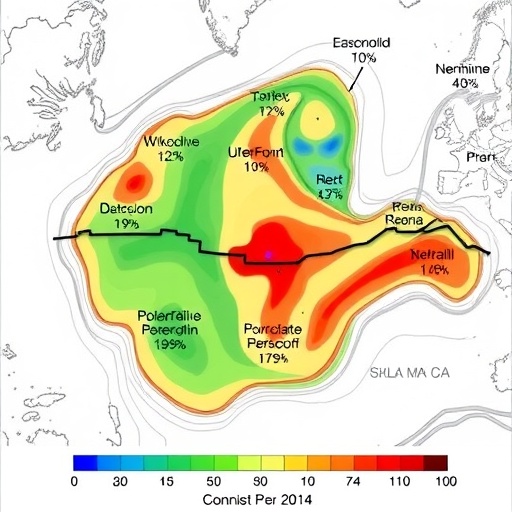
In a world increasingly defined by contradictions and divergences, the dynamics of land systems emerge as a focal point for researchers keenly analyzing the phenomenon of polarization in human and environmental interactions. The term ‘polarization’ typically evokes images of divisive politics or stark cultural differences. However, recent research has broadened the scope of this concept to encompass a variety of land-use practices, socioeconomic trends, and ecological responses. Conducted by a team of forward-thinking scientists, including Levers, Helfenstein, and Bürgi, this research aims to conceptualize and map polarization trends within land systems, contributing significantly to a deeper understanding of how these trends manifest globally.
The study posits that polarization in land systems refers to the increasing geographic, social, and economic segregation that affects land use and ecosystem health. With land serving as a critical resource for humanity, understanding how polarization plays out in various contexts is paramount. This polarization can manifest as contrasts in land ownership, usage practices, and even in the socioeconomic profiles of communities engaged in agricultural versus urban development. Such disparities lead to inequities, with certain land systems being favored over others, often resulting in economic benefits for a select few while marginalizing other groups.
The researchers utilized a multi-faceted approach to map these polarization trends, employing cutting-edge GIS techniques combined with social science methodologies. By integrating spatial data with demographic and economic indicators, the team sought to create a nuanced visualization of land systems marked by polarization. This approach highlights the interconnections between human behavior and environmental changes in a way that traditional methods often overlook. The complexity of social-ecological systems means that changes in one area disproportionately affect another, often leading to unintended consequences.
Crucially, the researchers focus on the global context, illustrating how polarization trends vary radically between regions. In affluent areas, land polarization often resembles suburban sprawl, where high-income neighborhoods starkly contrast with lower-income areas, which struggle with land access and sustainable practices. In contrast, developing regions may experience polarization in terms of land ownership structures, where large corporations seize control of land, pushing out local farmers and indigenous populations. Such dynamics underscore the pressing need for tailored approaches to land management that consider local contexts.
The study emphasizes that awareness of these polarization trends can drive policy changes and support grassroots movements aimed at re-integrating marginalized communities into the decision-making process regarding land systems. Such an inclusive approach can lead to more equitable land distribution and improved community resilience in the face of environmental change. It argues for the necessity of establishing participatory frameworks that recognize the benefits of diverse land management practices, including traditional ecological knowledge passed down through generations.
Beyond the immediate implications for land policy, the research offers broader insights into the intersectionality of environmental management and social equity. As the world grapples with challenges such as climate change, biodiversity loss, and increasing food insecurity, addressing polarization in land systems becomes a pressing concern that can no longer be overlooked. The trends observed in this research beckon policymakers, scientists, and the public alike to recognize the importance of collaborative solutions that can bridge divides.
Education and public awareness are also vital in combating the adverse effects of polarization. By fostering understanding and empathy regarding the various challenges faced by different communities in accessing and managing land, stakeholders can work together to create innovative solutions that promote sustainable land use. This calls for interdisciplinary efforts that draw from various fields, including sociology, ecology, economics, and urban planning.
The research conducted by Levers, Helfenstein, and Bürgi not only lays the groundwork for future inquiry into polarization in land systems but also serves as a clarion call to action. It implores academics, practitioners, and policymakers alike to reevaluate current land management strategies through the lens of equity and community engagement. The findings suggest that without addressing the roots of polarization, efforts to enhance sustainability may have limited success. Interventions that neglect to consider the socioeconomic dimensions of land systems risk perpetuating existing inequalities.
Through comprehensive mapping and analysis of polarization trends, this study enables a deeper exploration of land systems’ socio-environmental complexities. The team’s work provides a framework that could significantly influence future land management policies globally. It represents a pivotal moment in recognizing interconnected socio-ecological systems and the urgent need for collaborative action in fostering a sustainable future.
In conclusion, this research illuminates the critical need to understand and address polarization in land systems as a means to foster sustainability and social equity. As the world continues to confront various crises brought on by climate chaos and social injustices, the insights derived from this work could not be more timely. It challenges all stakeholders to not only observe and analyze but also to act toward bridging the divides that currently characterize global land systems.
Levers, C., Helfenstein, J., Bürgi, M. et al. Conceptualising and mapping polarisation trends in land systems. Ambio (2026). https://doi.org/10.1007/s13280-025-02344-0
Cite Scienmag News
Violet Maxwell. (January 24, 2026). Mapping Polarisation Trends in Land Systems. Scienmag. https://scienmag.com/mapping-polarisation-trends-in-land-systems/
Violet Maxwell. "Mapping Polarisation Trends in Land Systems." Scienmag, 24 January 2026, https://scienmag.com/mapping-polarisation-trends-in-land-systems/. Accessed 5 September 2026.
Violet Maxwell. "Mapping Polarisation Trends in Land Systems." Scienmag. January 24, 2026. https://scienmag.com/mapping-polarisation-trends-in-land-systems/


