


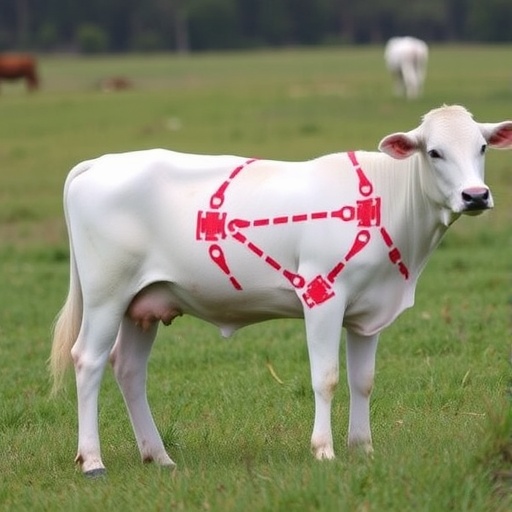
In a pioneering study published in BMC Genomics, researchers have uncovered significant insights into the genetic regulation of sperm DNA methylation in cattle. Utilizing a methodology known as meQTL mapping, the scientists elucidate how methylation patterns, which are crucial for gene expression and developmental processes, are influenced by specific genetic variations. This groundbreaking research stands to enhance our understanding of bovine genetics and could have far-reaching implications on cattle breeding programs.
The research was spearheaded by a team of scientists, including Fouéré, Costes, and Hozé, among others. Their collaborative effort not only sheds light on the complexities of DNA methylation in sperm cells but also highlights the underlying genetic architecture that governs these processes. The implications of this research extend beyond academic interest; they could improve livestock management practices and animal breeding strategies that negatively affect fertility and reproductive success.
DNA methylation is a key epigenetic mechanism that regulates gene expression without altering the underlying DNA sequence. In mammals, including cattle, methylation patterns can affect how genes are turned on or off, directly impacting various biological processes such as growth, development, and fertility. This epigenetic modification is increasingly recognized as a critical factor in animal breeding, particularly for traits linked to reproductive efficiency and overall genetic quality.
Using meQTL mapping, the researchers were able to associate specific genetic loci with methylation changes in sperm. This association offers a roadmap of sorts, enabling scientists to identify which particular genes are influenced by methylation and how these influences can affect sperm functionality. The meticulous work done in this study provides an important foundation for further investigations into the epigenetic factors that underlie reproductive traits in cattle.
One of the significant findings of this study is how certain genetic variations correlate with increased or decreased levels of sperm DNA methylation. Understanding these correlations is vital; it allows further exploration into how these variations might be selected for in breeding programs. Effective selection could eventually lead to improvements in cattle fertility rates, meat quality, and dairy production, which are essential for meeting the growing global food demands.
Moreover, the insights gained from this research could serve to enhance reproductive technologies, such as artificial insemination and in vitro fertilization. By tweaking the genetic selections made during these processes based on the findings of this study, breeders might improve the success rates of these advanced reproductive strategies. This could lead to more efficient cattle farming practices and ultimately beneficial outcomes for both producers and consumers.
Interestingly, the results found in this study resonate with parallel research in human fertility, suggesting that similar epigenetic mechanisms might be at play. If cattle genetics share analogous pathways with those in humans, this could unlock new avenues for understanding human reproductive health issues. Increased public awareness and acknowledgment of such connections are paramount in promoting broader support for animal research as a means to improve agricultural practices and, by extension, human health.
The methodology employed in this study involved sophisticated genomic analyses combined with bioinformatics tools to decode complex methylation patterns. Advanced computational science with high-throughput DNA sequencing played a pivotal role in accumulating the necessary data to establish these meQTL mappings. The research team effectively navigated the intricate landscape of epigenetics, balancing the demands of rigorous scientific inquiry with the ever-evolving landscape of genomic science.
The relevance of this study is magnified in today’s context, where the agricultural industry faces numerous challenges related to climate change, disease outbreaks, and the need for sustainable practices. As the landscape of food production becomes increasingly fraught with difficulties, the ability to refine genetic selection based on well-researched epigenetic principles could hold the key to resilient and productive livestock management in the future.
The research highlights the importance of multidisciplinary approaches in resolving complex biological questions. By fusing genetics, genomics, and epigenetics, the researchers have opened a door to a synergistic understanding that benefits not only academia but also practical agricultural applications. Future research efforts will likely build upon these findings, pushing the boundaries of what we know regarding cattle reproduction and genetic health.
Furthermore, broader applications of these findings could influence breeding programs beyond cattle. Other livestock species may exhibit similar genetic patterns, making this research relevant to the broader field of animal agriculture. The ripple effects could extend beyond just cattle breeding, potentially impacting poultry, swine, and even aquaculture sectors.
In conclusion, the work by Fouéré et al. serves as an essential milestone in the field of agricultural genetics, highlighting the critical role of DNA methylation in sperm quality and overall reproductive success in cattle. As advancements in genomic and biotechnological methods continue to unfold, the potential to unlock further secrets of epigenetics in agriculture remains promising and exciting.
The implications of this study resonate on multiple levels—from scientific inquiry to practical applications in livestock management, further pushing the boundaries of what is achievable in agricultural practices. With ongoing research poised to investigate these connections more deeply, we can anticipate a future where informed genetic selections lead to sustainable innovations in cattle breeding and, by extension, ensure food security in a rapidly changing world.
Fouéré, C., Costes, V., Hozé, C. et al. Genetic regulation of sperm DNA methylation in cattle through meQTL mapping.
BMC Genomics 26, 771 (2025). https://doi.org/10.1186/s12864-025-11934-x
Cite Scienmag News
Juliet Wilcox. (September 1, 2025). Mapping meQTLs Reveals Sperm DNA Methylation in Cattle. Scienmag. https://scienmag.com/mapping-meqtls-reveals-sperm-dna-methylation-in-cattle/
Juliet Wilcox. "Mapping meQTLs Reveals Sperm DNA Methylation in Cattle." Scienmag, 1 September 2025, https://scienmag.com/mapping-meqtls-reveals-sperm-dna-methylation-in-cattle/. Accessed 5 September 2026.
Juliet Wilcox. "Mapping meQTLs Reveals Sperm DNA Methylation in Cattle." Scienmag. September 1, 2025. https://scienmag.com/mapping-meqtls-reveals-sperm-dna-methylation-in-cattle/


