

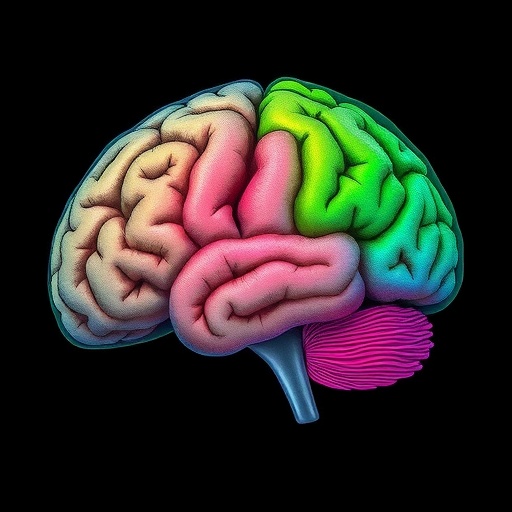
In a groundbreaking exploration into the intricate wiring of the primate brain, researchers have unveiled new insights into the relationship between the anatomical and functional connectivity of cortico-striatal circuits in macaques. The study, led by a team including Tang, Monko, and Liu and published in Translational Psychiatry in 2025, leverages advanced neuroimaging and electrophysiological techniques to dissect the nuanced interplay between structural pathways and their corresponding functional interactions within the macaque brain’s cortico-striatal network.
The cortico-striatal pathway, a pivotal neural circuit implicated in motor control, cognitive functions, and reward processing, has long been a subject of intense scientific scrutiny. However, a significant gap has persisted in understanding how anatomical connections correspond to dynamic functional communication within this system. This investigation pioneers a dual-modality approach, combining high-resolution diffusion tensor imaging (DTI) with in vivo functional magnetic resonance imaging (fMRI) and electrophysiological recordings to create a comprehensive map of connectivity.
Anatomical connectivity, defined by the physical axonal tracts linking the cerebral cortex with the striatum, provides the structural foundation on which neuronal signaling is built. Using sophisticated DTI tractography, researchers delineated the precise topography of white matter fibers traversing between key cortical areas such as the prefrontal cortex, motor cortex, and parallel striatal subregions. Their findings reveal a complex yet organized architecture, suggesting specialized cortico-striatal loops that may underlie distinct behavioral domains.
In parallel, functional connectivity—capturing the temporal correlation between neuronal activity in disparate brain regions—was assessed through resting-state and task-evoked fMRI paradigms. Intriguingly, the study reports instances where functional connectivity diverges considerably from anatomical pathways, highlighting the presence of indirect polysynaptic routes and modulatory influences shaping interregional communication. This observed dissociation challenges traditional dogma that presumes a direct one-to-one correspondence between anatomical and functional networks.
Electrophysiological data further enriched this comparative analysis by offering real-time temporal resolution of cortico-striatal interactions during behavioral tasks designed to probe reward anticipation and action selection. Neuronal ensemble recordings from striatal neurons exhibited patterns of synchronization with cortical inputs that were transient and context-dependent, underscoring the dynamism inherent in these circuits. These neural dynamics appeared to be modulated by neurotransmitter systems such as dopamine, emphasizing the neurochemical complexity intertwining with anatomical structure.
One of the study’s seminal contributions lies in the demonstration of hierarchical organization within cortico-striatal connectivity. The authors propose that direct structural links serve as conduits for fast, feedforward information flow, while functional connectivity encompasses both these direct interactions and additional feedback or lateral influences mediated by interneurons and neuromodulators. This layered architecture allows flexible adaptation to environmental demands, integrating sensory inputs, cognitive control, and reward signals.
Moreover, the comparative approach, examining both anatomically grounded and functionally derived connectivity metrics, offers profound implications for translational neuroscience. Understanding how these networks are organized in macaques—our closest neuroanatomical relatives—provides a critical scaffold for interpreting disruptions seen in human neuropsychiatric disorders such as schizophrenia, obsessive-compulsive disorder, and addiction, where cortico-striatal circuitry is often implicated. The insights from this work may inform novel therapeutic interventions seeking to restore or modulate network functionality.
Technologically, the study sets a benchmark by implementing cutting-edge integrated imaging protocols capable of simultaneously capturing structural and functional data with unprecedented spatial and temporal resolution. This methodological innovation represents a leap forward in the capacity to bridge microstructural connectivity maps with macroscale brain dynamics, paving the way for future explorations into the brain’s connectome.
Importantly, the research addresses the ongoing debate surrounding the predictive power of anatomical connectivity for functional outcomes. By quantifying the degree of correspondence and divergence between these two connectivity domains, it elucidates the limitations of relying solely on one modality for inferring brain function. The findings emphasize the necessity of multimodal approaches to achieve a more holistic understanding of neural circuit operation.
The delineation of discrete cortico-striatal pathways related to specific behavioral states also furthers our grasp of circuit specialization. For example, connectivity between the dorsolateral prefrontal cortex and the dorsomedial striatum was linked to cognitive control processes, while circuits involving the motor cortex and putamen appeared predominantly involved in the execution of learned motor sequences. This functional parcellation aligns with contemporary models of basal ganglia operation.
Furthermore, the dynamics of cortico-striatal signaling were shown to be state-dependent, modulated by internal factors such as arousal and external task demands. This contextual sensitivity underlines the brain’s ability to reconfigure network interactions rapidly, a feature that likely supports behavioral flexibility and adaptability. The study’s longitudinal design allowed for observation of these shifts over time, revealing plastic changes that correlate with learning and experience.
By integrating molecular data, the researchers also propose that variations in neurotransmitter receptor distribution within cortico-striatal nodes contribute to the heterogeneity in connectivity patterns observed. This neurochemical layering might explain differential susceptibility of various striatal regions to pathological conditions and informs strategies targeting receptor systems for therapeutic modulation.
The broader implications of this research resonate beyond basic neuroscience, touching upon fields such as artificial intelligence and computational modeling. The nuanced understanding of hierarchical and dynamic connectivity patterns inspires new algorithms mimicking the brain’s flexible information processing capabilities. This interdisciplinary cross-pollination stands to accelerate advancements in machine learning architectures grounded in biological principles.
In summary, this seminal study by Tang and colleagues marks a transformative step in mapping the complex relationship between structural and functional brain networks within an essential primate model. By unraveling the multi-dimensional connectivity landscape of the cortico-striatal circuitry, the research not only deepens fundamental neuroscientific knowledge but also lays crucial groundwork for translational applications aimed at combating brain disorders marked by network dysfunction.
As neuroscience continues to evolve towards integrative and multimodal investigative frameworks, the insights gleaned here reaffirm the brain’s remarkable sophistication in balancing anatomical scaffolding with the fluidity of functional dynamics. This paradigmatic shift heralds a new era in understanding how interconnected neural circuits orchestrate behavior and cognition, promising novel avenues for intervention and enhancement of brain health.
Subject of Research: Functional and anatomical cortico-striatal connectivity in the macaque brain
Article Title: Functional vs anatomical cortico-striatal connectivity in the macaque brain
Article References:
Tang, W., Monko, M.E., Liu, Z. et al. Functional vs anatomical cortico-striatal connectivity in the macaque brain. Transl Psychiatry (2025). https://doi.org/10.1038/s41398-025-03757-x
Image Credits: AI Generated


