

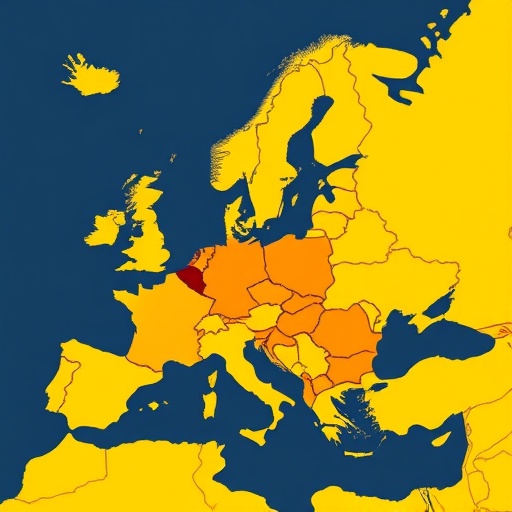
In the rapidly evolving landscape of digital technology, Europe finds itself at a crucial crossroads. The continent aspires to bolster its technological innovation and independence, particularly in critical areas such as artificial intelligence, cloud computing, and semiconductor manufacturing. Yet, recent insights published in a comprehensive policy brief by the Center for Advanced Security, Strategic and Integration Studies (CASSIS) at the University of Bonn, in partnership with the Vodafone Institute for Society and Communications, reveal an alarming disconnect between Europe’s digital ambitions and its actual dependencies. This in-depth examination exposes a hidden “digital trade deficit” and unveils the complexities that undermine Europe’s pursuit of digital sovereignty within the context of global economic power dynamics.
At first glance, Europe appears to maintain a favorable balance in digital trade, seemingly outpacing its rivals. However, deeper analytical scrutiny debunks this superficial impression, revealing critical distortions chiefly attributable to Ireland’s outsized role. The country has become a strategic locus for American technology giants, a hub that inflates Europe’s digital trade surplus by channeling substantial US tech profits through the Irish economy. This phenomenon, often referred to as the “Ireland effect,” masks the true scale of Europe’s reliance on foreign digital technology and infrastructure. Removing Ireland’s disproportionate influence uncovers a void: Europe faces a significant digital trade deficit that challenges the continent’s long-term digital autonomy and economic resilience.
The implications are profound. According to Assistant Professor Maximilian Mayer, coordinator at CASSIS, Europe’s concealed digital trade deficit cost the continent over $350 billion between 2022 and 2024 alone. To contextualize, this figure corresponds to nearly 40% of Europe’s planned defense expenditure through 2030. The financial ramifications underscore not only economic vulnerabilities but also geopolitical exposure. Europe’s overdependence on foreign digital assets, particularly from the US and China, intricately ties its technological sovereignty to external powers, limiting its capacity to make autonomous decisions in critical strategic sectors.
The disproportionate influence of US corporations concentrated in Ireland is just one aspect of a broader, concerning imbalance. Europe’s heavy reliance on China for digital goods represents another structural weakness. China’s role as a major supplier of hardware and components essential for Europe’s digital infrastructure creates a complex dependency that intertwines global supply chains with geopolitical risks. This dual dependency on both American and Chinese digital ecosystems places Europe in a precarious position, squeezed between two dominant global digital superpowers whose strategic interests may not always align with those of the European Union.
This analysis compels a reconsideration of current European digital policies and strategies. While the EU’s Digital Decade initiative aims ambitiously to foster homegrown technological innovation and competitiveness, the realities exposed by this research reveal an inconsistent trajectory. Maintaining the status quo risks undermining Europe’s objectives of digital sovereignty, as hidden dependencies limit meaningful progress. The policy brief advocates for a bold and coherent trade and industry policy framework, emphasizing the need to bolster the European manufacturing base, reduce import dependencies, and cultivate diversified technology partnerships that emphasize autonomy and resilience.
Central to understanding these vulnerabilities is the Digital Dependence Index (DDI), developed by CASSIS. The DDI provides a quantitative assessment of how susceptible individual countries are to foreign technological influence. This multifaceted index incorporates metrics such as reliance on imported electronic components, communication equipment, and critical software intellectual property including operating systems and patents. By capturing these dimensions, the DDI offers a nuanced picture of national digital resilience, highlighting areas where strategic investments and policy interventions are paramount to reducing technological dependencies.
Historically, the DDI has focused on the G20 economies, offering insights into the most significant global players. However, the index is undergoing a major upgrade to expand its geographical scope to over 50 nations, including numerous smaller countries from Europe, Africa, and Asia. This expansive approach serves to illuminate regional and global digital trends more holistically, identifying vulnerabilities that might otherwise remain obscured. Enhanced coverage will also facilitate targeted policymaking, allowing countries to benchmark themselves against global peers and develop tailored strategies to enhance digital sovereignty.
Beyond statistical enhancement, the DDI’s web platform is being redesigned to provide clearer insights and more accessible analysis tools. This upgrade aims to democratize data, equipping a broader audience—including policymakers, academics, and industry leaders—with robust, actionable information. The collaboration with the Vodafone Institute during this transition ensures that the index remains attuned to the latest technological and geopolitical developments, thereby reinforcing its relevance as a policymaking instrument in an era defined by digital transformation and shifting global power balances.
The policy brief emphasizes that achieving true digital sovereignty is not merely about economic metrics but also hinges on political will and strategic cooperation. Both the private and public sectors must align on common goals centered around autonomy and sovereignty if Europe is to navigate the inherently interconnected digital ecosystem. Moreover, fostering multifaceted partnerships that transcend national boundaries could catalyze innovation while mitigating risks associated with overdependence on specific technologies or regions. Europe’s future digital strength depends on its ability to convert these strategic imperatives into coherent policy actions.
Michael Jungwirth, Director of Public Policy & External Affairs at Vodafone Germany, underscores the urgency of consolidating trade and industrial policies that genuinely enhance Europe’s digital resilience. This requires a comprehensive reassessment of existing frameworks to address hidden dependencies and geopolitical vulnerabilities that current statistics obscure. A digitally sovereign Europe is not merely an economic imperative but a geopolitical necessity in a world where technological supremacy increasingly dictates influence and security.
Furthermore, the importance of securing supply chains for critical electronic components cannot be overstated. The COVID-19 pandemic exposed severe vulnerabilities in global supply chains, and Europe’s dependency on external suppliers for semiconductors and other hardware has continued to be a strategic weakness. Efforts to expand local manufacturing capacity, invest in research and development, and incentivize innovation in these sectors are vital to reducing reliance and ensuring the reliability of digital infrastructure.
In tandem with infrastructure improvements, addressing software and intellectual property dependencies is essential. Europe currently depends heavily on foreign software platforms, operating systems, and patented technologies that form the backbone of digital services and communication networks. Developing indigenous alternatives or negotiating equitable access to these technologies is crucial to achieving a balanced digital economy. This requires substantial investment in education, innovation ecosystems, and legal frameworks to foster homegrown technology and intellectual property rights.
Europe’s challenge is further complicated by the geopolitical landscape shaped by China and the US, two titans whose interests and policies increasingly influence global digital standards and regulations. Balancing relations with these powers while advancing an autonomous digital agenda demands diplomatic acuity and strategic foresight. Europe’s ability to maintain open but secure digital linkages, facilitate technological exchange, and set regulatory standards that reflect its values will be critical to its global standing.
Ultimately, the CASSIS and Vodafone Institute policy brief acts as a clarion call for Europe to recognize the depth and complexity of its digital dependencies. It beckons policymakers and stakeholders to move beyond optimistic statistics and confront the nuanced reality of digital trade imbalances and vulnerabilities. The path forward involves a combination of strategic industrial development, robust policy frameworks, and enduring political commitment to forge a digitally sovereign Europe capable of thriving amid the fierce international competition for technological dominance.
Subject of Research: Europe’s digital trade dependencies and strategic autonomy in digital technologies, focusing on hidden trade deficits and geopolitical vulnerabilities.
Article Title: Digital Trade Trap? A Wake-Up Call for the EU’s Digital Decade
News Publication Date: 30-Mar-2026
Image Credits: Photo: Gregor Hübl/University of Bonn
Keywords: Digital sovereignty, Europe, digital trade deficit, Ireland effect, US tech corporations, China dependence, Digital Dependence Index, CASSIS, Vodafone Institute, semiconductor supply chains, digital autonomy, geopolitical vulnerability


