


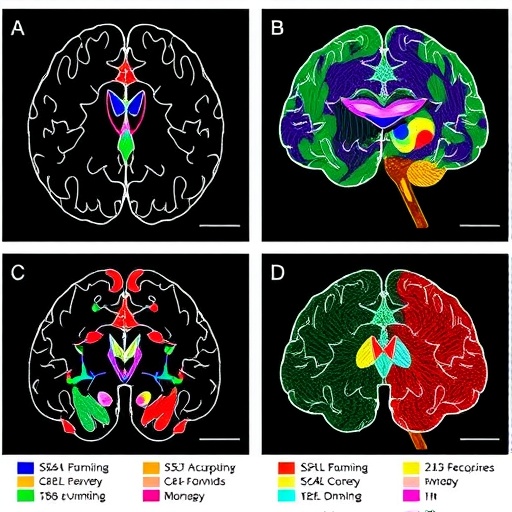
In the quest to decode the complex intricacies of synaptic connectivity within the brain, a groundbreaking investigation has emerged, shedding light on the synaptic interplay involving Martinotti cells (MCs) and their connections to diverse types of cortical neurons. This study delves into the synaptic patterns exhibited by different transcriptomic types of MCs, specifically focusing on the relationship between these inhibitory interneurons and excitatory cortical pyramidal cells. The insights gained could provide pivotal knowledge for understanding neuronal behavior in both healthy and diseased states.
Initially, researchers highlighted the distinct architectural features of inhibitory internol neurons. This lays the foundation for a comprehensive assessment of whether Martinotti cells demonstrate preferential synaptic connections with specific types of cortical cells. The research identifies two major categories of excitatory cortical neurons: intra-telencephalic (IT) neurons, which communicate within the cortex, and extra-telencephalic (ET) neurons, which extend their influence beyond the forebrain. The differentiation among these cell types is not merely academic; these cells harbor unique functional roles and are differentially implicated in various neurological disorders.
Employing cutting-edge automated methodologies, the researchers meticulously mapped the synaptic connectivity of individual MC types, recognizing that each exerted distinct inhibition patterns that correlate closely with their predicted metabolic types. In particular, the MET-8 subtype exhibits a striking preference for synapsing with layer 4 IT pyramidal cells, constituting over 65% of its total output synapses. Subsequent targets include L5 IT and L2/3 excitatory pyramidal cells, indicating a hierarchical connection preference that could inform potential therapeutic interventions in synaptic transmission anomalies.
Further analysis revealed that the MET-4 cell subtype is primarily oriented toward L2/3 pyramidal cells, forming close to 41% of its synapses there. In contrast, it also establishes connections with L5 IT pyramidal cells, albeit to a lesser degree. Interestingly, however, two individual MET-4 cells were found to preferentially synapse on L5 ET neurons, hinting at intrinsic variability or misclassification within the MET-type groups, an aspect that mandates further exploration.
The MET-6 cell subtype demonstrated its own unique connectivity pattern, forming a majority of synapses with L2/3 pyramidal cells but also reaching out to L5 ET and L6 pyramidal neurons. These findings are particularly enlightening given the typical anatomical positioning of the somas of these cells in layer 5, contradicting longstanding beliefs about the role of L5 MCs primarily inhibiting the apical dendrites of upper-layer excitatory neurons.
The spectrum of connectivity was further analyzed to assess how many neighboring cells are innervated, revealing that proximity plays an essential role in the functional connectivity of these interneurons. Most synaptic contributions from MARTINOTTI cells were concentrated within the immediate radial proximity of 100 µm. Nonetheless, the realities of these connections highlighted considerable variability, with connection rates rarely reaching near-complete saturation among target cell types.
Moreover, the study tackles the question of single vs. multi-synapse connections. An analysis of the synaptic architecture from individual Martinotti cells to their target cells unveiled a predominance of single-synapse connections, although this can vary significantly depending on the target cell type. Interestingly, MET-8 cells showed a preference for forming multi-synaptic connections with their favored target types, while MET-4 leaned more towards single-synapse formations.
In exploring the synaptic distances between connections, researchers found that most synapses occur within 150 µm of one another, indicating a nuanced spatial distribution within the dendritic arborizations of target cells. This evidence aligns with the hypothesis that L5 Martinotti cells may effectively couple inhibition across functional compartments within targeted pyramidal cells, facilitating a sophisticated network of excitatory and inhibitory interactions.
Furthermore, a breakdown of synaptic localization reflected that both MET-4 and MET-6 cell types target excitatory neurons at a dual level, addressing both apical and basal dendrites. Approximately half of MET-type synapses are focused on apical regions, indicating a complex interplay in the modulation of excitation and inhibition. However, the fraction of connections that span both compartments appears limited, suggesting that most connections target single dendritic types while facilitating nuanced synaptic subtleties.
The implications of this dynamic web of synaptic connections offer enlightening perspectives on how layered structures within the cortical architecture interact. Despite certain constellations of synapses resembling patterns reminiscent of random distributions, many connections exhibited a clear deviation from such expectations.
As the field of neuroscience thrives on elucidating the synaptic pathways that uphold brain activity, the correlations drawn from the synaptic patterns of MCs within various cortical layers mark a significant advancement in our understanding. This work lays the groundwork for future inquiries into how the brain organizes its intricate network of neurons and how disruptions in these connections might contribute to neurological diseases.
The findings contribute critical knowledge to the landscape of neurobiology, demonstrating that inherently diverse synaptic patterns correlate to distinct functional profiles of inhibitory cell types. With further investigations into the variability within these MC types, scientists hope to uncover the underlying mechanisms that dictate synaptic organizations and how they can be open to exploitation to remedy neuronal connectivity failures due to pathology.
In the dynamic arena of neuroscience, it becomes evident that utilizing advanced connectomic techniques fosters enlightenment into the interactional landscapes that characterize neuronal communication, laying the basis for constructive dialogue towards innovation in understanding brain diseases and advancing therapeutic strategies.
With ongoing studies aimed at elucidating the relationship between synaptic structure and function, researchers are keen to continue dissecting these complex signaling pathways. This pivotal work could pave the way for identifying more effective interventions to assist in treating the neurological disorders connected to synaptic malfunctions.
Gamlin, C.R., Schneider-Mizell, C.M., Mallory, M. et al. Connectomics of predicted Sst transcriptomic types in mouse visual cortex. Nature 640, 497–505 (2025). https://doi.org/10.1038/s41586-025-08805-6
Cite Scienmag News
Cassandra Pierce. (April 14, 2025). Mapping Connectomics of Sst Transcriptomic Types in Mouse Visual Cortex. Scienmag. https://scienmag.com/mapping-connectomics-of-sst-transcriptomic-types-in-mouse-visual-cortex/
Cassandra Pierce. "Mapping Connectomics of Sst Transcriptomic Types in Mouse Visual Cortex." Scienmag, 14 April 2025, https://scienmag.com/mapping-connectomics-of-sst-transcriptomic-types-in-mouse-visual-cortex/. Accessed 4 September 2026.
Cassandra Pierce. "Mapping Connectomics of Sst Transcriptomic Types in Mouse Visual Cortex." Scienmag. April 14, 2025. https://scienmag.com/mapping-connectomics-of-sst-transcriptomic-types-in-mouse-visual-cortex/


