


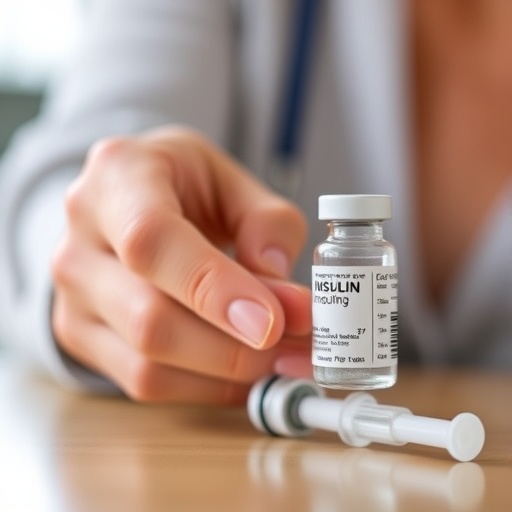
A new comprehensive analysis conducted by researchers at the Johns Hopkins Bloomberg School of Public Health provides compelling evidence that the implementation of out-of-pocket cost caps on insulin for Medicare Part D beneficiaries has effectively reduced the financial burden of insulin, marking a significant development in the ongoing efforts to improve diabetes care affordability. This study serves as a landmark evaluation following the legislative action embedded in the Inflation Reduction Act of 2022, which for the first time mandated a federal out-of-pocket ceiling of $35 for a 30-day insulin supply starting January 1, 2023.
The Inflation Reduction Act’s $35 cap represents a pivotal regulatory milestone aimed at curbing insulin costs for millions of Americans reliant on Medicare Part D. Prior to this federal mandate, out-of-pocket expenses for insulin varied widely, often placing substantial financial strain on patients managing type 1 and type 2 diabetes. By analyzing Medicare claims data over a five-year period from 2019 to 2023, the Johns Hopkins team was able to track and quantify changes attributable to these policy shifts, offering one of the most extensive bodies of evidence on insulin affordability and access in the Medicare population to date.
The dataset underpinning this investigation encompassed nearly 3.8 million Medicare Part D beneficiaries who had at least one insulin prescription claim within the study window. Among these individuals, the proportion paying $35 or less out of pocket for a standardized 30-day insulin supply rose from 48% in 2019 to an impressive 75% by 2023. This marked increase reflects a tangible improvement in affordability coinciding with the implementation of the mandated out-of-pocket cap, suggesting that federal policy interventions have meaningfully mitigated cost barriers previously encountered by insulin-dependent patients.
Crucially, the researchers documented a concomitant decline in the average out-of-pocket expenditure for a 30-day insulin supply, with mean costs dropping from $50.87 in 2019 to a significantly lower $21.98 in 2023. This decrease underscores the potency of the Inflation Reduction Act’s cost-containment strategies and indicates a broad, nationwide downward trend in insulin affordability for Medicare beneficiaries. Intriguingly, this downward cost trajectory was evident across all U.S. states, demonstrating the policy’s widespread impact irrespective of regional healthcare market dynamics.
Despite these encouraging findings, the research team uncovered that approximately one-quarter of Medicare beneficiaries continued to face out-of-pocket costs exceeding $35 for a 30-day supply in 2023. This anomaly prompted further scrutiny, revealing that some prescriptions were not prorated under the Inflation Reduction Act’s cost limit framework. Specifically, the Centers for Medicare & Medicaid Services (CMS) guidance stipulates that the $35 cap applies strictly to full multiples of a 30-day insulin supply, which excludes partial fills or prescriptions that deviate from standard supply durations. Hence, beneficiaries receiving quantities like 45-day supplies may be charged up to the equivalent cost of the next full 30-day multiple—effectively paying up to $70 for such fills.
These findings highlight nuanced complexities in insulin cost regulation and expose potential loopholes in current policy implementation. Variation among states in the average 30-day insulin costs, ranging from as low as $10.36 in Washington, D.C., to $31.09 in Minnesota during 2023, further suggests that differences in how pro-rating and plan-specific billing practices are administered contribute to ongoing disparities in out-of-pocket expenditures. Such state-level heterogeneity points to the need for refined regulatory guidance to harmonize pricing mechanisms and ensure comprehensive application of cost protections for all Medicare insulin users.
From a clinical and epidemiological perspective, the imperative to lower insulin costs stems from insulin’s fundamental role in managing diabetes, a chronic condition affecting millions. Insulin therapy is indispensable for patients with type 1 diabetes, whose pancreatic beta-cell dysfunction results in negligible endogenous insulin secretion. Moreover, many individuals with type 2 diabetes experience progressive insulin insufficiency or resistance, necessitating exogenous insulin to maintain glycemic control and prevent complications. The prohibitive cost of this life-sustaining hormone has historically posed a significant barrier to adherence and optimal disease management.
Policy interventions such as the CMS’s initial voluntary $35 cap introduced in 2021 set the stage for broader legislative action within the Inflation Reduction Act. The subsequent federally mandated cap represents a robust effort to institutionalize affordability protections, ensuring that all Medicare Part D beneficiaries have equitable access to insulin. The Johns Hopkins study’s longitudinal analysis, which excluded recipients of Medicare low-income subsidies to precisely isolate the policy’s effect on the broader Medicare population, underscores the tangible benefits achieved through systemic cost regulation.
The study’s lead author, Dr. Michael Fang, emphasizes that these results constitute compelling evidence confirming that recent Medicare policy initiatives have successfully enhanced insulin affordability and access. He notes the unprecedented attainment of historically low average out-of-pocket insulin costs for Medicare beneficiaries, an outcome that could significantly improve adherence and health outcomes for this vulnerable population. Nonetheless, Fang also acknowledges the remaining challenges posed by prorating practices and supply duration complexities, which the research team is actively investigating.
Future research endeavors are focused on dissecting how prescriptions that fall outside conventional 60- or 90-day supply intervals impact patient costs and whether policy adjustments could close identified loopholes. The goal is to refine the cost containment framework to ensure that all Medicare Part D patients, regardless of prescription duration or dosing peculiarities, benefit fully from the insulin out-of-pocket cost cap. These efforts will be instrumental in optimizing both economic access and clinical management for individuals with diabetes.
Published online in a peer-reviewed research letter in JAMA on March 19, the study represents a critical contribution to health policy literature addressing the economic barriers in diabetes care. It provides robust, real-world evidence that federally mandated price caps can successfully reshape healthcare affordability landscapes, fostering improved medication access and, ultimately, patient well-being. The multi-disciplinary collaboration among pharmacoeconomists, epidemiologists, and policy experts underscores the complex interplay between legislation, healthcare practice, and patient outcomes.
The implications for public health are profound, particularly considering that approximately 3.8 million Medicare beneficiaries rely on insulin treatment. By stabilizing and reducing the financial hurdles associated with insulin procurement, these policy reforms hold promise for mitigating health disparities, enhancing medication adherence, and preventing costly diabetes-related complications. As the population ages and the prevalence of diabetes continues to rise, such initiatives are vital for sustaining equitable healthcare delivery systems.
In summary, this study illuminates the tangible impact of federal legislation on insulin affordability for Medicare Part D beneficiaries, documenting a notable transition toward lower out-of-pocket expenditures and greater price predictability. While the majority of patients now experience costs well below previous thresholds, ongoing challenges related to prescription prorating and supply duration require further investigation and policy refinement. These findings affirm the critical role of targeted cost-containment policies in addressing the insulin affordability crisis and advancing public health goals.
News Publication Date: March 19, 2024.
Web References:
https://jamanetwork.com/journals/jama/fullarticle/2846650
References:
Fang M., Dun C., Wang D., Hicks C., Selvin E., Shin J.-I., Socal M. Trends in Insulin Out-of-Pocket Costs Among U.S. Medicare Beneficiaries. JAMA. 2024.
Cite Scienmag News
Ophelia Keating. (March 20, 2026). Mandated Caps Significantly Reduce Out-of-Pocket Insulin Costs for Medicare Patients. Scienmag. https://scienmag.com/mandated-caps-significantly-reduce-out-of-pocket-insulin-costs-for-medicare-patients/
Ophelia Keating. "Mandated Caps Significantly Reduce Out-of-Pocket Insulin Costs for Medicare Patients." Scienmag, 20 March 2026, https://scienmag.com/mandated-caps-significantly-reduce-out-of-pocket-insulin-costs-for-medicare-patients/. Accessed 6 September 2026.
Ophelia Keating. "Mandated Caps Significantly Reduce Out-of-Pocket Insulin Costs for Medicare Patients." Scienmag. March 20, 2026. https://scienmag.com/mandated-caps-significantly-reduce-out-of-pocket-insulin-costs-for-medicare-patients/


