


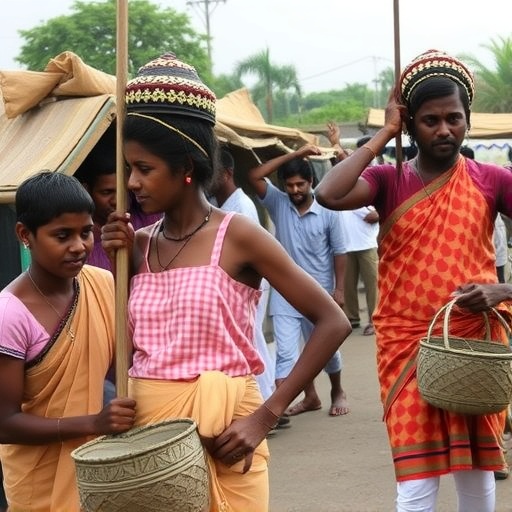
In the landscape of India, the Malakkuravar community in Tamil Nadu serves as a poignant example of how caste dynamics, market forces, and occupational stagnation intertwine. This indigenous group, primarily known for their traditional livelihoods rooted in agricultural practices, has faced increasing challenges in a rapidly modernizing economy. Their situation reflects broader socio-economic changes while highlighting the persistent effects of historical caste-based discrimination.
The Malakkuravars have historically engaged in various occupations related to agriculture and forest activities, which have been crucial for their economic sustainability. However, in recent years, the encroachment of commercial agricultural practices along with urban sprawl has severely limited their access to traditional resources. This phenomenon has left many members of the community either unemployed or forced to shift to less stable and less lucrative forms of employment, highlighting their struggle for economic identity in a globalized world.
As modernization intensifies, market demand for agricultural goods has evolved, shifting towards products that may not align with the traditional skills of the Malakkuravars. This shift raises crucial questions about how marginalized communities adapt to food systems increasingly dominated by corporate interests. With traditional practices overshadowed by the demands of modern agriculture, the community faces a double challenge: safeguarding their heritage while seeking new economic opportunities.
Educational access is another critical dimension influencing the community’s socio-economic trajectory. Historically, the Malakkuravars have faced hurdles in obtaining quality education due to socio-economic barriers rooted in their caste identity. Lack of educational resources and the stigmatization of their occupational identities continue to limit their ability to secure well-paying jobs. This issue underscores the importance of educational reform that includes culturally sensitive approaches tailored to marginalized communities.
Moreover, the role of government policies and social programs in addressing these inequalities cannot be underestimated. Despite some initiatives aimed at uplifting oppressed castes, the Malakkuravars still struggle to benefit fully from such measures. Bureaucratic barriers and a lack of tailored solutions often prevent the actualization of these policies, which further entrenches their socio-economic stagnation.
Additionally, the intersectionality of caste and gender further complicates the Malakkuravar experience. Women in this community are often relegated to the most precarious economic roles, making it even more challenging for families to break the cycle of poverty. Programs aimed specifically at empowering women could have a significant impact, offering training and resources that recognize their unique needs and contributions.
The cultural identity of the Malakkuravars is intricately linked to their land and traditional practices. As external economic pressures mount, the risk of cultural erosion becomes a stark reality. Efforts to preserve indigenous knowledge and practices must be prioritized, perhaps by integrating traditional methods into educational frameworks, allowing new generations to appreciate and continue their ancestral legacies while navigating contemporary challenges.
Sustainability is another compelling narrative that arises in the context of the Malakkuravar community. With their reliance on natural resources, there is a growing need to include them in discussions on sustainable agriculture and environmental stewardship. Their local knowledge can contribute significantly to efforts aimed at creating environmentally conscious farming practices that respect both the land and the cultural heritage of indigenous populations.
The concept of market access remains paramount in addressing the stagnation faced by the Malakkuravars. By facilitating access to broader markets, the community could leverage their unique agricultural products. Collaborations with NGOs and social enterprises could pave the way for fair-trade initiatives that empower local farmers and foster economic resilience.
The dual impact of globalization and local economic decline poses a formidable challenge. As the Indian economy continues to grow, it is imperative that local communities like the Malakkuravars are not left behind. Grassroots movements emphasizing economic self-sufficiency could inspire community-led initiatives that prioritize local resources and knowledge systems.
The transformation of the Malakkuravar community will require a confluence of efforts at multiple levels: local, state, and national. Policy-makers must engage with community leaders to understand the nuanced challenges they face while developing tailored solutions that reflect their aspirations. Participatory planning processes could enable the Malakkuravars to have a voice in shaping policies that directly impact their lives.
In examining the plight of the Malakkuravars, it becomes clear that their story is not unique but emblematic of many marginalized groups worldwide. The interplay between caste, market dynamics, and occupational opportunities reveals systemic issues that demand comprehensive, intersectional approaches to disrupt cycles of poverty and disenfranchisement.
The narrative of the Malakkuravar community serves as a call to action. Now is the time to recognize and reconstruct the socio-economic structures that perpetuate their stagnation. With inclusive policies and collaborative efforts, there is a possibility for resilience and revitalization, ensuring that the Malakkuravars can not only survive but thrive in an ever-changing socio-economic landscape.
As we reflect on the history, challenges, and potential pathways forward for the Malakkuraver community, it is essential to foster a discourse that respects their dignity and cultural significance. The solutions put forth should not only aim for economic upliftment but also celebrate the rich heritage of these communities, honoring their past while building a sustainable future.
In conclusion, the plight of the Malakkuravar community in Tamil Nadu serves as a microcosm of larger socio-economic dynamics at play across India and beyond. By addressing the nexus of caste, market forces, and occupational stagnation with empathy and sophistication, society as a whole can create a more equitable framework that uplifts all marginalized communities, paving the way for a fairer future.
Akhil, K.O., Jerome Samraj, C. Caste, market and occupational stagnation of Malakkuravars in Tamil Nadu. Discov glob soc 3, 176 (2025). https://doi.org/10.1007/s44282-025-00315-0
Cite Scienmag News
Courtney Benton. (December 26, 2025). Malakkuravars: Caste and Market Challenges in Tamil Nadu. Scienmag. https://scienmag.com/malakkuravars-caste-and-market-challenges-in-tamil-nadu/
Courtney Benton. "Malakkuravars: Caste and Market Challenges in Tamil Nadu." Scienmag, 26 December 2025, https://scienmag.com/malakkuravars-caste-and-market-challenges-in-tamil-nadu/. Accessed 6 September 2026.
Courtney Benton. "Malakkuravars: Caste and Market Challenges in Tamil Nadu." Scienmag. December 26, 2025. https://scienmag.com/malakkuravars-caste-and-market-challenges-in-tamil-nadu/


