

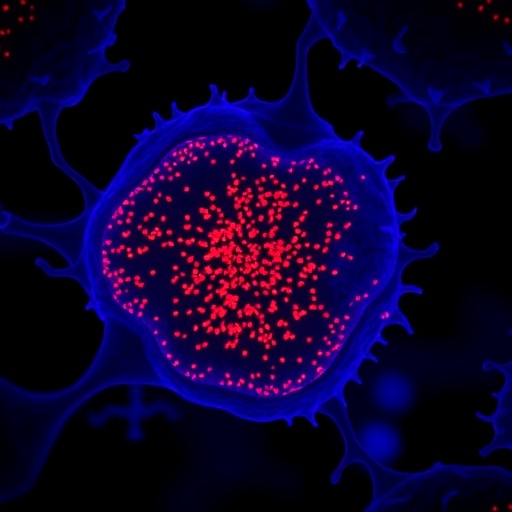
In a groundbreaking study published recently in Medical Oncology, researchers have uncovered critical insights into the complex interplay between macrophages and cancer cells that drives chemotherapy resistance in breast cancer. This revelation not only deepens our understanding of tumor biology but also opens new avenues for therapeutic interventions that could overcome one of the most formidable challenges in oncology: treatment resistance.
At the heart of this research lies the dynamic crosstalk between macrophages, a type of immune cell, and malignant breast cancer cells. Macrophages, traditionally known for their role in immune defense and tissue homeostasis, can, paradoxically, be co-opted by tumors to bolster their survival during chemotherapy. The study meticulously elucidates how these cells communicate, adapt, and ultimately promote drug resistance, highlighting the sophisticated cellular choreography underpinning treatment failure.
The researchers employed cutting-edge molecular and cellular biology techniques, combining in vitro co-culture systems with transcriptomic analyses and advanced imaging, to dissect the bidirectional communication pathways. Their data reveal that tumor-associated macrophages (TAMs) release a repertoire of cytokines and growth factors that activate survival pathways in cancer cells. Conversely, cancer cells secrete signals that reprogram macrophages into a pro-tumoral phenotype, reinforcing the vicious cycle of therapy evasion.
Central to this resistance mechanism is the secretion of interleukin-6 (IL-6) and transforming growth factor-beta (TGF-β) by macrophages, which engage STAT3 signaling and epithelial-to-mesenchymal transition (EMT) programs within cancer cells. Activation of STAT3 is particularly notorious for promoting cell survival and stem-like traits, which are directly linked to reduced sensitivity to chemotherapeutic agents. This bidirectional signaling establishes a microenvironment that favors tumor persistence despite aggressive chemotherapy.
The significance of EMT induction cannot be overstated, as it endows cancer cells with enhanced motility and invasiveness, traits correlative with metastatic potential and severe therapeutic resistance. The study’s authors emphasize that interrupting this crosstalk could recalibrate the tumor microenvironment, rendering cancer cells more susceptible to treatment and curbing metastatic dissemination.
Moreover, the research sheds light on the metabolic adaptations that accompany this macrophage-cancer cell interaction. Macrophages modulate the metabolic landscape to support tumor survival by increasing the availability of nutrients and modulating the acidic microenvironment, which further diminishes chemotherapy efficacy. These findings suggest that targeting metabolic pathways may represent a promising adjunct strategy alongside conventional chemotherapy.
The observation that macrophage-cancer cell communication fuels resistance challenges prior paradigms that regarded macrophages solely as cancer-fighting immune cells. Instead, it highlights a dualistic role shaped by the tumor milieu, underscoring the complexity of cellular interactions within cancer’s ecosystem. This duality necessitates innovative therapeutic approaches that can re-educate or inhibit macrophages selectively without compromising systemic immunity.
Importantly, the study underscores the heterogeneity of macrophage populations in tumors, whereby different subsets possess distinct functional properties, ranging from tumoricidal to tumor-supportive activities. Precision targeting of specific macrophage subsets or their signaling mediators could enhance therapeutic specificity and minimize off-target effects, a critical consideration for future drug development.
From the translational perspective, the identification of the key molecular players within this crosstalk creates prospects for biomarker development. Measuring levels of macrophage-derived cytokines or signaling intermediates could serve as predictive markers for chemotherapy response, enabling personalized treatment regimens that anticipate resistance and adjust strategies proactively.
The research also offers promising leads for combination therapies that co-target cancer cells and the supportive macrophage environment. For example, pharmacologic inhibitors of STAT3 or blocking antibodies against IL-6 or TGF-β pathways could sensitize tumors to chemotherapy and improve patient outcomes. Such approaches exemplify the growing trend of exploiting tumor microenvironment vulnerabilities alongside direct cancer cell targeting.
This study further highlights the importance of the tumor microenvironment, not as a passive backdrop but as an active participant in oncogenesis and therapy resistance. The macrophage-cancer cell axis exemplifies how tumors recruit and manipulate stromal components to survive insults, an insight that is reshaping cancer biology and therapeutic design.
The authors also contextualize their findings within the broader landscape of immunotherapy and targeted treatments, noting that macrophage modulation could synergize with checkpoint inhibitors or other immune-modulatory agents. Fine-tuning the immune landscape may overcome multifactorial resistance mechanisms afflicting breast cancer patients, particularly those with aggressive or refractory disease.
Future research directions suggested by this work include the exploration of macrophage plasticity and the signaling networks enabling phenotype switching. Understanding how macrophages transition from tumor-suppressive to tumor-promoting states could inform temporal targeting strategies, optimizing therapy windows and minimizing resistance development.
Ultimately, this comprehensive investigation into macrophage-cancer cell crosstalk heralds a paradigm shift in breast cancer treatment. It calls for a holistic approach that transcends cancer cells alone, incorporating the intricate cellular milieu that nurtures therapy resistance. By doing so, it sets the stage for revolutionary therapies capable of improving survival rates and quality of life for millions of breast cancer patients worldwide.
The research represents a triumph of interdisciplinary collaboration, integrating immunology, molecular oncology, and translational science. Its findings resonate far beyond breast cancer, hinting at similar resistance mechanisms in other malignancies where macrophages command a crucial role in shaping therapeutic outcomes.
As the fight against breast cancer continues, these insights empower clinicians and scientists alike with novel targets and concepts. By dismantling the protective cocoon formed by macrophages around cancer cells, we edge closer to rendering chemotherapy more effective and durable, transforming the prognosis for a disease that remains a leading cause of cancer mortality among women globally.
Subject of Research:
Breast cancer chemotherapy resistance mediated by macrophage-cancer cell interactions.
Article Title:
Macrophage-cancer cell crosstalk in breast cancer chemotherapy resistance.
Article References:
GUO, A., GU, LH., DING, YY. et al. Macrophage-cancer cell crosstalk in breast cancer chemotherapy resistance. Med Oncol 43, 63 (2026). https://doi.org/10.1007/s12032-025-03161-x
Image Credits: AI Generated
DOI: https://doi.org/10.1007/s12032-025-03161-x


