

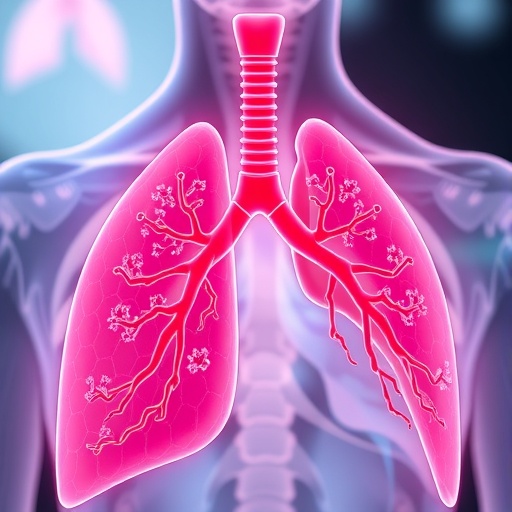
Lung Cancer and COVID-19: Unraveling Complex Causal Links Through Cutting-Edge Genetic Analysis
The global health landscape has been reshaped by the COVID-19 pandemic, intersecting dramatically with pre-existing health conditions. Among these, lung cancer—a disease already feared for its high mortality—has emerged as a potential determinant impacting COVID-19 susceptibility and outcomes. To date, observational studies have suggested lung cancer patients might face greater risks associated with COVID-19 infection, yet disentangling cause and effect has been fraught with confounding biological and environmental factors. A recent groundbreaking study published in BMC Cancer employs Mendelian randomization to clarify these intricate relationships using a robust genetic epidemiological approach.
Mendelian randomization (MR) leverages genetic variants as instrumental variables to simulate randomized control trials at the population level. This technique navigates around confounders and reverse causality, offering insights into whether lung cancer directly influences COVID-19 susceptibility and severity, or if observed associations merely reflect overlapping risk profiles. The study led by Bai and Li harnessed state-of-the-art genetic data encompassing over two million individuals from the COVID-19 Host Genetics Initiative, paired with extensive genomic information on lung cancer subtypes derived from more than 85,000 cases.
By performing a two-sample MR analysis, the researchers systematically interrogated the causal effects of overall lung cancer and its four genetically-distinct subtypes on a spectrum of COVID-19 phenotypes, including susceptibility to infection, rates of hospitalization, and severity of disease outcomes. This multifaceted approach allowed for nuanced insights beyond aggregates, considering the heterogeneity inherent in lung cancer pathology and its interaction with viral pathogenesis.
Surprisingly, the study’s principal finding reveals that lung cancer, in its entirety, does not exert a causative impact on an individual’s susceptibility to contracting COVID-19, nor on hospitalization rates or progression to severe disease. This challenges early assumptions drawn from epidemiological observations which conflated lung cancer status with COVID-19 risk, suggesting previous results may have been confounded by factors such as smoking history, environmental exposures, or healthcare access variability.
However, the investigation unveiled compelling evidence when focusing on lung cancer patients with a history of smoking—termed ‘ever smokers.’ Within this subgroup, there was a nominally significant association between lung cancer and increased rates of COVID-19 hospitalization, alongside heightened disease severity. The p-values, though modest, alongside corresponding false discovery rates, indicate a partially robust signal warranting further exploration. This implies that the intersection of carcinogenic exposure via smoking may synergize with lung cancer pathology to exacerbate COVID-19 outcomes, potentially through mechanisms involving compromised pulmonary function or inflammatory milieu modulation.
Adding another layer of complexity, the study delineated the role of specific lung cancer subtypes, with small cell lung carcinoma (SCLC) standing out distinctly. SCLC demonstrated a statistically significant association with worsened COVID-19 severity, strengthening the hypothesis that tumor biology and histopathological features independently influence viral disease trajectories. Given SCLC’s aggressive nature and distinct molecular landscape featuring neuroendocrine characteristics, these findings may pivot the clinical focus toward tailored management strategies for this subgroup during viral pandemics.
The utilization of comprehensive genome-wide association data in this research marks a significant advancement in resolving contentious issues surrounding COVID-19 risk stratification. By isolating genetic predispositions to lung cancer and correlating these with COVID-19 outcomes in a genetically informed framework, the researchers provide a clearer causal scaffold. These results could have profound implications for clinical risk assessments, guiding both oncological and infectious disease management in vulnerable populations.
Moreover, the findings reinforce the need for continued vigilance concerning smoking cessation programs, not only due to their well-established oncogenic risks but also because of their potential amplification of adverse COVID-19 courses in lung cancer patients. Public health interventions targeting smoking behaviors could thus confer a compounded benefit by mitigating dual disease burdens.
The researchers acknowledge certain limitations inherent to MR methodology, including assumptions about the genetic instruments’ specificity and the potential influence of horizontal pleiotropy. While the large sample sizes mitigate statistical noise, future research integrating multi-omic data layers and longitudinal clinical outcomes will be valuable to expand these insights and validate findings in diverse populations.
In summary, this pioneering genetic analysis elucidates that while lung cancer as a whole might not predispose individuals to worse COVID-19 outcomes, smoking history and specific subtypes notably small cell lung carcinoma, do confer increased risk severity. These nuanced findings pave the way for more personalized healthcare approaches, emphasizing genetic context and lifestyle factors as determinants of infectious disease vulnerability amid oncological challenges.
This study exemplifies the power of integrative genetic epidemiology in addressing pressing clinical questions in the era of overlapping pandemics and chronic diseases. As the global community continues to grapple with COVID-19 and its multifaceted interactions with cancer, such analytical frameworks will be central to unveiling the biological narratives underlying comorbidity and guiding effective interventions.
Bai and Li’s work serves as a beacon enhancing our understanding not only of lung cancer’s impact on infectious diseases but also inspiring future research at the intersection of genetics, oncology, and infectious disease epidemiology. These advancements hold promise for refining risk models, optimizing resource allocation, and ultimately improving patient outcomes in complex disease landscapes.
Subject of Research: Investigating the causal relationships between lung cancer, including its subtypes, and COVID-19 susceptibility and severity using Mendelian randomization analysis.
Article Title: Lung cancer and COVID-19 susceptibility and severity: a Mendelian randomization analysis
Article References:
Bai, M., Li, J. Lung cancer and COVID-19 susceptibility and severity: a Mendelian randomization analysis. BMC Cancer 25, 1771 (2025). https://doi.org/10.1186/s12885-025-15239-w
Image Credits: Scienmag.com
DOI: 10.1186/s12885-025-15239-w (Published 15 November 2025)


