

Monday, October 26, 2026
Science
No Result
View All Result
  • Login
  • HOME
  • SCIENCE NEWS
  • CONTACT US
  • HOME
  • SCIENCE NEWS
  • CONTACT US
No Result
View All Result
Scienmag
No Result
View All Result
Home Science News Medicine

Lower socioeconomic position linked to dependency across six ageing cohorts

October 26, 2026
in Medicine
Beatrice Stafford
By Beatrice Stafford Scienmag Editorial Profile - Chronobiology
Reading Time: 3 mins read
0
Lower socioeconomic position linked to dependency across six ageing cohorts

Lower socioeconomic position linked to dependency across six ageing cohorts

65
SHARES
587
VIEWS
Share on FacebookShare on Twitter
ADVERTISEMENT

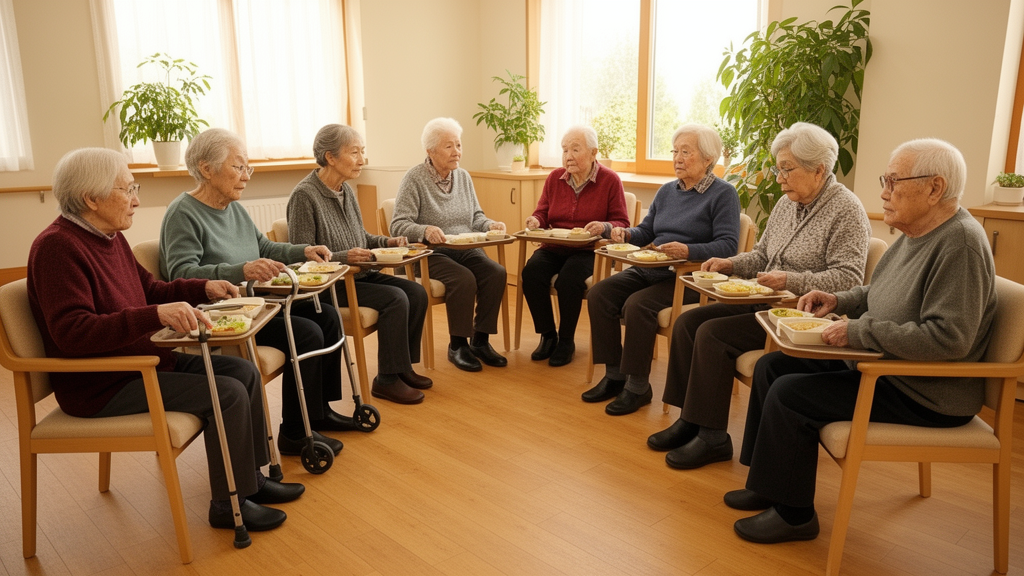
Lower socioeconomic position was associated with a higher incidence of functional limitations and less favourable functional trajectories in six longitudinal ageing cohorts representing 22 countries. The observational analysis included 104,834 adults aged 50 or older and 454,747 person-wave observations, finding broadly consistent associations between economic disadvantage and worsening functional status while also identifying differences among cohorts and dependency states. Because the study was observational, its results do not establish that education or household wealth caused the reported differences.

The researchers harmonized data from the China Health and Retirement Longitudinal Study, the English Longitudinal Study of Ageing, the US Health and Retirement Study, the Korean Longitudinal Study of Ageing, the Mexican Health and Aging Study, and the Survey of Health, Ageing and Retirement in Europe. Socioeconomic position was represented by a four-level index combining baseline educational attainment and household wealth. Cohort-specific Cox proportional hazards models examined the incidence of limitations in activities of daily living, or ADLs, and instrumental activities of daily living, or IADLs. Continuous-time multistate Markov models estimated transitions among no, mild, moderate and severe dependency and, where mortality data were sufficiently reliable, death.

Compared with people in the highest socioeconomic group, those in the lowest group had a higher estimated hazard of incident ADL limitation in all six cohorts. For incident IADL limitation, positive associations were observed in most cohorts, while the low-versus-high estimate for the Mexican cohort was not statistically significant, with a hazard ratio of 1.31 and a 95% confidence interval of 0.84–2.06. Inequality measures across the full socioeconomic distribution pointed in the same direction. Distribution-standardised relative-index-of-inequality estimates ranged from 1.44 to 2.49 for ADL limitation and from 1.34 to 2.78 for IADL limitation across the cohort–outcome combinations.

The multistate models estimated how participants moved between different levels of functional dependency. Low socioeconomic position was associated with higher estimated transition intensities from no dependency to mild dependency and from mild to moderate dependency across all six cohorts, although the magnitude and precision of these estimates varied. Five-year model estimates showed a lower probability of remaining without dependency for the low socioeconomic group than for the high group: 0.641 versus 0.873 in CHARLS, 0.658 versus 0.841 in HRS, and 0.750 versus 0.890 in ELSA. These figures are cohort-specific model estimates rather than observed rates for every participant, and their differences show that the pattern was not uniform across settings.

Alternative specifications for socioeconomic position produced similar graded patterns in most cohorts. In a sensitivity analysis restricted to strict progression between dependency states, 46 of 54 deterioration-transition comparisons remained in the same direction as in the primary models. Some mortality estimates were imprecise, and confidence intervals were unavailable for the Korean cohort, limiting how confidently those findings could be interpreted. Taken together, the results link lower socioeconomic position with more frequent functional limitations and less favourable subsequent dependency patterns, but the magnitude and pattern of deterioration, recovery and mortality associations varied across cohorts and dependency states. The study therefore identifies a recurring association rather than a single universal trajectory of functional decline.

Subject of Research: Socioeconomic inequalities in functional dependency across six international ageing cohorts

Article Title: Socioeconomic position and functional dependency trajectories across six longitudinal ageing cohorts

Article References: Zhao, X., Gao, J., & Zou, W. (2026). Socioeconomic position and functional dependency trajectories across six longitudinal ageing cohorts. BMC Public Health. https://doi.org/10.1186/s12889-026-29665-3

Image Credits: AI Generated

DOI: 10.1186/s12889-026-29665-3

Keywords: socioeconomic inequality, functional dependency, healthy ageing, activities of daily living, instrumental activities of daily living, educational attainment, household wealth, longitudinal cohorts, Markov models, later-life health, Socioeconomic, position

Cite Scienmag News

Beatrice Stafford. (October 26, 2026). Lower socioeconomic position linked to dependency across six ageing cohorts. Scienmag. https://scienmag.com/lower-socioeconomic-position-linked-to-dependency-across-six-ageing-cohorts/


Beatrice Stafford. "Lower socioeconomic position linked to dependency across six ageing cohorts." Scienmag, 26 October 2026, https://scienmag.com/lower-socioeconomic-position-linked-to-dependency-across-six-ageing-cohorts/. Accessed 26 October 2026.

Beatrice Stafford. "Lower socioeconomic position linked to dependency across six ageing cohorts." Scienmag. October 26, 2026. https://scienmag.com/lower-socioeconomic-position-linked-to-dependency-across-six-ageing-cohorts/

Tags: activities of daily livingactivities of daily living (ADLs) and instrumental activities (IADLs)cross-country ageing health comparisonsdependency trajectories in elderly populationseducation level and functional declineeducational attainmenteffects of economic disadvantage on dependency progressionfunctional dependencyfunctional limitations in older adultsglobal ageing health disparitieshealthy ageinghousehold wealthimpact of household wealth on healthinstrumental activities of daily livinglater-life healthlongitudinal ageing cohort studieslongitudinal cohortsMarkov modelsmultistate Markov models in ageing researchpositionsocioeconomic disparities in agingsocioeconomic inequalitysocioeconomic status and health outcomessocioeconomic)
Share26Tweet16
Previous Post

Bdelloid rotifers repair chromosomes across generations

Next Post

Prospective Shanghai cohort finds 6.8% latent TB prevalence in people with HIV

Related Posts

Observational cohort links baloxavir to faster influenza A fever resolution in children
Medicine

Observational cohort links baloxavir to faster influenza A fever resolution in children

October 26, 2026
CDC selects UCSF-led center to improve dementia care nationwide
Medicine

CDC selects UCSF-led center to improve dementia care nationwide

October 26, 2026
Behavioural risk profiles associated with non-communicable diseases in Tlokweng, South-East District, Botswana
Medicine

Behavioural risk profiles associated with non-communicable diseases in Tlokweng, South-East District, Botswana

October 26, 2026
Antimicrobial locks show early control of cancer catheter infections
Medicine

Antimicrobial locks show early control of cancer catheter infections

October 26, 2026
Prenatal iron deficiency alters mouse brains despite later iron supplementation
Medicine

Prenatal iron deficiency alters mouse brains despite later iron supplementation

October 26, 2026
Prospective Shanghai cohort finds 6.8% latent TB prevalence in people with HIV
Medicine

Prospective Shanghai cohort finds 6.8% latent TB prevalence in people with HIV

October 26, 2026
Next Post
Prospective Shanghai cohort finds 6.8% latent TB prevalence in people with HIV

Prospective Shanghai cohort finds 6.8% latent TB prevalence in people with HIV

  • Mothers who receive childcare support from maternal grandparents show more optimized

    Mothers who receive childcare support from maternal grandparents show more parental warmth, finds NTU Singapore study

    27656 shares
    Share 11059 Tweet 6912
  • University of Seville Breaks 120-Year-Old Mystery, Revises a Key Einstein Concept

    1061 shares
    Share 424 Tweet 265
  • Bee body mass, pathogens and local climate influence heat tolerance

    682 shares
    Share 273 Tweet 171
  • Researchers record first-ever images and data of a shark experiencing a boat strike

    546 shares
    Share 218 Tweet 137
  • Groundbreaking Clinical Trial Reveals Lubiprostone Enhances Kidney Function

    531 shares
    Share 212 Tweet 133
Science

Embark on a thrilling journey of discovery with Scienmag.com—your ultimate source for cutting-edge breakthroughs. Immerse yourself in a world where curiosity knows no limits and tomorrow’s possibilities become today’s reality!

RECENT NEWS

  • Selected private Kruger lodges show varied adoption of sustainability standards
  • Treated oilfield wastewater supports Eucalyptus rooting in nursery trial
  • Socioeconomic gaps concentrate before U.S. medical school acceptance
  • Review finds stronger causal evidence for senescence than mutations in aging

Categories

  • Agriculture
  • Anthropology
  • Archaeology
  • Athmospheric
  • Biology
  • Biotechnology
  • Blog
  • Bussines
  • Cancer
  • Chemistry
  • Climate
  • Earth Science
  • Editorial Policy
  • Marine
  • Mathematics
  • Medicine
  • Pediatry
  • Policy
  • Psychology & Psychiatry
  • Science Education
  • Science News
  • Social Science
  • Space
  • Technology and Engineering

Subscribe to Blog via Email

Enter your email address to subscribe to this blog and receive notifications of new posts by email.

Join 5,151 other subscribers

© 2025 Scienmag - Science Magazine

Welcome Back!

Login to your account below

Forgotten Password?

Retrieve your password

Please enter your username or email address to reset your password.

Log In
No Result
View All Result
  • HOME
  • SCIENCE NEWS
  • CONTACT US

© 2025 Scienmag - Science Magazine

Discover more from Science

Subscribe now to keep reading and get access to the full archive.

Continue reading