


Demodex blepharitis, a common and often underdiagnosed inflammatory eyelid disease caused by infestation with Demodex mites, has long presented a therapeutic challenge for eye care practitioners. A new systematic literature review and meta-analysis published in Frontiers in Ophthalmology has now provided the most rigorous comparative evaluation to date of the only FDA-approved treatment, lotilaner ophthalmic solution 0.25%, against the widely used off-label alternative, tea tree oil products. The findings are striking: lotilaner 0.25% demonstrated consistent, statistically significant benefits across all assessed clinical outcomes, while tea tree oil failed to show a statistically significant effect on mite density or mite eradication compared with sham controls.
The research team, led by Ian Benjamin Gaddie of Gaddie Eye Centers in Louisville, Kentucky, and including investigators from the United Kingdom, the United States, Germany, and Tarsus Pharmaceuticals, conducted the systematic review in accordance with PRISMA guidance. They searched MEDLINE, EMBASE, Cochrane CENTRAL, ClinicalTrials.gov, and the International Clinical Trials Registry Platform from database inception through July 10, 2025, to identify randomized controlled trials evaluating lotilaner 0.25% or tea tree oil interventions, which collectively included tea tree oil and its active component terpinen-4-ol.
From 1,197 records initially identified, the researchers screened 845 titles and abstracts after de-duplication, retained 173 for full-text review, and ultimately included nine unique randomized controlled trials comprising a total of 1,513 patients. Four trials evaluated lotilaner 0.25% against vehicle, while five trials evaluated tea tree oil products against sham comparators. The lotilaner trials were conducted in the United States and Mexico, while the tea tree oil trials spanned Türkiye, the United States, and South Korea, reflecting the global interest in both therapeutic approaches.
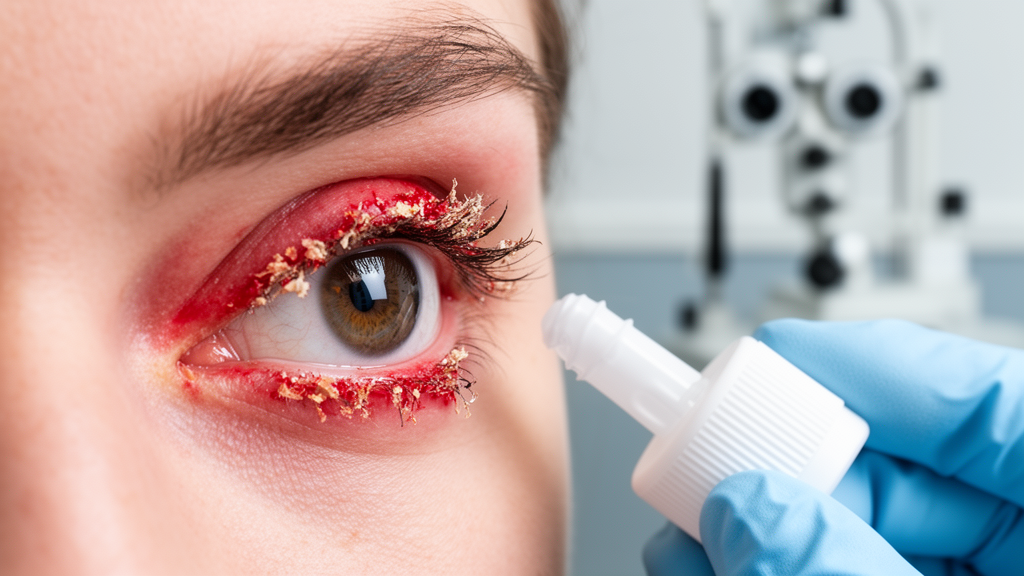
Demodex blepharitis is caused by two ectoparasites, Demodex folliculorum and Demodex brevis, which inhabit eyelash follicles and sebaceous glands. These mites contribute to chronic and progressive eyelid disease, inducing misdirected lashes, lash loss, erythema, meibomian gland disease, worsening dry eye, blepharokeratitis, and corneal scarring. Patients typically present with eyelid itching, fluctuating vision, tearing, redness, and irritation. The presence of collarettes, cylindrical sleeves of debris at the base of the lashes visible on slit-lamp examination, is a pathognomonic sign of the disease, and studies have consistently shown that eyes exhibiting collarettes are positive for Demodex mites.
The prevalence of Demodex blepharitis is substantial and increasingly recognized as a contributor to chronic eyelid irritation and patient burden. In the United States, 58% of patients presenting to eye clinics for various reasons exhibit symptoms of the disease, while a recent European study reported a similar prevalence of 54%. Patients frequently report substantial negative impacts on daily functioning, including limitations in reading, driving, household tasks, workplace productivity, and tolerance of glasses or contact lenses.
In 2023, lotilaner ophthalmic solution 0.25% became the first and only FDA-approved therapy for Demodex blepharitis. The drug is a member of the isoxazoline class, which acts on the nervous system of arthropods. Evidence from replicate randomized, double-blind controlled trials demonstrated significantly higher rates of clinical improvement across multiple endpoints, including collarette reduction, mite eradication, and erythema cure. Off-label therapeutic approaches, however, remain heterogeneous and largely empirical, with conventional management typically focusing on eyelid hygiene and mechanical removal of collarettes and mite debris.
Tea tree oil and its derivatives, including terpinen-4-ol, have been employed at varying concentrations for their purported acaricidal activity, but the evidence supporting their efficacy has been limited and inconsistent. Some forms of tea tree oil have even been shown to be harmful to meibomian gland epithelial cells under continuous exposure in vitro, raising concerns about the safety profile of these widely used products. Additional management strategies include in-office mechanical exfoliation, device-based procedures, and adjunctive treatments such as microblepharoexfoliation and intense pulsed light, though clinical evidence for these approaches remains sparse.
The meta-analysis revealed that patients treated with lotilaner 0.25% had significantly lower mite density than those receiving vehicle at both timepoints assessed, with a mean difference of -1.29 mites per lash at 2-4 weeks and -1.29 mites per lash at 6-8 weeks, both highly significant. Patients treated with lotilaner 0.25% were also significantly more likely to achieve mite eradication, with odds ratios of 4.70 at 2-4 weeks and 9.60 at 6-8 weeks, indicating that the odds of complete mite elimination increased substantially over time. Collarette reduction to 0-2 collarettes was similarly improved, with odds ratios of 8.39 at 2-4 weeks and 9.67 at 6-8 weeks, and erythema cure was achieved at nearly fourfold higher odds with lotilaner 0.25% at 6-8 weeks.
In contrast, tea tree oil did not demonstrate a statistically significant difference from sham for mite density or mite eradication at either timepoint. At 2-4 weeks, the mean difference in mite density was -0.02 mites per lash, which reduced to no difference at 6-8 weeks. Similarly, the odds of achieving mite eradication did not differ significantly between tea tree oil and sham at either timepoint. The researchers noted that the tea tree oil trials were constrained by considerable variability in formulations and concentrations, adjunctive interventions, and substantial heterogeneity in comparators, as well as small sample sizes and heterogeneous study populations.
The quality assessment revealed that three of the four lotilaner trials were judged to be at low risk of bias, while the overall study quality of the tea tree oil trials was lower, with two rated as good quality, one with some risk of bias, and two assessed as having high risk of bias. The researchers concluded that lotilaner 0.25% represents an effective pharmacological treatment for Demodex blepharitis, supported by consistent and statistically significant improvements across all assessed outcomes, while the evidence base for tea tree oil remains limited and considerably heterogeneous. Given the substantial burden of Demodex blepharitis and its high prevalence in clinical practice, the availability of an FDA-approved, consistently effective therapy represents a significant step forward in patient care.
Subject of Research: Systematic literature review and meta-analysis of lotilaner 0.25% and tea tree oil for Demodex blepharitis
Article Title: Systematic literature review and meta-analysis of lotilaner 0.25% and tea tree oil for Demodex blepharitis
Article References: Gaddie, I. B., Nanavaty, M. A., Page, T., White, D., McGee, S., Theriot, P. E., Fluetsch Brennan, N., Bloudek, L., Mun, J., Yeu, E., & Burkhard Dick, H. (2026). Systematic literature review and meta-analysis of lotilaner 0.25% and tea tree oil for Demodex blepharitis. Frontiers in Ophthalmology, 6, Article 1978403. https://doi.org/10.3389/fopht.2026.1978403
Image Credits: AI Generated
DOI: 10.3389/fopht.2026.1978403
Keywords: Systematic, literature, review, meta-analysis, lotilaner, tree, Demodex, blepharitis, scientific research
Cite Scienmag News
Eliza Ramsey. (October 17, 2026). Lotilaner 0.25% Outperforms Tea Tree Oil in Meta-Analysis of Demodex Blepharitis Treatment. Scienmag. https://scienmag.com/lotilaner-0-25-outperforms-tea-tree-oil-in-meta-analysis-of-demodex-blepharitis-treatment/
Eliza Ramsey. "Lotilaner 0.25% Outperforms Tea Tree Oil in Meta-Analysis of Demodex Blepharitis Treatment." Scienmag, 17 October 2026, https://scienmag.com/lotilaner-0-25-outperforms-tea-tree-oil-in-meta-analysis-of-demodex-blepharitis-treatment/. Accessed 17 October 2026.
Eliza Ramsey. "Lotilaner 0.25% Outperforms Tea Tree Oil in Meta-Analysis of Demodex Blepharitis Treatment." Scienmag. October 17, 2026. https://scienmag.com/lotilaner-0-25-outperforms-tea-tree-oil-in-meta-analysis-of-demodex-blepharitis-treatment/


