

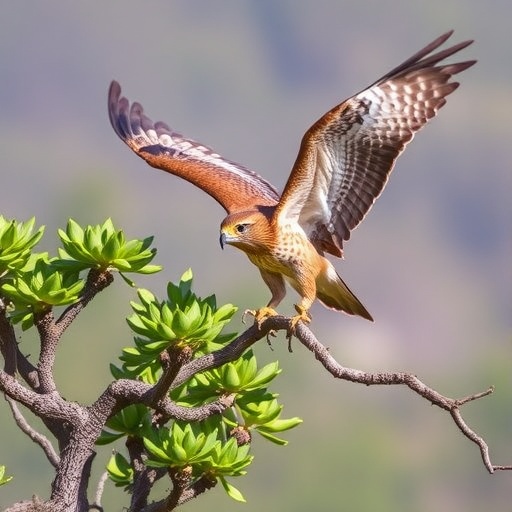
A recent comprehensive study has uncovered alarming declines among several species of birds of prey in South Africa, shedding light on a troubling conservation crisis within the region’s raptor populations. By examining the population trends of 18 raptor species and 8 large terrestrial birds across central South Africa from 2009 through 2025, researchers have documented significant population decreases in half of the species surveyed. These declines, surpassing 50% in many cases, highlight a critical and widespread threat facing these iconic and ecologically important birds.
The findings, published in the journal Biological Conservation, represent one of the most thorough attempts to quantify trends in raptor populations using data gathered primarily through long-term road count surveys. According to Dr. Santiago Zuluaga, the lead author and researcher affiliated with the University of Cape Town and the National Museum of Natural Sciences in Spain, the results are profoundly concerning. He emphasized that some of the steepest declines involve species already recognized as conservation priorities, underscoring the urgent need to reconsider and reinforce protective measures.
Among the most striking revelations is the decline of the secretarybird (Sagittarius serpentarius), an endangered species well-known for its distinctive appearance and hunting behavior. The study documents a staggering 68% drop in secretarybird populations over the past 16 years alone. Dr. Megan Murgatroyd, International Programs Director at HawkWatch International and study co-author, explained that the species’ dependence on vast terrestrial landscapes for survival makes such dramatic decreases indicative of pervasive ecological pressures affecting large swathes of habitat.
The study further highlights declines in migratory raptors such as the Lesser Kestrel (Falco naumanni), Amur Falcon (Falco amurensis), and Steppe Buzzard (Buteo buteo vulpinus). These species rely on multiple geographic regions throughout their annual cycles, exposing them to compounded threats from habitat loss, climate change, and human-induced disturbances across continents. The implication is clear: conservation efforts must be coordinated not only locally but also across international migration corridors.
Equally troubling are population downturns documented in species currently listed as Least Concern, including the Spotted Eagle-Owl (Bubo africanus) and Jackal Buzzard (Buteo rufofuscus). These findings suggest that formal conservation status may lag behind actual population changes, highlighting the need for more dynamic and responsive monitoring protocols that can detect early warning signs before species reach critically endangered levels.
This groundbreaking study relied heavily on data collected over more than 15 years of road counts—systematic surveys conducted repeatedly across central South Africa’s diverse landscapes. Field biologist Ronelle Visagie of the Endangered Wildlife Trust, responsible for much of the field data collection, reflected on the painstaking nature of such work. The sustained effort involved extensive time in the field under challenging conditions but has ultimately produced invaluable information capable of informing targeted conservation strategies.
To broaden the context of their findings, researchers compared the road count data with population trends derived from the Southern African Bird Atlas Project (SABAP2), a vital citizen science initiative. While atlas data remain critical for mapping distribution patterns, the study demonstrated that different methodologies can yield conflicting signals regarding population dynamics. This discrepancy emphasizes the importance of integrating multiple monitoring approaches—combining professional surveys with citizen science—to achieve the most accurate understanding of species status, particularly for far-ranging raptors.
The significance of raptors as apex predators and scavengers cannot be overstated. These birds serve as vital indicators of ecosystem health, controlling populations of other wildlife and contributing to nutrient cycling. However, the study’s findings confirm that raptors in Africa are experiencing some of the fastest declines among bird groups, driven by habitat alteration due to land-use change, increasing infrastructure development, illegal killing, and the overarching threat of climate change.
As human populations in Africa are projected to rise sharply in the coming decades, pressures on habitats and wildlife are anticipated to intensify. Dr. Zuluaga stresses the indispensable value of robust, long-term monitoring programs capable of detecting declines early, allowing for timely interventions before population collapses become irreversible. He advocates for scaled-up investment and collaboration across governments, research institutions, and conservation organizations to safeguard South Africa’s raptor species.
The study’s implications extend beyond regional borders, serving as a stark reminder of the fragility of predator populations globally in the face of accelerating anthropogenic change. It calls for a reevaluation of conservation priorities to incorporate new data-driven insights and to strengthen protective actions for species whose ecological roles are pivotal in maintaining biodiversity and ecosystem balance.
In conclusion, this research underscores the urgent need to refine and expand conservation efforts targeting raptors across southern Africa. Through sustained monitoring, integrative data analysis, and cooperative conservation planning, there remains hope to halt and reverse the severe declines identified. The survival of these majestic birds depends on immediate, evidence-based responses to the multifaceted threats they face.
Subject of Research: Animals
Article Title: Road counts expose widespread declines in South African raptors underestimated by atlas data
News Publication Date: 20-Mar-2026
Web References:
10.1016/j.biocon.2026.111764
Image Credits: Photo by Megan Murgatroyd
Keywords: Raptors, South Africa, Bird Population Decline, Secretarybird, Conservation, Migration, Long-term Monitoring, Habitat Loss, Citizen Science, Biodiversity


