

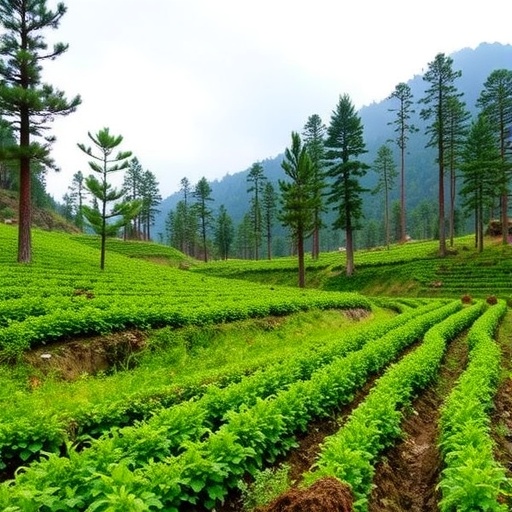
The impact of agroforestry on soil health is increasingly becoming an area of interest, especially in regions like the Central Himalayan foothills. A recent study conducted by a team of researchers, including Pant et al., sheds light on the consequences of 20-year-old agroforestry systems on soil organic carbon fractions and biological activity. This research not only addresses ecological dynamics but also has implications for sustainable agricultural practices in mountainous terrains where soil erosion is a predominant challenge.
Agroforestry, defined as the integration of trees and shrubs into agricultural lands, has been recognized for its potential to enhance biodiversity, improve soil quality, and increase carbon sequestration. The study outlined the intricate relationships between the plant root systems and the soil microbiome, indicating a symbiotic interaction that bolsters soil fertility and resilience. Over the years, various ecosystems have been documented to flourish under agroforestry systems, suggesting a marking trend where traditional farming practices meet innovative environmental stewardship.
The Central Himalayan foothills provide a unique backdrop for this investigation. The biodiversity and climatic variations in this region contribute to unique soil compositions, which are vital for understanding how agroforestry practices can be optimized. The researchers aimed to explore how established agroforestry systems over two decades could modify soil characteristics, particularly focusing on organic carbon fractions, a key indicator of soil health. These fractions include labile, stable, and recalcitrant organic matter, which play critical roles in nutrient cycling, water retention, and overall soil structure.
One of the standout findings of the research was the notable increase in total soil organic carbon (SOC) levels in agroforestry plots compared to traditional farming fields. Enhanced levels of SOC are significant not only for improving soil fertility but also for sequestering carbon from the atmosphere, an essential factor in combating climate change. The ability of agroforestry to act as a carbon sink may influence climate mitigation efforts at both local and global scales.
Moreover, the biological activity in the soil was assessed, which included measuring microbial biomass and enzymatic activities. These metrics are indispensable for evaluating soil health since they reflect the biological processes that contribute to nutrient availability and decomposition rates. The investigations indicated a marked rise in microbial populations within agroforestry systems, which correlates with increased enzymatic activities essential for nutrient cycling. In this regard, a healthy and active soil ecosystem emerges as a cornerstone for successful agricultural yields.
The study further delves into the implications for land management strategies. By promoting agroforestry, farmers in the Central Himalayan region can enhance soil health while simultaneously diversifying their income through the cultivation of tree products. This dual benefit illustrates a viable pathway towards sustainable livelihoods for local populations dependent on agriculture. It serves as a compelling argument against the backdrop of systemic soil degradation prevalent in traditional monocropping systems.
In addition to the ecological advantages, the research presents valuable insights into adaptation strategies for climate change. As communities in vulnerable regions face increasingly erratic weather patterns, agroforestry systems provide a buffer against extreme events such as floods and droughts. The interplay between tree systems and soil profiles can lead to improved water retention capacities, thus enabling farms to better withstand environmental stresses. This resilience is crucial for long-term agricultural sustainability and food security.
The socio-economic dimensions of agroforestry highlighted in this analysis are equally vital. As farmers transition to agroforestry practices, they may gain access to new markets through the sale of timber, fruits, and other non-timber products, fostering economic diversification. This shift not only bolsters local economies but also empowers communities to take ownership of sustainable land management practices, fostering a culture of conservation.
Moreover, the research emphasizes the necessity of knowledge dissemination among farmers. For agroforestry practices to reach their full potential, local populations must be trained and educated regarding the benefits and techniques involved. The role of extension services cannot be understated, as providing farmers with the requisite skills and information can catalyze a shift towards integrated farming systems that uphold ecological balance while ensuring economic viability.
Overall, Pant et al. present a compelling case for incorporating agroforestry into conventional farming practices, emphasizing its multifaceted benefits for soil health, biodiversity conservation, and climate change mitigation. The long-term monitoring of agroforestry systems, like those studied in the Central Himalayan foothills, is critical in illustrating the adaptability and sustainability of these approaches in diverse environments.
As the global community grapples with agricultural sustainability challenges, insights from this research could serve as a model for similar ecosystems around the world. The findings encourage stakeholders, including policymakers, agronomists, and farmers, to embrace agroforestry as a sustainable land use strategy capable of addressing some of the most pressing environmental and social issues of our time.
The study incites hope for a more sustainable agricultural future, where traditional practices evolve to meet modern challenges, proving that innovation and tradition can successfully coexist for the betterment of both people and the planet.
Subject of Research: Impact of agroforestry systems on soil health.
Article Title: Impact of 20-year-old agroforestry systems on soil organic carbon fractions and biological activity in Central Himalayan foothills.
Article References: Pant, C., Dwivedi, G.K., Paul, J. et al. Impact of 20-year-old agroforestry systems on soil organic carbon fractions and biological activity in Central Himalayan foothills. Discov. For. 2, 5 (2026). https://doi.org/10.1007/s44415-025-00062-9
Image Credits: AI Generated
DOI: https://doi.org/10.1007/s44415-025-00062-9
Keywords: Agroforestry, Soil Health, Organic Carbon, Biological Activity, Sustainable Agriculture, Central Himalayas.


