


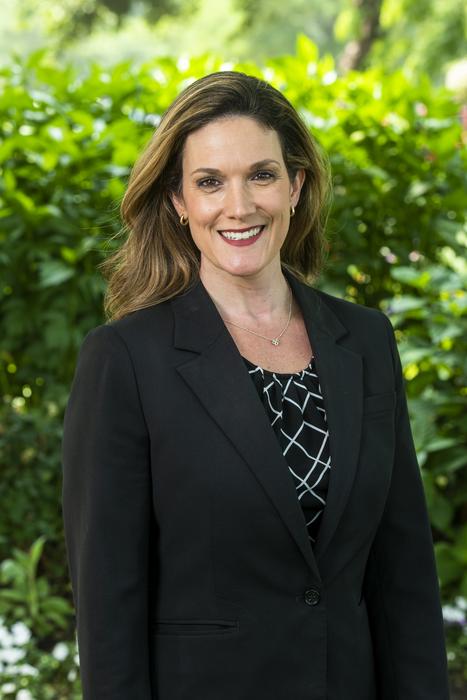
CHICAGO — Loneliness in adulthood follows a U-shaped pattern: it’s higher in younger and older adulthood, and lowest during middle adulthood, reports a new Northwestern Medicine study that examined nine longitudinal studies from around the world.

Credit: Northwestern University
- Adults are lonelier in early and older adulthood, less lonely in middle adulthood
- Consistent loneliness pattern found across nine longitudinal studies, all collected prior to COVID-19 pandemic
CHICAGO — Loneliness in adulthood follows a U-shaped pattern: it’s higher in younger and older adulthood, and lowest during middle adulthood, reports a new Northwestern Medicine study that examined nine longitudinal studies from around the world.
The study also identified several risk factors for heightened loneliness across the whole lifespan, including social isolation, sex, education and physical impairment.
“What was striking was how consistent the uptick in loneliness is in older adulthood,” said corresponding author Eileen Graham, associate professor of medical social sciences at Northwestern University Feinberg School of Medicine. “There’s a wealth of evidence that loneliness is related to poorer health, so we wanted to better understand who is lonely and why people are becoming lonelier as they age out of midlife so we can hopefully start finding ways to mitigate it.”
Lacking connection can increase the risk for premature death to levels comparable to smoking daily, according to the office of the U.S. Surgeon General, who one year ago called for action to address America’s loneliness epidemic. Graham said her findings underscore the need for targeted interventions to reduce social disparities throughout adulthood to hopefully reduce levels of loneliness, especially among older adults.
Perhaps one day general practitioners could assess levels of loneliness during regular wellness visits to help identify those who might be most at risk, Graham said.
The study will be published April 30 in the journal Psychological Science.
Factors associated with higher persistent loneliness
The study found individuals with higher persistent loneliness were disproportionately women, more isolated, less educated, had lower income, had more functional limitations, were divorced or widowed, were smokers, or had poorer cognitive, physical or mental health.
‘How does loneliness change across the lifespan?’
The study replicated this U-shaped pattern across nine datasets from studies conducted in the U.K., Germany, Sweden, the Netherlands, Australia, Israel and more. Only one of the datasets was from the U.S., which Graham said points to how widespread the loneliness epidemic is globally.
“Our study is unique because it harnessed the power of all these datasets to answer the same question — ‘How does loneliness change across the lifespan, and what factors contribute to becoming more or less lonely over time?’,” she said.
All of the nine longitudinal studies were conducted before the onset of the COVID-19 pandemic, when many researchers found loneliness became even more pronounced.
Why is middle adulthood less lonely?
While this study didn’t specifically examine why middle-aged adults are the least lonely, Graham said it could be because the many demands on a middle-aged person’s life often involve social interactions, such as being married, going to work and making friends with the parents of children’s friends.
But the relationship between social interaction and loneliness is complex. “You can have a lot of social interaction and still be lonely or, alternatively, be relatively isolated and not feel lonely,” Graham said.
As for younger adulthood being a lonelier time, Graham and the study’s co-author Tomiko Yoneda said the study data start right at the end of adolescence, when young adults are often navigating several important life transitions (e.g., education, careers, friend groups, relationship partners and families).
“As people age and develop through young adulthood into midlife, they start to set down roots and become established, solidifying adult friend groups, social networks and life partners,” said Yoneda, assistant professor of psychology at University of California, Davis. “We do have evidence that married people tend to be less lonely, so for older adults who are not married, finding ongoing points of meaningful social contact will likely help mitigate the risk of persistent loneliness.”
Journal
Psychological Science
Cite Scienmag News
Ophelia Keating. (April 30, 2024). Loneliness grows as we age. Scienmag. https://scienmag.com/loneliness-grows-as-we-age/
Ophelia Keating. "Loneliness grows as we age." Scienmag, 30 April 2024, https://scienmag.com/loneliness-grows-as-we-age/. Accessed 3 September 2026.
Ophelia Keating. "Loneliness grows as we age." Scienmag. April 30, 2024. https://scienmag.com/loneliness-grows-as-we-age/

