


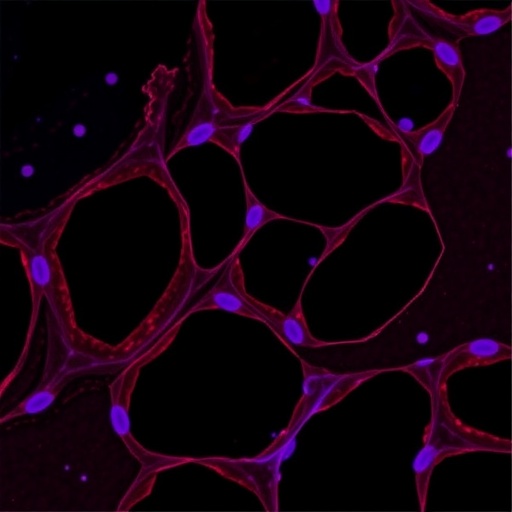
In a groundbreaking study that could reshape our understanding of vascular health, researchers have meticulously dissected the role of long non-coding RNA (lncRNA) PVT1 in the modulation of endothelial cell function, particularly concerning deep vein thrombosis (DVT) in the lower limbs. This discovery, articulated by Xiang, Zhang, Liu, and colleagues, presents a remarkable insight into the molecular mechanisms underlying DVT—a condition that affects millions of individuals globally, and often leads to severe complications if left untreated.
DVT is characterized by the formation of blood clots in the deep veins, primarily of the legs. This condition not only poses a serious risk of pulmonary embolism but also calls for lifelong management strategies for those affected. Despite advances in preventive measures and treatment regimens, a significant gap in understanding the cellular and molecular changes that precipitate DVT remains. This research embarks on addressing this knowledge void, focusing on the intricate interplay between lncRNAs and microRNAs in endothelial cells.
LncRNAs, such as PVT1, have emerged as pivotal players in gene regulation. While previously deemed as “junk” RNA, their capability to influence a plethora of biological processes, including cell proliferation, apoptosis, and differentiation, has garnered considerable attention. PVT1, in particular, is known to be involved in various pathological conditions, including tumors and cardiovascular diseases. The present research elucidates its specific role in endothelial dysfunction—a precursor to DVT.
The research team employed highly sophisticated methodologies, including cell culture experiments, to establish the relationship between lncRNA PVT1 and microRNA-143-3p. Their findings reveal that PVT1 acts as a molecular sponge for miR-143-3p, effectively inhibiting its activity. The downregulation of this miRNA is significant, as it is known for its protective role in maintaining endothelial integrity and function. The modulation of this pathway, therefore, highlights the importance of lncRNA PVT1 in vascular health and its potential impact on thrombotic events.
Critical cellular mechanisms were examined, revealing that the inhibition of miR-143-3p by PVT1 leads to enhanced inflammatory responses within endothelial cells. As inflammation plays a crucial role in the pathogenesis of DVT, the research offers novel insights into how PVT1 could contribute to the onset of thrombotic conditions. This inflammatory cascade can result in increased vascular permeability and an upregulation of pro-thrombotic markers, laying the groundwork for clot formation.
Moreover, the findings advocate for a more nuanced approach towards understanding the molecular networks that govern endothelial cell behavior in health and disease. By deciphering the role of lncRNA PVT1 in modulating miR-143-3p levels, the study underscores the potential of targeting this pathway for therapeutic interventions. Such strategies could revolutionize DVT management, providing a new avenue for prevention and treatment that addresses the underlying mechanisms of the disease rather than merely managing its symptoms.
The implications of this research extend beyond DVT alone. The interplay between lncRNAs and microRNAs offers a rich turf for exploring therapeutic targets across a spectrum of vascular diseases. Given the central role of endothelial dysfunction in various cardiovascular conditions, the modulation of lncRNAs may emerge as a novel strategy in combating vascular pathologies. The recognition of lncRNA PVT1’s role anchors it as a potential biomarker for assessing thrombotic risk, paving the way for personalized medicine approaches in managing vascular diseases.
As this study disseminates through the scientific community, it raises important questions regarding the therapeutic targeting of lncRNA PVT1. Could we develop small molecules or RNA-based therapeutics aimed at modulating its expression? Furthermore, the promise of lncRNAs as druggable targets opens up possibilities for more innovative and targeted treatment strategies. Should researchers find effective means to alter PVT1 expression or activity, there may be a transformative shift in how we manage thrombotic diseases, potentially improving patient outcomes significantly.
In conclusion, the meticulous investigation into lncRNA PVT1’s role in influencing endothelial cell function and its association with DVT delineates a crucial chapter in vascular biology. This research not only sheds light on the molecular mechanisms underpinning DVT but also invites a reevaluation of existing therapeutic paradigms. As the scientific community continues to unravel the complexities of the endothelial layer’s interactions, the significance of lncRNA PVT1 may well extend far beyond DVT, inviting exploration into other related vascular conditions and their management.
The research heralds a new era in the understanding of vascular diseases, emphasizing the intricate relationship between genetic regulation and the pathophysiology of conditions such as DVT. As lncRNAs continue to reveal their multifaceted roles in health and disease, the journey towards unraveling their potential as therapeutic targets appears both promising and vital for future cardiovascular health strategies.
Xiang, J., Zhang, Y., Liu, S. et al. LncRNA PVT1 targets miR-143-3p to modulate endothelial cell function and thereby participate in deep vein thrombosis (DVT) of the lower limbs.
Ann Hematol 105, 60 (2026). https://doi.org/10.1007/s00277-026-06833-4
Cite Scienmag News
Juliet Wilcox. (January 26, 2026). LncRNA PVT1 Influences Endothelial Function in DVT. Scienmag. https://scienmag.com/lncrna-pvt1-influences-endothelial-function-in-dvt/
Juliet Wilcox. "LncRNA PVT1 Influences Endothelial Function in DVT." Scienmag, 26 January 2026, https://scienmag.com/lncrna-pvt1-influences-endothelial-function-in-dvt/. Accessed 4 September 2026.
Juliet Wilcox. "LncRNA PVT1 Influences Endothelial Function in DVT." Scienmag. January 26, 2026. https://scienmag.com/lncrna-pvt1-influences-endothelial-function-in-dvt/


