


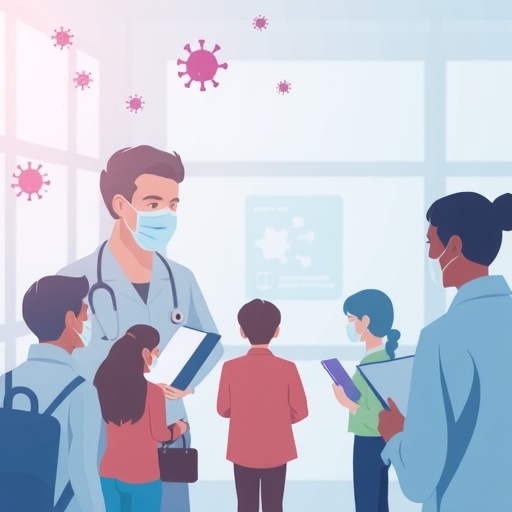
In recent years, the global narrative surrounding public health has shifted dramatically, primarily influenced by the advent of pandemics that have tested healthcare systems around the world. Among the many insights drawn from crises such as the COVID-19 pandemic is the intricate interplay between education and healthcare. A recent study from a team of researchers in the Netherlands sheds light on this complex relationship, emphasizing the critical role that educational systems may play in shaping future pandemic management strategies.
The research, conducted by a highly regarded team of experts, aims to dissect the nuanced connections between education and healthcare, focusing specifically on how educational frameworks can bolster health systems and prepare societies for potential crises. This study stands out for its approach, which seeks to identify key variables that connect these two seemingly disparate sectors during times of emergency. The findings could be invaluable for policymakers, educators, and healthcare professionals who are grappling with the aftermath of the pandemic and seeking innovative strategies for future readiness.
One of the study’s central themes is the necessity of fostering a culture of health literacy through education. By embedding health education into curricula at all levels, students can develop an understanding of public health principles from an early age. This foundational knowledge can empower individuals to make informed choices regarding their health and well-being, potentially mitigating the effects of future pandemics. The researchers argue that such a proactive approach could lead to a more resilient population, capable of navigating health crises with greater efficacy.
Another critical aspect of the research highlights the role of interdisciplinary collaboration. The challenges posed by public health emergencies require a concerted effort that transcends traditional boundaries of academia, healthcare, and other sectors. The study proposes the establishment of partnerships between educational institutions and healthcare providers to create programs focused on crisis management, disease prevention, and public health education. By fostering these collaborations, the researchers believe that the potential for innovation increases, leading to more effective public health responses.
In addition to health literacy, the research delves into the importance of training healthcare professionals. There is a pressing need for continuous education and professional development within the healthcare workforce, particularly in areas related to emergency preparedness and response. The study posits that integrating educational strategies specifically aimed at enhancing skills in crisis situations is essential. This targeted training would not only improve individual competencies but also strengthen the resilience of healthcare systems as a whole.
Furthermore, the researchers emphasize the critical need for accessibility in educational resources. Disparities in access to quality education are mirrored in healthcare access, which can exacerbate inequalities in health outcomes. The study advocates for policy measures that prioritize equitable access to educational opportunities, particularly for marginalized communities. By addressing these disparities, public health systems can be better equipped to respond to crises and can ensure that all citizens receive the necessary support and information during emergencies.
The research also offers a compelling argument for research-driven educational policies. Data and evidence from past health crises should inform educational strategies and curricula development moving forward. This evidence-based approach can help ensure that the educational content remains relevant and adapts to the changing landscape of public health threats. By continually revising educational frameworks based on emerging data, societies can stay ahead of potential future crises.
Additionally, the authors of the study examined the role of technology in education and healthcare convergence. The digital divide, exacerbated during the pandemic, necessitates the integration of technology into educational methodologies. Online platforms and digital resources can play a pivotal role in disseminating health information and facilitating distance learning, thus ensuring that education can persist even during lockdowns or restrictions related to health crises. The potential for technology to bridge gaps in education and healthcare access is profound and warrants further exploration.
As the research progresses, it is essential for educational institutions to adopt curricula that promote critical thinking and problem-solving skills. The nature of public health emergencies often requires rapid responses, and individuals equipped with analytical skills will be better positioned to contribute to solutions. Schools and universities should focus on teaching students how to assess situations critically, evaluate information sources, and engage in informed discussions about health-related issues.
Moreover, the study calls for integrating behavioral sciences into education about health. Understanding the psychological aspects of health and disease can aid in designing more effective communication strategies during pandemics. This encompasses not only how information is conveyed to the public but also how individuals process and respond to that information. Incorporating such insights into educational frameworks can enhance the efficacy of public health messaging and intervention strategies.
Of particular interest is the notion that educational institutions themselves can serve as models for public health practices. By adopting best practices in hygiene, preventive care, and health promotion within schools and universities, educational entities can play a critical role in shaping community health behaviors. Promoting vaccinations, mental health resources, and general wellness initiatives in educational settings can create a culture of health that extends beyond school walls.
Additionally, the researchers advocate for a global perspective in educational and health systems frameworks. Public health is a worldwide concern; thus, their findings are not only applicable to the Netherlands but also offer relevant insights for other countries. Developing international collaborations in education and healthcare can lead to shared resources, knowledge exchange, and best practice implementations that are crucial during global health crises.
In summary, the recent research encapsulates the vital link between education and healthcare within the context of pandemic preparedness. It presents a multi-faceted view of how educational strategies can support health systems and promote societal resilience. As we navigate an increasingly uncertain future with potential health crises on the horizon, the recommendations proposed in this study are of paramount importance for fostering a culture of preparedness and response.
Cite Scienmag News
Kristina Jarvis. (August 31, 2025). Linking Education and Healthcare for Pandemic Preparedness. Scienmag. https://scienmag.com/linking-education-and-healthcare-for-pandemic-preparedness/
Kristina Jarvis. "Linking Education and Healthcare for Pandemic Preparedness." Scienmag, 31 August 2025, https://scienmag.com/linking-education-and-healthcare-for-pandemic-preparedness/. Accessed 4 September 2026.
Kristina Jarvis. "Linking Education and Healthcare for Pandemic Preparedness." Scienmag. August 31, 2025. https://scienmag.com/linking-education-and-healthcare-for-pandemic-preparedness/


