

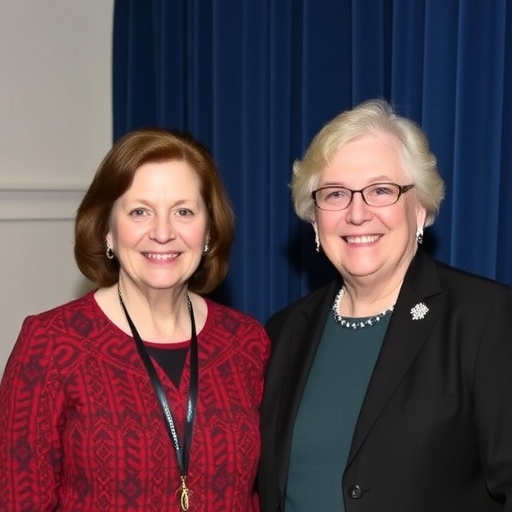
In a landmark recognition that highlights the often-overlooked yet critical role of medical education coordinators, the American Geriatrics Society (AGS) has announced Linda Ferrie as the inaugural recipient of the AGS/ADGAP Outstanding Geriatric Medicine Education Coordinator of the Year Award. This prestigious accolade honors individuals who play a pivotal role in advancing geriatrics medical education while efficiently managing the complex operations of Geriatric Medicine Fellowship Programs. Ms. Ferrie’s dedication to this niche but essential field of healthcare education sets a new standard for the professional community.
Linda Ferrie’s journey to becoming a cornerstone in geriatric medical education is not only inspiring but emblematic of dedication and perseverance. Before ascending to her current role at the Mayo Clinic’s Geriatric Medicine Fellowship in Rochester, Minnesota, she balanced morning studies with evening shifts at a factory. Her goal was to join the esteemed Mayo Clinic, a goal she achieved and transformed into a career spanning nearly twenty-five years. Throughout this time, Ms. Ferrie has demonstrated a relentless commitment to shaping the future of geriatric healthcare professionals through innovative education coordination.
The AGS/ADGAP award is not merely a recognition but a statement about the critical importance of education program coordinators in medical training environments. These professionals are responsible for the logistical and administrative orchestration of fellowship programs that mold future geriatricians. Their work ensures that educational curricula are delivered effectively, that fellows receive appropriate mentorship, and that the programs continually adapt to advancements in geriatric medicine and educational strategies.
A particularly noteworthy aspect of Ms. Ferrie’s contribution is her leadership within the Mayo School of Graduate Medical Education’s Education Program Coordinator Council, where she has served multiple terms as chair. Her influence extends beyond program administration to mentorship, providing guidance and support to emerging coordinators, program directors, and administrative professionals in medical education. This mentorship cultivates a pipeline of skilled coordinators equipped to navigate the evolving complexities of geriatric education.
On a national scale, Ms. Ferrie’s expertise contributed significantly to the development of assessment tools for certification in Geriatric Medicine, undertaken through her role on the Training Administrators for Graduate Medical Education (TAGME) board. These tools are integral in standardizing and enhancing the quality of geriatrics training programs across the country, ensuring that certification processes are rigorous and reflect current clinical and educational standards.
Further amplifying her impact, Ms. Ferrie played an instrumental role in founding the American Geriatrics Education Administrator Coordinator Team (AGE-ACT), a leadership initiative designed to foster professional development and collaboration among coordinators nationwide. Under her chairmanship, AGE-ACT launched an annual workshop aligned with the ADGAP/AGS Annual Education Conference, serving as a platform for sharing best practices and forging networks that support the growth and effectiveness of geriatrics education coordinators.
The recognition by AGS President Paul Mulhausen underscores the often invisible yet indispensable contributions of education program coordinators. “Through her vision and dedication,” Mulhausen states, “Ms. Ferrie has defined and elevated the role of Education Program Coordinators in geriatric medicine and beyond.” Such endorsements reflect a growing awareness within the medical community of the complex interplay between education administration and clinical training excellence.
The field of geriatrics, which focuses on the care of older adults, faces unique challenges, including an aging population and the need for specialized clinical and research knowledge. Geriatrics education coordinators like Ms. Ferrie ensure that fellowship programs are prepared to meet these demands by integrating emerging research, clinical best practices, and innovative teaching methodologies into their curricula. Their work directly impacts the quality of healthcare provided to older adults nationwide.
The AGS, established in 1942, represents a broad coalition of healthcare professionals dedicated to enhancing the lives of older adults through improved care and education. Its membership spans disciplines, including physicians, nurse practitioners, social workers, and pharmacists, united by a commitment to interdisciplinary approaches that respect the complexity of aging. The society’s anti-discrimination stance highlights its commitment to inclusive, equitable healthcare access and outcomes for all older individuals.
The affiliation between the AGS and the Association of Directors of Geriatrics Academic Programs (ADGAP) reinforces a robust infrastructure aimed at training and supporting healthcare professionals in geriatrics. ADGAP advocates for academic geriatrics programs and fellowship directors, ensuring the continual development of knowledge and the healthcare workforce—a mission that aligns seamlessly with Ms. Ferrie’s career-long focus on education coordination and program excellence.
The AGS Annual Scientific Meeting, one of the largest gatherings of geriatrics professionals, serves as a critical forum for disseminating research and clinical innovations. With over 2,600 participants from diverse healthcare backgrounds, the 2026 Virtual Meeting scheduled for April 30 to May 2 promises to advance geriatric care through state-of-the-art educational sessions. Ms. Ferrie’s award presentation at this event emphasizes the synergy between educational coordination and ongoing professional development in the field.
Looking ahead, the elevation of education coordinators like Linda Ferrie reflects an essential paradigm shift. These professionals are not peripheral administrators but central architects in the education and preparation of clinicians adept at managing the complexities of aging. Recognition of their expertise ensures that geriatrics training programs remain responsive, innovative, and capable of producing leaders in healthcare for older adults.
Linda Ferrie’s story is a testament to the profound impact that dedicated education coordinators have on the healthcare system. Her journey from factory shifts to national leadership in geriatrics education encapsulates the spirit of resilience and commitment. As the field advances, her contributions set a benchmark for excellence and inspire future generations of coordinators who will carry forward the mission of improving care for aging populations.
In summation, the AGS/ADGAP Outstanding Geriatric Medicine Education Coordinator of the Year Award conferred upon Linda Ferrie not only celebrates an individual but elevates the indispensable role of education coordinators in ensuring the highest standards of geriatrics training. Their work behind the scenes is critical to transforming medical education and, ultimately, patient care for older adults nationwide. This recognition sets a new precedent for valuing the multifaceted contributions that sustain and enhance medical education infrastructures.
Subject of Research: Geriatric Medicine Education Coordination and Fellowship Program Development
Article Title: Linda Ferrie Honored with AGS/ADGAP Award for Transforming Geriatrics Education Coordination
News Publication Date: April 10, 2026
Web References: https://meeting.americangeriatrics.org/
Keywords: Geriatrics, Medical Education, Fellowship Program Coordination, Geriatric Medicine, Healthcare Education Leadership, AGS, ADGAP, Educational Program Development, Medical Training, Aging Population


