

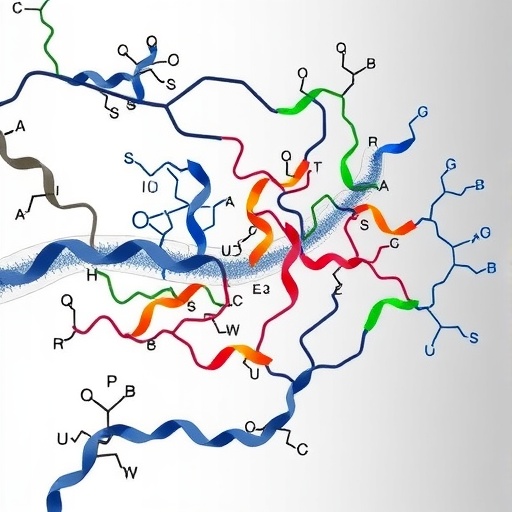
In a groundbreaking study published in Nature, researchers have unveiled the intricate molecular choreography that underlies G-protein-coupled receptor (GPCR) signaling, revealing how distinct ligands elicit unique conformational trajectories in receptor–G-protein complexes within living cells. This novel insight not only deepens our mechanistic understanding of GPCR function but also paves the way for designing selective therapeutics that exploit ligand-specific signaling pathways.
GPCRs represent one of the largest families of cell surface receptors, orchestrating diverse physiological responses by transducing extracellular signals through G proteins. Despite their biological importance and pharmacological relevance, the precise mechanisms dictating ligand-dependent G-protein activation have remained elusive. The current research leverages advanced biophysical methods to parse how different agonists stabilize distinct receptor conformations that directly influence G-protein engagement dynamics.
Central to the study is the muscarinic M2 receptor (M2R), a prototypical GPCR whose activation by various agonists was interrogated in living cells employing cutting-edge bioluminescence resonance energy transfer (BRET) sensors. These biosensors allow real-time monitoring of conformational changes and G-protein activation with unprecedented temporal resolution, providing a window into the dynamic equilibria of receptor–G-protein complexes.
The investigators demonstrate that all agonists tested induce the formation of at least two distinct M2R–G-protein signaling complexes. Strikingly, these complexes coexist in a dynamic equilibrium but differ in their signaling efficacies. This equilibrium landscape is not static; instead, it is highly ligand-dependent, reflecting unique conformational signatures imprinted by each agonist on the receptor structure.
By profiling the full spectrum of Gα subunits via the TRUPATH biosensor platform, encompassing 14 different types, the study details agonist-specific G-protein activation profiles. The results elucidate a pronounced preference of M2R agonists for the G_i/o family, with differential potency and efficacy metrics spanning subfamily members such as G_i1, G_i2, G_i3, G_oA, G_oB, and G_z. Intriguingly, a minor but significant engagement of G_15 was also detected, suggesting a nuanced signaling repertoire.
Among the agonists analyzed, iperoxo emerged as a superagonist, eliciting robust activation across nearly all G_i/o subtypes, while pilocarpine performed as a partial agonist with comparatively subdued signaling outcomes. Arecoline revealed a unique efficacy fingerprint, preferentially superactivating G_oA and G_oB subunits but exhibiting partial agonism for other G_i/o proteins, underscoring the complexity of ligand-specific signaling bias.
These findings fundamentally link the receptor’s conformational equilibrium states to functional signaling outputs. The high-efficacy complex, referred to as C1, correlates with potent G-protein activation and is predominantly stabilized by iperoxo. In contrast, pilocarpine favors a low-efficacy complex, C2, which aligns with partial agonism. The distinct formation pathways of these complexes—termed activation trajectories—are critical in determining which G-protein subtypes are preferentially engaged.
The study further elucidates that the temporal progression and sequence of conformational changes during receptor–G-protein complex formation are not uniform across ligands. Instead, each agonist follows a unique activation trajectory, sculpting a ligand-specific signaling landscape within the cellular milieu. This nuanced understanding challenges traditional binary models of GPCR activation and introduces a more dynamic and layered framework.
Such revelations have broad implications for drug discovery, as they suggest that tailoring ligand structure to selectively stabilize specific receptor conformations could enable unprecedented precision in modulating GPCR-mediated pathways. This could lead to therapeutics with enhanced efficacy and minimal side effects by biasing signaling toward beneficial G-protein subunits.
Moreover, the application of advanced BRET-based biosensors in live cells exemplifies a powerful approach to deciphering receptor pharmacology under physiologically relevant conditions. The ability to monitor real-time conformational equilibria and activation kinetics represents a significant methodological advance in the field.
The research underscores that ligand efficacy extends beyond the magnitude of response to encompass the kinetics and conformational selection dynamics during receptor activation. This paradigm highlights the importance of considering conformational trajectories in understanding complex signaling behaviors and interpreting pharmacological data.
Importantly, the study’s integration of structural and functional analyses offers a blueprint for future investigations aiming to deconvolute the multifaceted nature of GPCR signaling. By mapping the interplay between ligand structure, receptor dynamics, and G-protein coupling specificity, researchers can better predict signaling outcomes and therapeutic potential.
In sum, this research propels the field toward a refined conceptualization of GPCR signaling, where ligand-specific activation trajectories and conformational equilibria dictate the qualitative and quantitative aspects of cellular responses. Such insights hold promise for the rational design of next-generation drugs targeting these pivotal receptors in a wide array of diseases.
Subject of Research: Ligand-specific activation trajectories and conformational equilibria in G-protein-coupled receptor (GPCR) signaling within living cells.
Article Title: Ligand-specific activation trajectories dictate GPCR signalling in cells.
Article References:
Thomas, R., Jacoby, P.S., De Faveri, C. et al. Ligand-specific activation trajectories dictate GPCR signalling in cells. Nature (2026). https://doi.org/10.1038/s41586-025-09963-3


