


The urgent quest for effective therapeutic agents against SARS-CoV-2 has taken on renewed significance in the wake of the COVID-19 pandemic. Despite widespread vaccination efforts that have been successful in controlling the virus’s spread, the persistent emergence of new variants continues to pose challenges to global health strategies. This situation has necessitated the exploration of alternative treatment options, particularly small-molecule inhibitors that target key viral proteins. Such inhibitors hold the potential to control COVID-19 transmission at both individual and community levels, thereby offering an additional layer of defense against the virus.
In an intriguing advance within this field, a recent study spearheaded by Associate Professor Md. Altaf-Ul-Amin, alongside a dedicated team of researchers from the Nara Institute of Science and Technology (NAIST) in Japan, has unveiled promising insights into the potential of natural products as inhibitors of the SARS-CoV-2 spike protein. This collaborative effort involved contributions from scientists across multiple institutions, including researchers from Jenderal Soedirman University in Indonesia, underscoring the global nature of the fight against COVID-19. The investigation utilized advanced computational methods to screen a diverse library of natural compounds, aiming to identify those capable of effectively binding to the spike proteins of the virus.
The findings of this research are detailed in their publication, which appeared in Volume 15 of Scientific Reports on January 2, 2025. The study’s methodology centered on molecular docking analysis, a computational technique that allows researchers to simulate molecular interactions at the atomic level. Through this approach, the authors were able to identify several natural compounds with high binding affinities, indicating their potential to interfere with SARS-CoV-2’s viral entry mechanisms and reduce overall viral activity within the body.
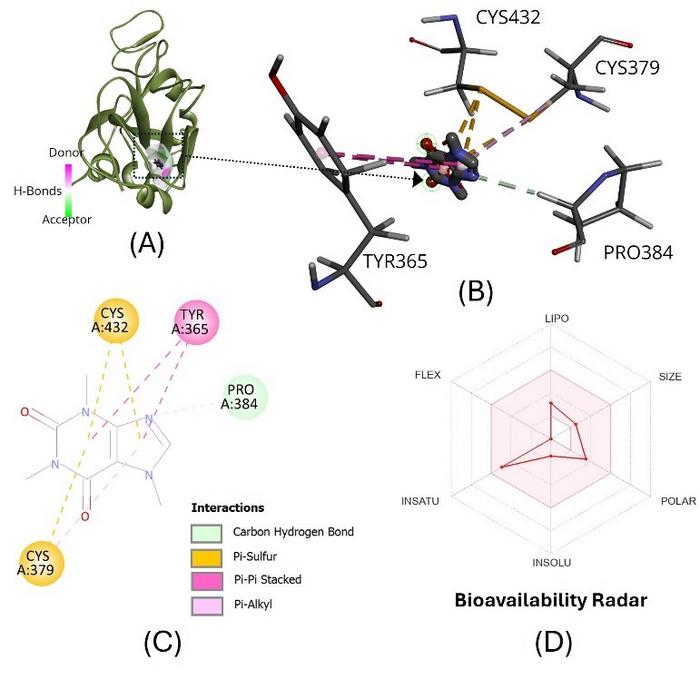
One of the most noteworthy discoveries from this research was the identification of caffeine as a significant inhibitor of the SARS-CoV-2 spike protein. Caffeine, a widely recognized stimulant commonly found in coffee and other beverages, demonstrated remarkable binding stability to the spike protein’s active site. In addition to its strong binding affinity, caffeine exhibited favorable drug-like properties, including excellent solubility and promising potential as an oral therapeutic candidate. This revelation not only highlights caffeine’s versatility but also encourages a broader exploration of naturally occurring compounds in the development of antiviral drugs.
As articulated by Associate Professor Md. Altaf-Ul-Amin, the variants of the SARS-CoV-2 spike protein can be classified into five distinct clusters based on similarities in their amino acid sequences and functions. This classification was achieved using an in-house developed algorithm and software dubbed DPClusSBO, which effectively organizes spike proteins based on their structural attributes. Such clustering is pivotal for understanding how different variants may behave in response to treatment with natural compounds, thus guiding future therapeutic strategies.
The bioinformatics landscape was further enriched by this study through the utilization of the KNApSAcK database, cultivated by the research team, which serves as a robust resource for natural products relevant to drug discovery. This comprehensive database played a critical role in sourcing the 11 natural compounds that were ultimately identified in the research. Among these compounds, cephaeline, emetine, uzarigenin, linifolin A, caffeine, colchamine, cytidine, (+)-epijasmonic acid, 11-hydroxyvittatine, staurosporin, and paxilline emerged as noteworthy candidates for further investigation.
Caffeine’s dual role as a potential SARS-CoV-2 inhibitor and its established neuroprotective and anticancer effects suggest that it may offer multifaceted benefits in combating viral infections. As Muhammad Alqaaf, the study’s first author, emphasized, this research underscores the significant potential of natural products in the ongoing battle against COVID-19. The compounds identified through computational screening establish a foundation for future experimental validation and the formulation of innovative drug development strategies.
As the field of computational drug discovery continues to evolve, the findings from this study demonstrate how bioinformatics and molecular modeling can expedite the identification of new viral inhibitors. Future research endeavors will be focused on the in vitro and in vivo validation of the identified natural compounds. Additionally, the exploration of structural modifications to enhance the antiviral activity of these compounds represents a critical next step in the pathway toward viable therapeutic options for COVID-19.
This line of investigation into natural products not only broadens the horizon for potential antiviral agents but also reinforces the need for interdisciplinary approaches in addressing complex health challenges. The implications of such research extend beyond virology, as they pave the way for the continued exploration of how natural compounds might contribute to medical advancements in various therapeutic contexts.
In conclusion, the discovery of caffeine as a viable inhibitor of the SARS-CoV-2 spike protein is a transformative finding that could reshape our understanding of therapeutic options available for COVID-19. As this study illustrates, marrying traditional medicinal knowledge with modern computational algorithms enables researchers to unveil a treasure trove of potential treatments within the realm of natural products. The relationship between caffeine and its multifaceted biological activities exemplifies the untapped potential that lies within the natural world, waiting to be harnessed for the betterment of public health.
This cutting-edge research encapsulates the spirit of innovation that is crucial in the fight against infectious diseases. By harnessing the power of nature, researchers can potentially unlock new pathways to combat viral threats and enhance our collective resilience against emerging public health challenges.
Cite Scienmag News
Ophelia Keating. (March 21, 2025). Leveraging Computational Methods to Discover Natural Products Against SARS-CoV-2. Scienmag. https://scienmag.com/leveraging-computational-methods-to-discover-natural-products-against-sars-cov-2/
Ophelia Keating. "Leveraging Computational Methods to Discover Natural Products Against SARS-CoV-2." Scienmag, 21 March 2025, https://scienmag.com/leveraging-computational-methods-to-discover-natural-products-against-sars-cov-2/. Accessed 5 September 2026.
Ophelia Keating. "Leveraging Computational Methods to Discover Natural Products Against SARS-CoV-2." Scienmag. March 21, 2025. https://scienmag.com/leveraging-computational-methods-to-discover-natural-products-against-sars-cov-2/


