


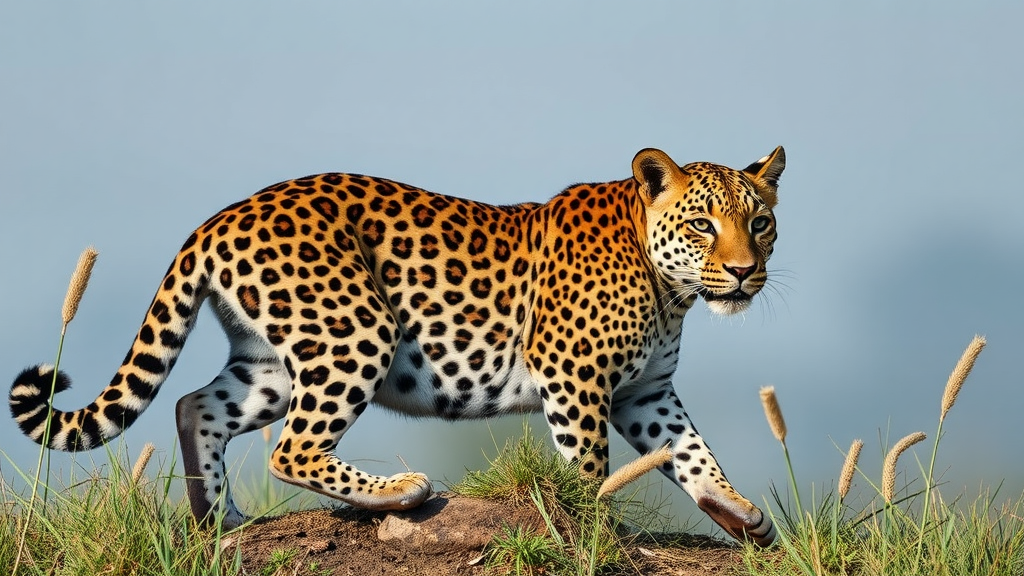
A scientific paper that examined the genomic divergence of leopards living in South Africa’s Cape Floristic Region has been retracted, according to a retraction notice published in the journal Heredity. The article, originally titled “Genomic divergence of leopards in the Cape Floristic Region of South Africa: potential drivers for local adaptation,” appeared in the Nature Portfolio journal and proposed to explore how genetic differences among leopard populations in this biodiverse corner of the Western Cape might have arisen through local adaptation. The retraction notice, dated 9 April 2026 and carrying the digital object identifier 10.1038/s41437-026-00883-0, now stands as the authoritative record for the paper on the journal’s website.
Retractions are among the most consequential actions in scientific publishing, and they are never undertaken lightly. When a journal retracts an article, it signals to the research community that the findings should no longer be relied upon, whether because of problems with the underlying data, flaws in the methods or analysis, ethical concerns, errors that undermine the central conclusions, or issues with authorship and approval. Readers who encounter the leopard genomics study will now see a prominent watermarked notice explaining its retracted status, a standard practice designed to prevent the paper’s results from being cited as if they remained valid.
The subject matter of the retracted paper is of considerable ecological importance. The Cape Floristic Region is one of the world’s six floral kingdoms and a recognised global biodiversity hotspot, characterised by fynbos vegetation, rugged mountain chains, and a highly heterogeneous landscape. Leopards in this region, Panthera pardus, persist at low densities across fragmented habitats, making them a species of significant conservation concern. Because the animals range across mountain passes, valley systems, and peri-agricultural land, researchers have long been interested in whether distinct leopard populations show measurable genetic structure and whether that structure reflects adaptation to local environmental conditions.
Genomic studies of large carnivores typically rely on non-invasive sampling methods, such as scat collection or hair snares, because capturing and handling elusive animals is difficult and stressful for both researchers and wildlife. From such samples, scientists can extract DNA and examine genome-wide markers to estimate genetic diversity, detect inbreeding, infer population boundaries, and test for signatures of selection. In species with wide geographic ranges, such as the leopard, comparative genomic approaches can reveal whether populations separated by habitat barriers are drifting apart neutrally or whether specific genes show patterns consistent with adaptation to different climates, prey bases, or vegetation types.
The Cape Floristic Region presents an especially interesting setting for this kind of research. Its topography creates natural barriers to movement, and leopards there are the last remaining large carnivore in the region, occupying a range that overlaps extensively with farmland and rural communities. Understanding the genetic connectivity of these populations carries direct management implications: it informs decisions about wildlife corridors, translocation policies, conflict mitigation, and the delineation of conservation units. Any genetic evidence of locally adapted lineages would strengthen the argument for preserving population distinctiveness rather than treating the region’s leopards as a single interchangeable metapopulation.
With the retraction now in place, the study’s conclusions about potential drivers of local adaptation cannot be treated as established science. Researchers, conservation practitioners, and policymakers who previously encountered the paper are advised to disregard its findings when weighing decisions about leopard management in the Western Cape. Journals generally encourage authors and readers to cite the retraction notice itself when referring to the work, so that the scientific record accurately reflects the paper’s withdrawn status. The retraction notice remains accessible at https://www.nature.com/articles/s41437-026-00883-0, and the associated DOI resolves to the notice rather than to a standing set of findings.
Retraction practices have evolved considerably over the past two decades. Organisations such as the Committee on Publication Ethics provide guidance recommending that journals investigate concerns transparently, notify authors, and publish retraction statements that explain, where possible, why an article has been withdrawn. The goal is not to punish researchers but to protect the integrity of the literature on which future studies depend. In fast-moving fields such as conservation genomics, where results feed directly into policy, the prompt retraction of compromised work helps prevent error propagation through subsequent papers, management plans, and public communications.
For the scientific community studying southern African carnivores, the retraction is a reminder of the importance of reproducibility and rigorous data stewardship. Genomic datasets are complex, combining field sampling metadata, laboratory processing, bioinformatic pipelines, and statistical inference, and errors can enter at any stage. Leading journals, including Heredity, increasingly require authors to deposit raw data and code in public repositories so that independent researchers can verify analyses. Transparency of this kind not only deters misconduct but also accelerates genuine discovery, because validated datasets can be reused to answer new questions about population history, hybridisation, and adaptive potential.
Conservation science moves forward through correction as much as through breakthrough. The broader questions that motivated the retracted study remain open and important: How genetically connected are leopard populations across the Cape Fold Mountains? Are there loci showing evidence of selection along environmental gradients? What do effective population sizes and inbreeding levels imply for the long-term viability of the region’s leopards? Answering these questions responsibly requires carefully validated genomic evidence, and the field’s continued attention to publication integrity will determine how reliably future findings can guide the stewardship of one of South Africa’s most iconic and imperilled predators.
Subject of Research: Retraction of a genomic study of leopard divergence and local adaptation in South Africa's Cape Floristic Region
Article Title: Retraction Note: Genomic divergence of leopards in the Cape Floristic Region of South Africa: potential drivers for local adaptation
Article References: Tensen, L., Khan, A., Sarabia, C., Bishop, J., Camacho, G., Fischer, K., & Williams, K. S. (2026). Retraction Note: Genomic divergence of leopards in the Cape Floristic Region of South Africa: potential drivers for local adaptation. Heredity. https://doi.org/10.1038/s41437-026-00883-0
Image Credits: AI Generated
DOI: 10.1038/s41437-026-00883-0
Keywords: leopards, Cape Floristic Region, genomic divergence, local adaptation, retraction, conservation genetics, Heredity, South Africa, population genomics, research integrity, biodiversity hotspot, fynbos
Cite Scienmag News
Juliet Wilcox. (September 22, 2026). Leopard Genomics Paper on South Africa’s Cape Floristic Region Retracted. Scienmag. https://scienmag.com/leopard-genomics-paper-on-south-africas-cape-floristic-region-retracted/
Juliet Wilcox. "Leopard Genomics Paper on South Africa’s Cape Floristic Region Retracted." Scienmag, 22 September 2026, https://scienmag.com/leopard-genomics-paper-on-south-africas-cape-floristic-region-retracted/. Accessed 5 October 2026.
Juliet Wilcox. "Leopard Genomics Paper on South Africa’s Cape Floristic Region Retracted." Scienmag. September 22, 2026. https://scienmag.com/leopard-genomics-paper-on-south-africas-cape-floristic-region-retracted/


