

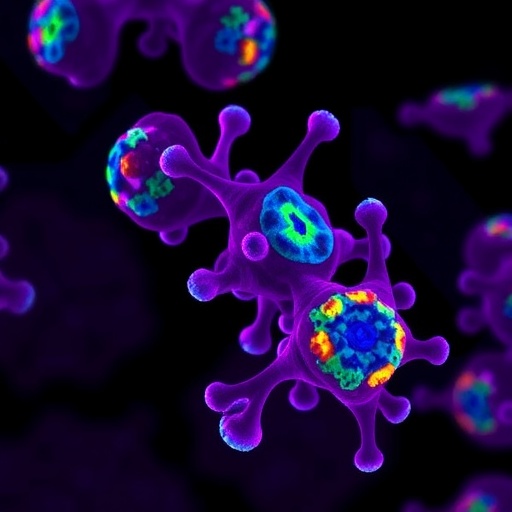
In a groundbreaking study published in BMC Complementary Medicine and Therapies, researchers Li, Liu, and Wen have unveiled a potential therapeutic agent for type 1 diabetes, known as Leonurine (SCM-198). This compound demonstrates noteworthy protective effects on pancreatic β-cells, a crucial element in insulin secretion and regulation of glucose metabolism. Through meticulous experimentation, the authors delve into the intricate signaling pathways that govern cell survival and apoptosis, specifically targeting the Bax/Bcl-2/Caspase-3 cascade. This research could potentially reshape therapeutic strategies for managing type 1 diabetes, offering hope to millions who suffer from this chronic condition.
Type 1 diabetes arises from an autoimmune response that leads to the destruction of pancreatic β-cells. As these cells are essential for producing insulin, their depletion results in the inability to regulate blood sugar levels effectively. Patients often face serious complications, including cardiovascular diseases and neuropathy, due to prolonged hyperglycemia. The need for novel treatments is more urgent than ever, and the discovery of compounds like Leonurine, which shows promise in preserving β-cell integrity, is a significant step forward. This study sets the stage for further exploration into agents that can protect against diabetes-related cell death.
The signaling pathway examined in this study—the Bax/Bcl-2/Caspase-3 pathway—plays a critical role in the regulation of apoptosis. Apoptosis, or programmed cell death, is a normal process that helps maintain cellular health. However, in the case of type 1 diabetes, excessive apoptosis of β-cells accelerates the diseases’ progression. The research highlights how Leonurine influences this pathway to enhance cell survival rates. By manipulating the expression of key proteins involved in apoptotic signaling, Leonurine appears to mitigate the harmful effects of autoimmunity on pancreatic cells.
Researchers employed a variety of methodologies to evaluate the efficacy of Leonurine. They utilized in vitro models of pancreatic β-cell cultures exposed to stressors mimicking the diabetic environment. This approach provided valuable insights into how Leonurine interacts with cellular mechanisms, particularly under conditions that typically induce inflammatory responses and oxidative stress. The findings indicated that Leonurine treatment significantly reduced apoptosis in the cultured β-cells, primarily by upregulating the anti-apoptotic protein Bcl-2 while downregulating the pro-apoptotic factor Bax.
Moreover, Caspase-3, a key mediator of apoptosis, was also influenced by Leonurine, suggesting that this compound not only prevents the initiation of cell death but may also promote β-cell survival in a hostile environment. This dual action makes Leonurine a particularly interesting candidate for type 1 diabetes therapy. By addressing the underlying mechanisms that lead to β-cell loss, Leonurine could help maintain insulin-producing capacity and ultimately improve glycemic control in affected individuals.
The authors also investigated the potential side effects and safety profile of Leonurine. It is crucial for any new therapeutic candidate to balance efficacy with safety, especially in a population that often requires lifelong treatment. The study indicated that Leonurine exhibited minimal cytotoxic effects on β-cells, suggesting a favorable therapeutic index. Future studies will need to address the long-term safety and efficacy in vivo, but these initial findings are promising.
The role of oxidative stress in type 1 diabetes is well-documented, and the study’s results suggest that Leonurine may also exert antioxidant effects. The compound’s ability to scavenge free radicals could further protect β-cells, enhancing their resilience against diabetic stressors. This multifaceted approach not only targets apoptosis but also addresses oxidative damage that contributes to β-cell dysfunction.
Given the urgency of finding new treatments for type 1 diabetes, this study adds a vital piece to the puzzle of diabetes management. The findings create a foundation for subsequent clinical studies that may lead to innovative therapeutic options for patients grappling with this condition. Additionally, the mechanistic insights provided by this research can inform future investigations into the complex interplay of inflammation, oxidative stress, and apoptosis in diabetes.
Leonurine, derived from traditional herbal medicine, embodies the potential of natural compounds in modern therapeutics. While more research is needed to fully elucidate its mechanisms and potential clinical applications, the enthusiasm surrounding this compound is palpable. By bridging traditional knowledge with contemporary scientific inquiry, researchers are paving the way for new strategies in the fight against type 1 diabetes.
The study emphasizes the importance of interdisciplinary research, combining insights from biochemistry, molecular biology, and traditional medicine. Such integrative approaches are essential for innovation in diabetes treatment. As the research community continues to explore compounds like Leonurine, there is hope that a more comprehensive understanding of β-cell biology will emerge, leading to transformative therapies for patients.
The overall impact of this research extends beyond the immediate findings concerning Leonurine. It highlights the necessity for ongoing investigation into the molecular underpinnings of type 1 diabetes, emphasizing the need for novel therapeutic strategies that can effectively halt or reverse disease progression. The study also serves as an inspiration for future research aimed at exploring other natural compounds that might provide similar protective effects.
In conclusion, the study by Li, Liu, and Wen represents a potential turning point in the management of type 1 diabetes. By demonstrating the protective effects of Leonurine on β-cells through modulation of the Bax/Bcl-2/Caspase-3 signaling pathway, this research could inspire further studies and clinical trials that may lead to new treatment paradigms. As the search for effective diabetes therapies continues, Leonurine stands as a beacon of hope, potentially offering a new horizon for those living with this challenging condition.
Li, Z., Liu, X., Wen, F. et al. Leonurine (SCM-198) exerts protective effects on pancreatic β-cells in type 1 diabetes by modulating the Bax/Bcl-2/Caspase-3 signaling pathway.
BMC Complement Med Ther 25, 306 (2025). https://doi.org/10.1186/s12906-025-05051-1
Cite Scienmag News
Ophelia Keating. (August 28, 2025). Leonurine Shields Pancreatic Beta-Cells in Type 1 Diabetes. Scienmag. https://scienmag.com/leonurine-shields-pancreatic-beta-cells-in-type-1-diabetes/
Ophelia Keating. "Leonurine Shields Pancreatic Beta-Cells in Type 1 Diabetes." Scienmag, 28 August 2025, https://scienmag.com/leonurine-shields-pancreatic-beta-cells-in-type-1-diabetes/. Accessed 4 November 2026.
Ophelia Keating. "Leonurine Shields Pancreatic Beta-Cells in Type 1 Diabetes." Scienmag. August 28, 2025. https://scienmag.com/leonurine-shields-pancreatic-beta-cells-in-type-1-diabetes/