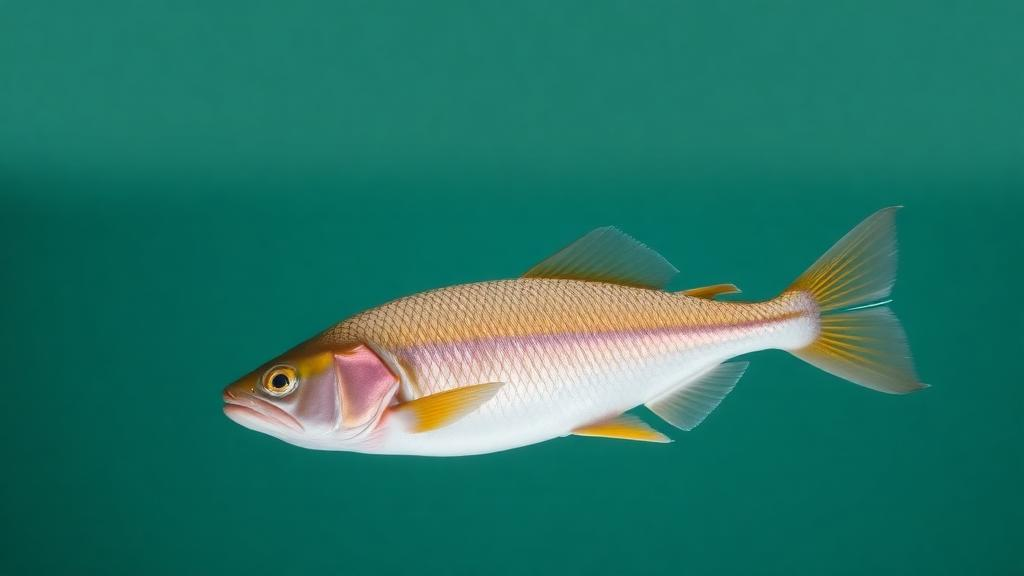
A field study of 11 freshwater fish species from four protected areas in northern Vietnam produced statistically significant length–weight relationships for all 11 species examined. The survey included 737 fish representing 11 genera and seven families, collected during eight field visits between October 2018 and November 2021. Six species showed positive allometric growth, five were statistically consistent with isometric growth, and none showed negative allometric growth. The researchers also identified six species for which no length–weight information was publicly available in FishBase, while cautioning that the sample sizes for two other species were too small for appropriate equations.
Length–weight relationships, commonly abbreviated LWRs, connect a fish’s measured length with its weight and can be used to estimate the mean weight of fish in a given length group. The study modeled each relationship as W = aTL^b, with W representing total weight in grams, TL representing total length in centimetres, a the intercept and b the slope. After log transformation, the relationship was expressed as log(W) = log(a) + b × log(TL). In the authors’ interpretation, a slope of 3 represents isometric growth, a value above 3 indicates positive allometric growth and a value below 3 indicates negative allometric growth.
The research was designed to establish baseline relationships for primarily freshwater fishes from four protected areas: Bac Me Nature Reserve, Nam Xuan Lac Habitat and Species Conservation Area, Cham Chu Nature Reserve and Phia Oac–Phia Den National Park. Fish were collected with hand nets, casting nets and gillnets. In the field, specimens were fixed in 10% formalin solution and later transferred to 70% ethanol in the laboratory. Total length was recorded to the nearest 0.01 centimetre and weight to the nearest 0.01 gram for each fish before the relationships were estimated statistically.
The analyzed assemblage included Aphyocypris normalis, Barbodes semifasciolatus, Beaufortia pingi, Carassius auratus, Glyptothorax honghensis, Hemibarbus medius, Macropodus opercularis, Neolissochilus benasi, Onychostoma gerlachi, Opsariichthys minutus and Rhinogobius duospilus. The authors described their work as the first study of LWRs for this set of primarily freshwater fishes in northern Vietnam. Six species—B. pingi, B. semifasciolatus, N. benasi, O. minutus, G. honghensis and R. duospilus—had no previous LWR information available in FishBase.
All 11 regressions were highly significant, with reported p-values below 0.001, and their coefficients of determination ranged from 0.952 to 0.997. The lowest value occurred for R. duospilus, while O. gerlachi and A. normalis each reached 0.997. Estimated slopes extended from 2.954 for M. opercularis to 3.407 for A. normalis. The estimated intercepts ranged from 0.004 for O. minutus and A. normalis to 0.012 for M. opercularis. Every fitted slope was within the 2.50–3.50 range identified in the cited general expectation for fish LWRs and the confidence limits reported in FishBase.
Six species had slopes significantly greater than 3. They were B. pingi, with b = 3.318; B. semifasciolatus, with b = 3.294; C. auratus, with b = 3.337; R. duospilus, with b = 3.201; A. normalis, with b = 3.407; and O. minutus, with b = 3.309. The other five species—N. benasi, O. gerlachi, H. medius, M. opercularis and G. honghensis—had confidence intervals that included 3 and were therefore classified as having isometric growth. Although the point estimate for M. opercularis was 2.954, its 95% confidence interval was 2.762–3.146, so the study did not classify it as showing negative allometry.
Sample sizes varied considerably among species and were an important limitation. The largest sample comprised 294 R. duospilus, followed by 91 O. minutus and 74 B. semifasciolatus. Only 17 H. medius and 12 C. auratus were measured. The authors stated that these two samples were insufficient to derive appropriate LWR equations. That qualification is important when interpreting their statistically significant fits: the numerical regressions describe the available specimens, but the authors did not regard the equations for those two species as adequately supported.
The observed length and weight ranges also differed substantially among taxa. B. pingi ranged from 1.06 to 7.44 centimetres and 0.01 to 4.25 grams; B. semifasciolatus from 2.12 to 7.57 centimetres and 0.10 to 5.56 grams; and R. duospilus from 2.32 to 5.28 centimetres and 0.12 to 1.58 grams. The largest sampled fish by recorded weight was N. benasi, reaching 17.86 centimetres and 71.75 grams. O. gerlachi extended from 1.05 to 17.81 centimetres, while O. minutus ranged from 2.01 to 16.92 centimetres and 0.05 to 47.88 grams.
Comparisons with previously published relationships showed that several estimates were similar to values in FishBase. The reported slopes for H. gerlachi, A. normalis, C. auratus and H. medius were close to the corresponding database values, whereas the estimate for M. opercularis was lower than the value reported by Tang and colleagues. The new dataset supplemented earlier records for O. gerlachi with smaller specimens and expanded the length range used for comparison in A. normalis. Such differences were not interpreted independently of sampling because LWR parameters can vary with fishing methods, storage techniques, collection periods, habitat, season, measured length type, sample size, gonadal maturation, diet, stomach fullness and growth stage.
The resulting estimates are presented as mean values because specimens were gathered over an extended period and the authors did not identify a single season dominating the sampling. They provide a baseline for stock assessment and for future work on the basic biology and growth patterns of the region’s freshwater fishes, including species of conservation concern. The study does not demonstrate population trends or changes in abundance: its measured result is the statistical relationship between observed length and weight for 11 species. Its immediate contribution is a set of reference equations, including first available LWR data for six species in FishBase, together with an explicit limitation on two equations supported by especially small samples.
Subject of Research: Length–weight relationships and growth patterns in 11 freshwater fish species from four protected areas in northern Vietnam
Article Title: Length–weight relationships for 11 freshwater fish species ( Actinopterygii ) from four protected areas, northern Vietnam
Article References: Nguyen, H. Q., Dang, H. T. T., Ta, T. T., Do, C. L., & Tran, H. D. (2024). Length–weight relationships for 11 freshwater fish species (Actinopterygii) from four protected areas, northern Vietnam. Acta Ichthyologica et Piscatoria, 54, 269-273. https://doi.org/10.3897/aiep.54.135133
Image Credits: AI Generated
Keywords: freshwater fish, length–weight relationships, positive allometry, isometric growth, northern Vietnam, protected areas, fish growth, Aquatic biodiversity, FishBase, field sampling, Length, weight
Cite Scienmag News
Margaret Porter. (October 20, 2026). Length–weight relationships reveal growth patterns in 11 northern Vietnamese fish species. Scienmag. https://scienmag.com/length-weight-relationships-reveal-growth-patterns-in-11-northern-vietnamese-fish-species/
Margaret Porter. "Length–weight relationships reveal growth patterns in 11 northern Vietnamese fish species." Scienmag, 20 October 2026, https://scienmag.com/length-weight-relationships-reveal-growth-patterns-in-11-northern-vietnamese-fish-species/. Accessed 20 October 2026.
Margaret Porter. "Length–weight relationships reveal growth patterns in 11 northern Vietnamese fish species." Scienmag. October 20, 2026. https://scienmag.com/length-weight-relationships-reveal-growth-patterns-in-11-northern-vietnamese-fish-species/