


The waste generated by power generation utility companies could be a potential source of metals and minerals that are key components of modern electronics, batteries, vehicles, and the clean-energy industry as a whole.

Credit: Lehigh University
The waste generated by power generation utility companies could be a potential source of metals and minerals that are key components of modern electronics, batteries, vehicles, and the clean-energy industry as a whole.
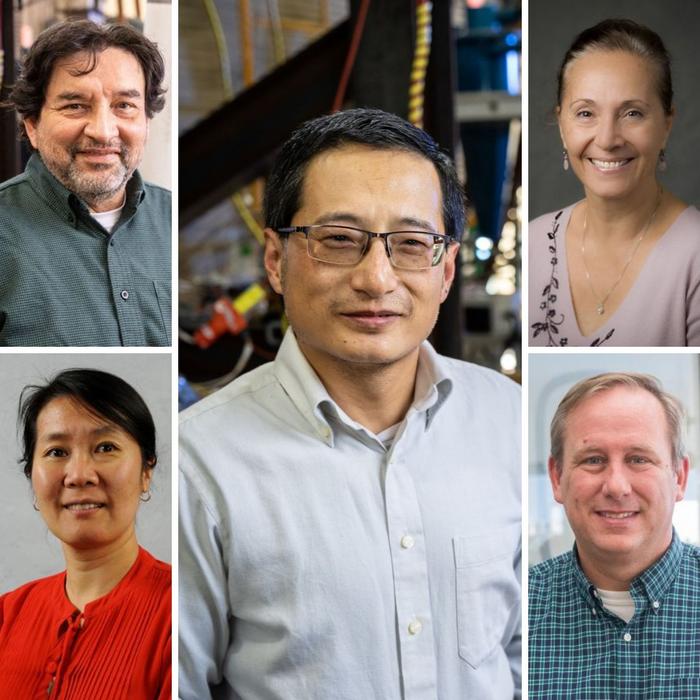
Zheng Yao, principal research scientist within Lehigh University’s Energy Research Center (ERC), and a multidisciplinary team of researchers recently received a $2.5 million grant from the Department of Energy (DOE) to identify rare earth elements (REEs) and elements of interest (EOIs) in wastewater and solid waste streams, and to develop the technology that could extract those elements.
The project team includes three faculty members in Lehigh’s P.C. Rossin College of Engineering and Applied Science: ERC Director Carlos Romero, research full professor in mechanical engineering and mechanics; Sibel Pamukcu, a professor of civil and environmental engineering; and Xuanhong Cheng, a professor of bioengineering and materials science and engineering. Stephen Peters, an associate professor of earth and environmental sciences in Lehigh’s College of Arts and Sciences, is also a member of the team, along with collaborators from Western Kentucky University and three U.S. utility companies.
For more than 40 years, the ERC has collaborated with various agencies and industries to address global energy challenges through innovative research, technology development, and student training, focusing today on sustainable power generation and decarbonization. The center is affiliated with Lehigh’s Institute for Cyber Physical Infrastructure and Energy (I-CPIE).
“Energy production creates liquid waste in the form of wastewater, or leachate, and solid waste in the form of ash,” says Yao, the project’s lead researcher. “The volume of landfill leachate is approximately 10 billion gallons per year, and the volume of ash is 190 to 240 billion gallons per year. Developing a means of mineral recovery to reduce the cost of waste treatment while potentially recovering valuable constituents is of great importance.”
According to Yao, there is only one large-scale mine in the United States that extracts REEs that are essential to the batteries that power devices like cell phones and electric vehicles, which are vital to growing the clean-energy economy. Tapping into the vast waste streams generated by utility companies could significantly bolster our national reserves of such materials and reduce our dependence on foreign suppliers.
“Redirecting this waste could also benefit the communities near these plants,” Romero says. “It could reduce the impact of leakages that may occur, and if we could develop a better way to clean the wastewater, that gray water could be utilized by those communities.”
The team will first work to characterize to what extent these waste streams contain REEs and EOIs.
After collecting samples at partner utilities, they’ll revise and streamline the procedures to analyze and measure the samples. They’ll then use electrodialysis—an electrochemical separation process that uses a membrane to concentrate material to enhance the value of the feedstock—to demonstrate that the technology can be used to effectively and efficiently extract and recover the elements.
“We’ll start with a tabletop electrodialytic device that will target REEs and lithium,” says Pamukcu. “It will be a custom-built setup, designed by multiple departments here at Lehigh, because the membrane we need to use must be very selective to allow for specific elements to pass through it.”
The goal is to demonstrate the effectiveness of the technology and to ultimately scale it up to be available commercially.
“Utility companies could use it to mitigate waste and contamination, and as a nation, we would have another domestic feedstock for battery manufacturing,” says Yao. “This is an opportunity to solve significant real-world problems.”
Related Links
- Lehigh University: Energy Research Center
- DOE project selections (FOA 2796): Water Research & Development for Oil & Gas Produced Water & Coal Combustion Residuals…
- ERC: Zheng Yao
- Faculty Profile: Carlos E. Romero
- Faculty Profile: Xuanhong Cheng
- Faculty Profile: Sibel Pamukcu
- College of Arts and Sciences/Earth & Environmental Sciences: Steve Peters
Cite Scienmag News
Denise Maddox. (May 29, 2024). Lehigh University researchers secure $2.5M DOE grant to characterize, extract rare earth elements from utility waste. Scienmag. https://scienmag.com/lehigh-university-researchers-secure-2-5m-doe-grant-to-characterize-extract-rare-earth-elements-from-utility-waste/
Denise Maddox. "Lehigh University researchers secure $2.5M DOE grant to characterize, extract rare earth elements from utility waste." Scienmag, 29 May 2024, https://scienmag.com/lehigh-university-researchers-secure-2-5m-doe-grant-to-characterize-extract-rare-earth-elements-from-utility-waste/. Accessed 10 September 2026.
Denise Maddox. "Lehigh University researchers secure $2.5M DOE grant to characterize, extract rare earth elements from utility waste." Scienmag. May 29, 2024. https://scienmag.com/lehigh-university-researchers-secure-2-5m-doe-grant-to-characterize-extract-rare-earth-elements-from-utility-waste/

