

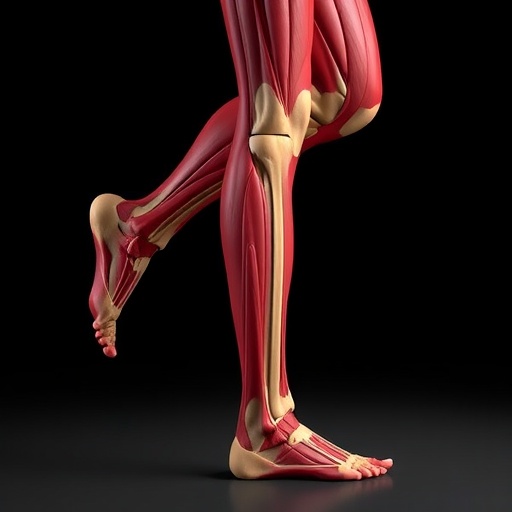
A groundbreaking study has unveiled a compelling link between leg muscle microvascular function and dynamic balance performance in older adults, marking a significant stride in geriatric health research. Published recently in BMC Geriatrics, the research highlights that microvascular health in leg muscles plays a crucial role in maintaining an individual’s ability to perform movements requiring balance and coordination, a revelation that could reshape intervention strategies aimed at fall prevention among the elderly.
Falls among older adults remain a dominant public health issue worldwide, often resulting in severe injury, disability, or even mortality. While much research has traditionally emphasized factors like muscle strength or neural control in balance, this latest investigation pivots toward the microvascular system within leg muscles—tiny blood vessels responsible for oxygen and nutrient distribution—as a pivotal determinant of dynamic balance ability. Unlike static balance, which involves maintaining a posture without movement, dynamic balance requires the body to stabilize itself during motion, such as walking, turning, or avoiding obstacles.
The study capitalized on advanced imaging techniques and vascular assessments to measure microvascular function in the leg muscles of older participants. Functional tests evaluating both static and dynamic balance were administered, enabling researchers to draw robust correlations. The findings were striking: participants exhibiting better microvascular function demonstrated superior performance on dynamic balance tests, whereas no significant relationship was found with static balance capabilities. This delineation underscores the complexity and specificity of physiological mechanisms underpinning different types of balance control in aging populations.
Microvascular health influences muscle metabolism profoundly by regulating the delivery of oxygen and nutrients necessary for sustained muscle activity. In the context of dynamic balance, which demands continuous and adaptive muscular responses, an efficient microvascular network ensures muscle resilience and responsiveness. This biological insight affords a fresh perspective on why some older adults are predisposed to falls, not purely because of muscle strength deficits or neurological decline but due to compromised blood flow at the micro-level within muscle tissues.
The researchers posit that interventions designed to enhance microvascular function could hold promising potential for improving dynamic balance. Aerobic exercise, known to promote angiogenesis and vascular health, may thus offer dual benefits by boosting cardiovascular capacity and fortifying microvascular integrity in the muscles. This dual action could help sustain the muscular functions necessary for maintaining balance during movement, thereby lowering the risk of falls.
Moreover, the absence of a notable link between microvascular function and static balance suggests that maintaining posture without movement relies more heavily on other systems, such as proprioception and central nervous system stability. Consequently, clinical assessments and therapeutic approaches need to consider these differing physiological foundations when targeting fall prevention.
This investigation also raises important questions about the role of comorbidities such as diabetes and peripheral arterial disease, which are known to impair microvascular function. Future research exploring how these conditions exacerbate balance impairments could pave the way for targeted treatment regimens that address vascular health as a cornerstone of mobility maintenance in the elderly.
Importantly, the study’s methodology exemplifies the integration of cutting-edge vascular imaging with functional performance metrics, setting a new standard for multidimensional assessment in gerontology research. Such holistic approaches enable a more nuanced understanding of the interplay between cardiovascular and musculoskeletal health and their collective impact on functional independence.
Beyond fall prevention, the implications of improving leg muscle microvascular function may extend to broader domains of aging research, including frailty reduction and enhancement of overall physical performance. Maintaining the integrity of the microvascular network may be a key factor in preserving muscular health and autonomy in older adults, thereby contributing to improved quality of life.
The potential for pharmacological agents aimed at endothelial function enhancement is another intriguing avenue to be explored, supplementing lifestyle interventions where physical activity may be limited due to concurrent illnesses or mobility constraints. Development of such therapeutic strategies could revolutionize care paradigms for an aging global population.
In-depth molecular analyses could further unravel the mechanisms by which microvascular alterations impact muscle function and balance, including the roles of inflammation, oxidative stress, and endothelial nitric oxide pathways. Understanding these pathways may identify biomarkers for early detection of microvascular deterioration and subsequent balance decline.
As the global demographic shifts towards older age groups, the urgency of developing effective, evidence-based approaches to maintain functional independence becomes increasingly critical. The current findings inject fresh enthusiasm and direction into the field, emphasizing the vascular-muscular axis as a pivotal component of mobility preservation strategies.
Translational efforts are necessary to implement these research insights into practical applications within community and clinical settings. Screening programs integrating microvascular function assessments could identify at-risk individuals earlier, facilitating timely and personalized intervention planning.
In conclusion, this landmark study not only broadens our comprehension of the intrinsic factors influencing balance in older adults but also lays the groundwork for innovative, vascular-based therapeutic interventions. By bridging the gap between microvascular health and dynamic balance performance, these research findings promise to inform future strategies aimed at enhancing mobility, reducing fall risk, and ultimately improving the aging experience.
Subject of Research: The relationship between leg muscle microvascular function and balance performance in older adults
Article Title: Leg muscle microvascular function is associated with dynamic but not static balance performance in older adults
Article References: Leng, B., Liu, Z., Huang, H. et al. Leg muscle microvascular function is associated with dynamic but not static balance performance in older adults. BMC Geriatr (2026). https://doi.org/10.1186/s12877-026-07213-3
Image Credits: AI Generated


