


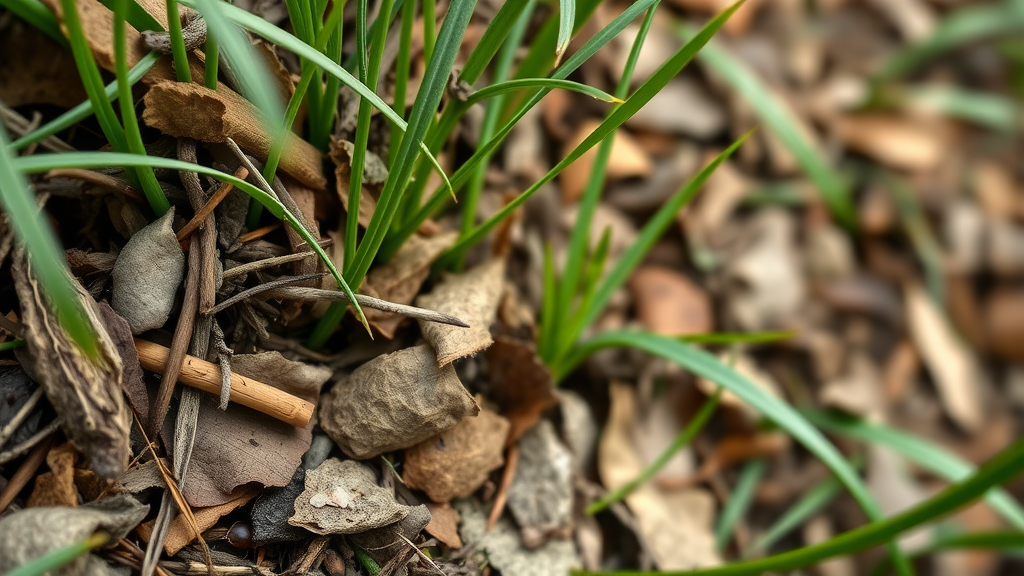
Beneath every drought-stressed grassland lies a quiet negotiation between roots, microbes, and the decaying leaves that carpet the soil. A new experiment conducted by researchers at the Hawkesbury Institute for the Environment at Western Sydney University, published in the open-access journal Discover Ecology, reveals that this negotiation is far more species-specific than ecologists had assumed. The study, led by Jerzy Szejgis and colleagues, shows that leaf litter does not simply act as a passive fertilizer during dry spells. Instead, it actively rewires the relationships between plants and soil organisms, sometimes promoting cooperation and at other times intensifying competition for scarce nutrients, with consequences that could shape which plant species dominate pastures as droughts intensify.
The team drew on a rare scientific resource: a long-term rainfall manipulation experiment in eastern Australian grassland that had been running since 2014. On plots where rain-exclusion shelters had cut incoming rainfall by fifty percent for seven years, the soil itself carries a memory of prolonged drought, a legacy embedded in its chemistry and microbial communities. The researchers excavated soil from both droughted and ambient rainfall plots, transported it to the laboratory, and used it as the foundation for a carefully controlled growth-chamber experiment. This design allowed them to separate the historical imprint of drought from the immediate effects of reduced water availability, a distinction that most short-term studies cannot make.
Two common pasture species served as the protagonists: weeping grass, Microlaena stipoides, a native C3 grass with dense fibrous roots, and ribwort plantain, Plantago lanceolata, a forb that invests more heavily in shoots and tends to conserve resources under stress. Seedlings of each species were grown for twelve weeks in pots containing soil from the long-term droughted or ambient plots, maintained at either forty percent or seventy percent of water holding capacity, mirroring the field treatments. Crucially, the researchers added a twist: half the pots received a mesh litter bag containing roughly one gram of leaf litter produced by the same plant species, buried vertically in the soil to ensure direct contact with microbial decomposers. The other half received no litter, creating a clean contrast.
The measurement toolkit was correspondingly comprehensive. Plant root and shoot biomass were harvested and weighed separately. Soil nutrient pools were assessed using chloroform fumigation extraction, which distinguishes carbon and nitrogen locked inside living microbial cells from soluble pools available to plants. Microbial community composition was profiled using phospholipid and neutral lipid fatty acid analysis, biomarker techniques that assign signature fatty acids to broad taxonomic groups: Gram-positive and Gram-negative bacteria, Actinobacteria, fungi, protozoa, and, via the neutral lipid 16:1 omega 5c, arbuscular mycorrhizal fungi. Litter bags were reweighed to quantify decomposition as percent mass loss, and statistical models including redundancy analysis tied plant performance to microbial profiles.
The headline result is deceptively simple: drought consistently reduced microbial biomass carbon and nitrogen across both plant species, confirming that water stress limits the soil organisms that drive nutrient cycling. Yet litter addition significantly boosted microbial biomass carbon under well-watered conditions and increased most microbial biomarkers, particularly in pots planted with the grass. On the plant side, litter addition increased shoot biomass for both species regardless of watering, hinting that decomposing litter released nutrients that plants could capture. But the most striking findings emerged in the roots, where the story diverged sharply between species.
For Microlaena stipoides, litter addition increased root biomass under drought but decreased it under ambient watering, with the root-to-shoot ratio following the same pattern. This reversal suggests a fundamental shift in strategy. When water was plentiful and litter present, the grass apparently could afford to invest less in foraging roots, possibly relying more on symbiotic microbes to supply nutrients. Under drought, however, the combination of litter and dry soil pushed the grass toward heavier root investment, and the litter mass lost to decomposition correlated positively with both root biomass and the arbuscular mycorrhizal biomarker. In other words, under dry conditions the grass and its fungal partners appeared to work together to unlock nutrients stored in decaying leaf material, a genuine plant-soil biotic feedback rather than a simple fertilization effect.
Plantago lanceolata told a different tale. The forb showed higher litter mass loss overall, consistent with its nitrogen-rich, more readily decomposable leaves, and its biomass was broadly and positively associated with nearly every microbial measure, from bacterial biomarkers to microbial biomass carbon and nitrogen. This pattern suggests an ongoing, mutually beneficial exchange in nutrient cycling between the forb and the soil community. Even so, some nuances appeared: in the presence of litter under ambient conditions, biomarkers for Gram-positive bacteria and Actinobacteria declined, and under drought with litter, biomarkers for Gram-negative bacteria, protozoa, and arbuscular mycorrhizae dropped, hinting that litter could also shift microbial dynamics in ways that were not uniformly positive.
The redundancy analysis crystallized the contrast between the two species. While Plantago lanceolata biomass rose in tandem with microbial abundance across treatments, Microlaena stipoides shoot biomass was negatively associated with microbial biomass carbon, and its root biomass was negatively related to fungal and bacterial biomarkers. The authors interpret this as resource competition: when nutrients run short, microorganisms can immobilize inorganic nitrogen during decomposition, effectively hoarding it away from plant roots, and the grass responds by building more roots to grab nutrients directly. Yet even this competitive grass maintained one positive relationship, with arbuscular mycorrhizal fungi, suggesting that mycorrhizas occupy a special role as partners rather than rivals, particularly when litter provides a shared nutrient reservoir that fungal hyphae can penetrate.
Not every observation fit the researchers’ initial hypotheses. Contrary to expectations, Gram-positive bacteria and Actinobacteria biomarkers were actually higher under drought than under ambient watering in pots without litter, particularly with the grass, indicating that some microbial groups are biologically adapted to desiccation, or that stress induces shifts in fatty acid composition that inflate these biomarker signals. Litter decomposition was also faster under drought, an unexpected result that the authors attribute to microorganisms investing more effort in mining litter for carbon when other resources are limited. These caveats matter: fatty acid biomarkers can persist in dead cells, and the twelve-week pot experiment involved only thirty-two pots and two species, limitations the team acknowledges openly.
The broader implications reach well beyond the growth chamber. As climate change intensifies drought frequency and severity across many ecosystems, the finding that litter mediates drought impacts through species-specific shifts in plant-microbe interactions suggests that the composition of plant communities will help determine how grasslands respond. A pasture dominated by a grass like Microlaena stipoides may lean increasingly on mycorrhizal partnerships and litter decomposition to survive dry years, while forb-rich communities may sustain nutrient cycling through close coupling with the broader microbial community. The authors point toward litter manipulation as a potential management strategy to enhance drought resilience, while cautioning that long-term field studies with more species are needed. What is already clear is that the dead leaves on the forest and grassland floor are not debris; they are active participants in the living economy of the soil, and their role becomes only more critical as the climate dries.
Subject of Research: How leaf litter moderates drought effects on plant growth and soil microbial communities through species-specific plant-soil biotic interactions
Article Title: Drought impacts on plants and microbes are moderated by leaf litter via species specific shifts in plant and soil biotic interactions
Article References: Szejgis, J., Carrillo, Y., Dijkstra, F. A., Hassan, K., Maisnam, P., & Nielsen, U. N. (2026). Drought impacts on plants and microbes are moderated by leaf litter via species specific shifts in plant and soil biotic interactions. Discover Ecology, 2(1), Article 4. https://doi.org/10.1007/s44396-026-00022-3
Image Credits: AI Generated
DOI: 10.1007/s44396-026-00022-3
Keywords: drought, leaf litter, plant-soil interactions, soil microbes, arbuscular mycorrhiza, Microlaena stipoides, Plantago lanceolata, PLFA, nutrient cycling, grassland ecology, decomposition, climate change
Cite Scienmag News
Gavin Prescott. (September 25, 2026). Leaf Litter Emerges as a Hidden Ally That Reshapes How Grassland Plants and Microbes Weather Drought. Scienmag. https://scienmag.com/leaf-litter-emerges-as-a-hidden-ally-that-reshapes-how-grassland-plants-and-microbes-weather-drought/
Gavin Prescott. "Leaf Litter Emerges as a Hidden Ally That Reshapes How Grassland Plants and Microbes Weather Drought." Scienmag, 25 September 2026, https://scienmag.com/leaf-litter-emerges-as-a-hidden-ally-that-reshapes-how-grassland-plants-and-microbes-weather-drought/. Accessed 4 October 2026.
Gavin Prescott. "Leaf Litter Emerges as a Hidden Ally That Reshapes How Grassland Plants and Microbes Weather Drought." Scienmag. September 25, 2026. https://scienmag.com/leaf-litter-emerges-as-a-hidden-ally-that-reshapes-how-grassland-plants-and-microbes-weather-drought/


