


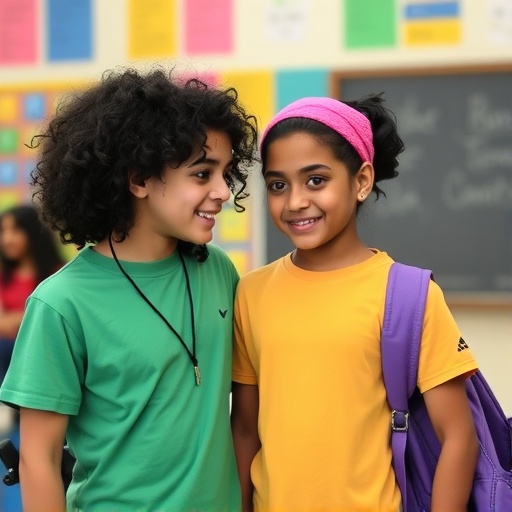
In a groundbreaking study published in the journal Large-scale Assess Educ, a group of researchers led by N. López-Hornickel has delved deeply into the nuanced perceptions of gender equity among Latin American students. This pioneering research not only sheds light on the opinions of adolescents regarding gender equality but also emphasizes the critical role that peer influence plays in shaping these views within school environments. As societies across Latin America navigate the complex landscape of gender rights and equality, understanding the perspective of future generations becomes increasingly essential.
The study reveals that students’ endorsements of gender equity are often influenced not just by their own beliefs but significantly by the opinions of their peers. The researchers conducted extensive surveys across multiple countries, gathering data from thousands of students to assess how their views align with or diverge from those of their classmates. This kinship of thought emphasizes a collective consciousness that permeates school culture, affecting students’ behavior and attitudes towards gender roles and equity.
At the forefront of this research is the concept that support for gender equality is not merely an isolated opinion but a shared value system among groups of students. Evidence suggests that when one student expresses a belief in gender equity, it is likely to resonate with others in their immediate social circle. The study posits that this phenomenon is a powerful tool for promoting gender equality initiatives within educational settings. Schools that foster open discussions about gender roles and equity may find their efforts enhanced by the natural inclination of students to align with their peers.
In analyzing the gathered data, the researchers discovered that factors such as socioeconomic status, educational background, and cultural norms played a significant role in shaping students’ endorsement of gender equity. For instance, students from lower socioeconomic backgrounds tended to exhibit stronger support for gender equity, often as a response to personal experiences with inequality. These findings challenge conventional assumptions about who supports gender equality, revealing a more complex tapestry of beliefs influenced by various external factors.
Moreover, the study highlighted the importance of school curricula in reinforcing or undermining perceptions of gender norms. Schools that actively integrate discussions on gender equality into their programs are witnessing a more profound commitment to equity among students. This integration encourages students to critically assess their own beliefs, fostering an environment where questioning traditional gender roles becomes a norm rather than an exception. The implications of this trend are far-reaching, potentially shaping the future landscape of gender equity beyond school walls.
Peer dynamics are pivotal in this process. The survey results indicated that students were often swayed by their friends’ opinions, which led to a ripple effect within the classroom. For instance, if a popular student advocated for gender equality, their circle of friends was more likely to adopt similar views, irrespective of their initial stances. This phenomenon can be harnessed by educators to promote inclusive practices that encourage constructive peer discussions about gender roles.
The research underscores the necessity for teachers and administrators to cultivate environments where open dialogue about gender issues is encouraged. Training sessions and workshops could equip educators with the necessary tools to facilitate these discussions, ensuring that students feel safe and supported in expressing their thoughts. By employing inclusive teaching strategies, schools can bridge gaps in understanding and foster a culture of mutual respect and equality.
As the findings gain traction among educational policymakers, there is a growing recognition of the need to implement gender-sensitive approaches in curriculum design. These strategies could identify ways to engage students from diverse backgrounds while reinforcing the importance of equity across all aspects of school life. The potential impact of these initiatives could be transformative, impacting not just individual students but entire communities as they work towards greater inclusivity.
Furthermore, this research serves as a vital reminder that adolescents are not passive consumers of societal norms—they are active agents capable of challenging and redefining those norms. When schools create spaces where gender equity is championed, they empower students to advocate for change, both within their institutions and in the broader society. The ripple effects of these empowered youths could lead to a profound shift in cultural perceptions of gender equality across Latin America.
As this vital conversation continues, it remains imperative that all participants in the educational ecosystem—students, teachers, administrators, and families—commit to fostering a culture of equity. This collective engagement will be key to creating sustainable change that not only enhances the school environment but also equips students with the skills needed to navigate and challenge gender inequalities in their future endeavors.
In summary, López-Hornickel and her team’s research is essential for understanding the mechanisms through which students’ views on gender equity evolve. By highlighting the interplay between personal belief systems and peer influence, the study offers a roadmap for schools aiming to promote a more equitable educational experience. The research not only contributes valuable insights to academic discourse but also serves as a practical guide for educational institutions striving to impact future generations positively.
The momentum of the findings suggests a pivotal moment in the journey towards true gender equity in education. As Latin American societies grapple with ingrained gender disparities, the role of students as advocates for change cannot be understated. Engaging them in meaningful discussions about gender issues today can lay the groundwork for a more equitable tomorrow.
The call to action generated by this research is clear: it is time for educators and policymakers to collaborate closely, transforming schools into hubs of progressive thought where gender equality is not just taught but actively endorsed. If society can harness the passion and power of the youth, the dream of gender equity may not just be an aspiration—but a realizable goal for future generations.
In the spirit of this study, looking at the collaborative efforts needed to pave the way for comprehensive gender equity ensures that conversations surrounding this topic remain vital, impactful, and ever-evolving in educational settings.
Cite Scienmag News
Courtney Benton. (November 30, 2025). Latin American Students Champion Gender Equity in Schools. Scienmag. https://scienmag.com/latin-american-students-champion-gender-equity-in-schools-2/
Courtney Benton. "Latin American Students Champion Gender Equity in Schools." Scienmag, 30 November 2025, https://scienmag.com/latin-american-students-champion-gender-equity-in-schools-2/. Accessed 7 September 2026.
Courtney Benton. "Latin American Students Champion Gender Equity in Schools." Scienmag. November 30, 2025. https://scienmag.com/latin-american-students-champion-gender-equity-in-schools-2/


