

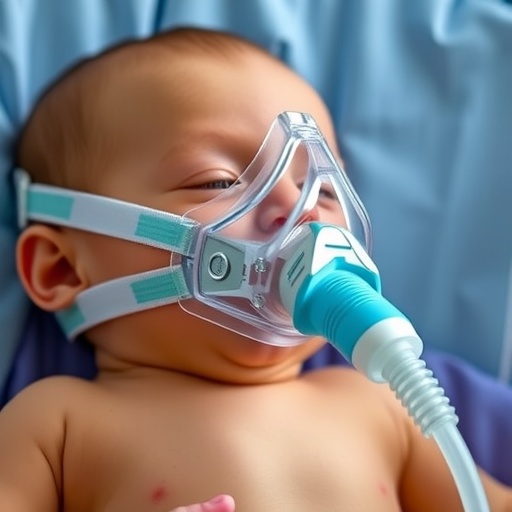
In a groundbreaking advancement poised to revolutionize neonatal resuscitation, researchers have introduced an innovative method for delivering epinephrine using a laryngeal mask airway (LMA). This technique promises to expand the tools available to clinicians in the critical moments when newborns experience cardiac arrest or severe bradycardia, potentially improving survival outcomes and neurological prognosis dramatically. The findings, published in Pediatric Research on December 2, 2025, mark a major step forward in addressing the challenges of neonatal airway management during resuscitation.
Neonatal resuscitation protocols have traditionally relied on endotracheal intubation to administer epinephrine effectively during life-threatening events. However, intubation can be technically challenging in newborns due to their delicate and small anatomical structures, requiring highly skilled practitioners. Delays or failures in intubation are linked directly to poorer survival rates. The introduction of LMA as a viable alternative circumvents many of these obstacles by providing a quicker, less technically demanding route for drug delivery.
The laryngeal mask, originally designed and widely used in adults and older pediatric patients as a supraglottic airway device, is now being adapted for the unique physiology of neonates. By positioning above the vocal cords, the LMA allows ventilation and medication administration without navigating through the trachea. This approach reduces the risk of trauma, decreases the time needed to secure an airway, and opens up avenues for even less experienced providers to deliver life-saving interventions in emergency scenarios.
In this pivotal research, investigators evaluated the pharmacodynamics and effectiveness of epinephrine administration through LMAs in controlled neonatal models. Their results demonstrated not only comparable systemic absorption of the drug but also favorable hemodynamic responses when compared to the gold-standard endotracheal route. This suggests that epinephrine delivered via LMA can achieve the vital cardiac stimulation needed to restore spontaneous circulation in newborns experiencing asystole or profound bradycardia.
The clinical implications of these findings extend beyond just ease of drug delivery. Time to intervention is a critical determinant of survival in neonates undergoing resuscitation. By streamlining airway management and minimizing technical obstacles, the LMA-based technique could significantly reduce the delay in epinephrine administration. This improvement has the potential to transform neonatal resuscitation outcomes globally, particularly in resource-limited settings where expert personnel are scarce.
Moreover, the study underscores the importance of re-evaluating and updating neonatal resuscitation algorithms to include supraglottic airway devices as frontline options in drug delivery. The researchers advocate for widespread training and dissemination of LMA use in neonatal units, emphasizing that proficiency with this device is achievable with focused education and practice. Institutional adoption could lead to standardized protocols that incorporate this advancement, ultimately saving more newborn lives.
From a physiological standpoint, the researchers analyzed the distribution of epinephrine after LMA administration using advanced imaging and blood sampling techniques. They noted efficient and rapid pulmonary absorption, which facilitated prompt systemic effects. This confirms that the LMA route permits effective pulmonary drug delivery even in critically ill neonates with compromised cardiac function. Such a mechanism could be critical when vascular access is difficult or delayed.
The team also addressed potential concerns surrounding the use of LMAs in newborns, including the risk of airway obstruction or aspiration. Their meticulous experimental setup, incorporating ultrasound and continuous monitoring, demonstrated a reliable seal and minimal complications. This reassures clinicians that LMAs can be safely integrated into neonatal resuscitation without increasing airway trauma or infection risk.
Perhaps most impressively, the research bridges the gap between technical airway management innovation and pharmacological efficacy, providing a seamless solution to a long-standing clinical challenge. The LMA is not a mere improvement in ventilation but also serves as an efficient conduit for emergency medication delivery. Such dual functionality enhances the overall resuscitation strategy, addressing multiple barriers simultaneously.
These findings arrive at a crucial time when neonatal mortality rates stagnate in many parts of the world due to inadequate resuscitation facilities and practitioner expertise. The introduction of an easier-to-use airway device that guarantees rapid drug delivery could democratize access to life-saving therapies. Especially in low- and middle-income countries, where neonatal deaths remain alarmingly high, this innovation holds promise for transforming neonatal intensive care units’ capabilities.
The next steps recommended by the authors include large-scale clinical trials to validate the efficacy and safety of LMA-mediated epinephrine delivery in actual neonatal resuscitation scenarios. Such trials would not only confirm the translational value of their experimental work but also resolve any lingering uncertainties related to device sizing, dosing, and patient variability. Additionally, integration into international neonatal resuscitation guidelines requires robust evidence from diverse healthcare environments.
In parallel to clinical development, the team envisions developing specialized neonatal LMA devices optimized for drug administration. Future designs might incorporate drug reservoirs or enhance sealing properties to maximize therapeutic delivery. The intersection of device engineering and neonatal pharmacology embodied in this study highlights an emerging frontier for innovation in perinatal medicine.
By unlocking a novel pathway for epinephrine administration, this research redefines how clinicians approach the most critical emergencies in newborns. It challenges the entrenched reliance on difficult intubation and paves the way for safer, faster, and more effective neonatal resuscitation. The ability to expand the airway toolbox with the laryngeal mask reflects a remarkable advancement in the fight against neonatal mortality and morbidities associated with poor oxygenation.
Ultimately, this work embodies a blend of clinical pragmatism and scientific rigor, marrying airway device technology with emergency pharmacology to yield improved patient-centered outcomes. The neonatal intensive care community eagerly awaits broader adoption and validation, which may herald a new era where epinephrine delivery is as accessible and reliable as ventilation itself.
The promise of this technique extends beyond neonatal care; it may inspire innovation in pediatric and emergency medicine, driving forward safer approaches to rapid medication delivery in vulnerable patients. As research continues, this breakthrough could stimulate a re-examination of drug administration routes in various resuscitation contexts, influencing treatment protocols well into the future.
In summary, the advent of laryngeal mask epinephrine administration stands to revolutionize neonatal resuscitation by offering an accessible, efficient, and effective alternative to traditional intubation-based drug delivery. With ongoing research and clinical integration, this innovation holds immense potential to save countless newborn lives worldwide, ensuring that the first moments of life are met with the best possible interventions.
Subject of Research: Neonatal resuscitation; epinephrine delivery through laryngeal mask airway
Article Title: Laryngeal mask epinephrine: expanding the airway toolbox in neonatal resuscitation
Article References:
Chandrasekharan, P., Wilding, G. & Bawa, M. Laryngeal mask epinephrine: expanding the airway toolbox in neonatal resuscitation. Pediatr Res (2025). https://doi.org/10.1038/s41390-025-04645-2
Image Credits: AI Generated
DOI: 10.1038/s41390-025-04645-2
Keywords: neonatal resuscitation, laryngeal mask airway, epinephrine, airway management, pharmacology, neonatal cardiac arrest


