


In a world-first discovery, Griffith University researchers have discovered faulty cell function in veterans suffering from Gulf War Illness (GWI), also known as Gulf War Syndrome (GWS), is likely caused by intense exposure to hazardous biological and chemical agents during war service.

Credit: Griffith University
In a world-first discovery, Griffith University researchers have discovered faulty cell function in veterans suffering from Gulf War Illness (GWI), also known as Gulf War Syndrome (GWS), is likely caused by intense exposure to hazardous biological and chemical agents during war service.
The landmark research, published in PLOS ONE, solves a mystery that has baffled medical scientists for decades.
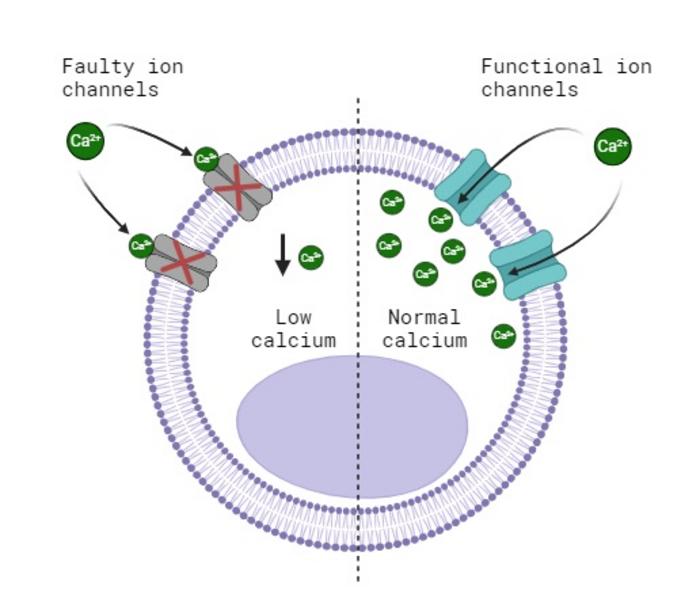
Conducted on the Gold Coast by Griffith University’s National Centre for Neuroimmunology and Emerging Diseases (NCNED), the research revealed the cell structures integral for transporting calcium into cells, known as transient receptor potential ion channels, are defective in veterans with GWI.
NCNED Director and author Professor Sonya Marshall-Gradisnik said the role of calcium within cells as a signalling molecule was pivotal, regulating essential functions such as muscle contraction, nerve function and hormone secretion.
“The findings from our research provides clear scientific evidence that the health problems experienced by Gulf War veterans can be directly linked to their exposure to specific hazardous agents during their service.
“Our study reveals a crucial dysfunction in cell ion channels, specifically the transient receptor potential ion channels, in veterans with GWI.
“This discovery is a significant step forward in understanding this baffling and complex illness.”
NCNED researcher and author Etianne Sasso said the team’s findings were crucial in demystifying GWI, offering definitive scientific evidence that validates the condition which has long been challenging for sufferers to have recognised and accepted.
“During the Gulf War, defence personnel faced exposure to a wide range of agents, including environmental stressors and biological and chemical agents,” she said.
“Our research clearly shows cell structures within the human body are sensitive and vulnerable to these agents, causing faulty cell function.
“This breakthrough in understanding the cause of GWI now provides hope for researchers to be able to develop new treatments to improve the future for our veterans.”
Gulf War Veteran and GWI advocate Mr Ian Allwood, said he was immensely thankful to Professor Marshall-Gradisnik and her team for their dedication to our cause.
“To be believed means the world to us,” he said.
“This research is life-changing for the Gulf War Vets.
“For those in the Veteran community that have been suffering, this is the first step in identifying a causal factor.
“This is groundbreaking research that will hopefully open pathways to treatment for the often-debilitating symptoms.
“Our veterans were prepared to lay their lives on the line, representing Australia, in the name of freedom.
“We owe them a debt of more than gratitude.
“They have suffered injury as a direct result of their service.”
GWI affects between 25 per cent to 32 per cent of the nearly one million veterans from 41 countries who served in the 1990-1991 Gulf War.
More than 1800 Australians served in the Gulf War, mainly in the Navy and with smaller Army and Air Force contributions.
Many were exposed to several mandatory vaccines, prophylactic anti-nerve agent drugs and various hazardous agents, including insecticide, nerve agents and depleted uranium.
These veterans suffered from an unexplained cluster of symptoms such as chronic fatigue, pain, inflammation, sleep disturbances, neurological and cognitive impairment, gastrointestinal and respiratory disorders, and post-exertional malaise.
The paper ‘Novel characterisation of endogenous Transient Receptor Potential Melastatin 3 ion channels from Gulf War Illness participants’ has been published in PLOS ONE.
Journal
PLoS ONE
Method of Research
Case study
Subject of Research
People
Article Title
Novel characterization of endogenous transient receptor potential melastatin 3 ion channels from Gulf War Illness participants
Article Publication Date
25-Jun-2024
Cite Scienmag News
Bethany Barker. (July 15, 2024). Landmark discovery solves baffling mystery around Gulf War Illness in veterans. Scienmag. https://scienmag.com/landmark-discovery-solves-baffling-mystery-around-gulf-war-illness-in-veterans/
Bethany Barker. "Landmark discovery solves baffling mystery around Gulf War Illness in veterans." Scienmag, 15 July 2024, https://scienmag.com/landmark-discovery-solves-baffling-mystery-around-gulf-war-illness-in-veterans/. Accessed 5 September 2026.
Bethany Barker. "Landmark discovery solves baffling mystery around Gulf War Illness in veterans." Scienmag. July 15, 2024. https://scienmag.com/landmark-discovery-solves-baffling-mystery-around-gulf-war-illness-in-veterans/

