


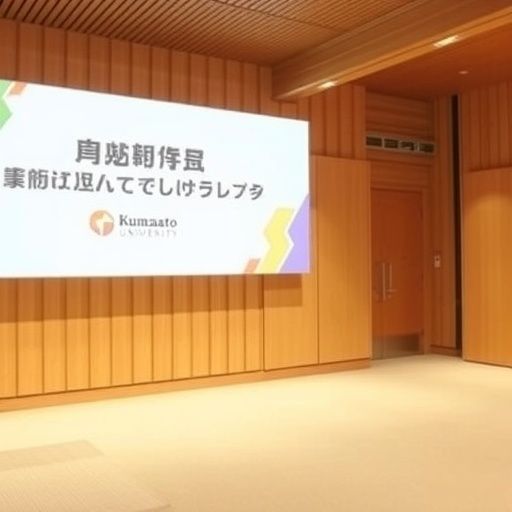
In a bold leap toward advancing semiconductor science and technology, Kumamoto University has unveiled a trailblazing venture known as the Kumadai Research Institute (KURI). This strategic initiative emerges at a pivotal moment, coinciding with the notable expansion of Taiwan Semiconductor Manufacturing Company (TSMC) within the Kumamoto region. The synergy between academia and industry is expected to forge a transformative pathway in semiconductor education, research, and industrial application, positioning Kumamoto as a burgeoning hub on the global semiconductor stage.
The establishment of KURI reflects Kumamoto University’s commitment to responding to the urgent need for highly skilled engineers and researchers capable of driving innovation in semiconductor technology. In a press conference held on March 17th, 2026, the university delineated KURI’s visionary framework as a dynamic interface that integrates cutting-edge academic insights with industrial exigencies. The initiative is a testament to the university’s strategic foresight, underpinning its evolution beyond traditional scholarship towards real-world technological leadership.
Recognizing the sophisticated demands of semiconductor manufacturing and research, Kumamoto University has dramatically expanded its educational portfolio with a newly minted undergraduate program specializing in Semiconductor Device Engineering. This rigorous curriculum is designed to cultivate a generation of students proficient in quantum mechanics, semiconductor physics, and nano-fabrication techniques. Parallel to this undergraduate program, the university launched a graduate-level department dedicated to advanced semiconductor studies, fostering deep expertise in device architecture, circuit integration, and materials science.
Augmenting this academic expansion is the inauguration of the School of Informatics, a novel faculty constituting the institution’s first new academic division since 1949. This school serves as an interdisciplinary nexus, bringing together data science, information theory, and computational engineering to enhance the analytical and design capabilities essential for semiconductor innovation. It reflects the university’s recognition that future semiconductor advancements will increasingly rely on sophisticated informatics and machine learning tools.
Integral to KURI’s success is the strategic collaboration with the Japanese government’s J-PEAKS program, which provides robust financial backing and policy support aimed at establishing Kumamoto as a premier semiconductor research hub. This alignment ensures that KURI’s research and development efforts resonate with national innovation policies, fostering a conducive environment for technological breakthroughs and workforce reskilling initiatives.
Distinguished Professor Hideki Wakabayashi, a luminary in technology management, anchors KURI’s research leadership. His expertise in Management of Technology (MOT) propels the institute’s mission beyond pure research, emphasizing the translation of scientific discoveries into viable industrial applications. Under his guidance, KURI integrates MOT education with practical consultancy, equipping enterprises with strategies to navigate the complex semiconductor ecosystem and accelerate technology adoption.
President Hisao Ogawa of Kumamoto University underscored the imperative of swiftly channeling academic knowledge into societal progress, highlighting KURI’s role as a pivotal conduit in this knowledge transfer. His vision articulates a future wherein academia does not operate in isolation but actively participates in solving real-world industrial challenges, fostering innovation that drives economic growth and technological sovereignty.
Toshihiko Tanaka, appointed as KURI’s company president, elaborated on the institute’s operational philosophy. Unlike conventional research entities that offer theoretical advice, KURI commits to hands-on project execution, collaborating closely with industry stakeholders. This pragmatic approach ensures that research outcomes are directly implemented in product development cycles, manufacturing optimization, and supply chain enhancements, thereby shortening the innovation lifecycle.
By fusing technology management education with bespoke corporate support services, KURI aspires to cultivate a sustainable, global semiconductor ecosystem. This envisioned ecosystem transcends geographic and disciplinary boundaries, promoting a continuous exchange of talent, technology, and industrial know-how. Kumamoto’s strategic geographical position and academic assets uniquely position it as a linchpin in this global network.
The anticipated frictionless circulation of semiconductor knowledge and skills aims to address the escalating demand for highly specialized experts capable of navigating the increasingly intricate semiconductor value chain. From device physics and materials characterization to process engineering and systems integration, KURI endeavors to produce professionals equipped with a holistic understanding of semiconductor development complexities.
TSMC’s regional expansion acts as a catalyst, propelling Kumamoto University’s semiconductor initiatives into high gear. This geopolitical and industrial development not only catalyzes substantial capital investment but also amplifies collaborative opportunities with Taiwanese universities and corporations. Such cross-border partnerships enrich the intellectual capital and offer multifaceted perspectives essential for next-generation semiconductor innovation.
Kumamoto University’s seamless integration of education, research, and industrial collaboration embodied in KURI is poised to redefine the paradigms of technological advancement in Japan and beyond. By embracing both foundational semiconductor science and emerging technologies, such as AI-driven design automation and quantum materials, KURI stands on the frontier of semiconductor innovation poised to influence the global technological landscape profoundly.
This pioneering effort echoes a broader global movement striving to secure semiconductor supply chains, enhance production capabilities, and nurture domestic technological leadership. As semiconductor devices become ever more central to modern electronics, computing, and communication infrastructures, initiatives like KURI symbolize a decisive stride toward ensuring resilient and advanced semiconductor ecosystems for the future.
News Publication Date: March 17th, 2026
Web References:
- Kumamoto University: https://ewww.kumamoto-u.ac.jp/en/
- Kumadai Research Institute (KURI): https://www.kuriinc.com/english/
Keywords
Semiconductors, Semiconductor Device Engineering, Technology Management, Semiconductor Research, Semiconductor Innovation, Industry-Academia Collaboration, TSMC Expansion, Management of Technology, Semiconductor Education, Semiconductor Ecosystem, Japan Semiconductor Initiatives, Kumadai Research Institute
Cite Scienmag News
Denise Maddox. (June 5, 2026). Kumamoto University Unveils ‘Kumadai Research Institute’ to Advance Semiconductor Management Ecosystem. Scienmag. https://scienmag.com/kumamoto-university-unveils-kumadai-research-institute-to-advance-semiconductor-management-ecosystem/
Denise Maddox. "Kumamoto University Unveils ‘Kumadai Research Institute’ to Advance Semiconductor Management Ecosystem." Scienmag, 5 June 2026, https://scienmag.com/kumamoto-university-unveils-kumadai-research-institute-to-advance-semiconductor-management-ecosystem/. Accessed 3 September 2026.
Denise Maddox. "Kumamoto University Unveils ‘Kumadai Research Institute’ to Advance Semiconductor Management Ecosystem." Scienmag. June 5, 2026. https://scienmag.com/kumamoto-university-unveils-kumadai-research-institute-to-advance-semiconductor-management-ecosystem/


