
Sunday, March 22, 2026
Science
No Result
View All Result
  • Login
  • HOME
  • SCIENCE NEWS
  • CONTACT US
  • HOME
  • SCIENCE NEWS
  • CONTACT US
No Result
View All Result
Scienmag
No Result
View All Result
Home Science News Marine

Krill provide insights into how marine species can adapt to warmer waters

August 22, 2024
in Marine
Reading Time: 3 mins read
0
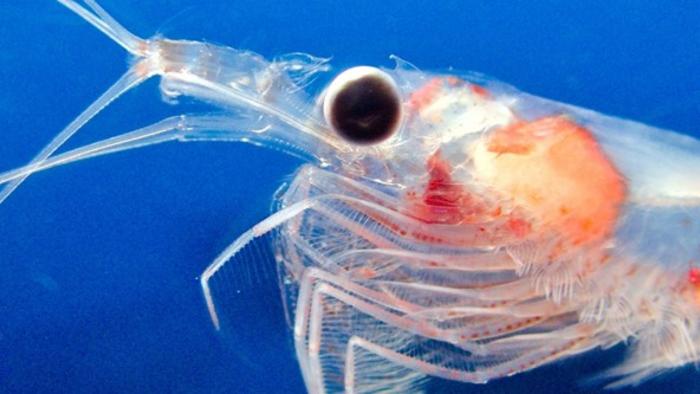
Genes controlling eye development and light sensitivity differed between the Northern krill from the Atlantic Ocean versus the Mediterranean Sea. The researchers believe this reflects genetic adaptations of behaviour and development to different waters.
66
SHARES
596
VIEWS
Share on FacebookShare on Twitter
ADVERTISEMENT

Krill in our northern waters show how key marine species can adapt genetically to cope with climate change. This is the discovery made by researchers at Uppsala University in collaboration with an international research group. According to the researchers, their study – published in Nature Communications – provides important knowledge that can help protect marine ecosystems when the climate changes.

Genes controlling eye development and light sensitivity differed between the Northern krill from the Atlantic Ocean versus the Mediterranean Sea. The researchers believe this reflects genetic adaptations of behaviour and development to different waters.

Credit: Andreas Wallberg

Krill in our northern waters show how key marine species can adapt genetically to cope with climate change. This is the discovery made by researchers at Uppsala University in collaboration with an international research group. According to the researchers, their study – published in Nature Communications – provides important knowledge that can help protect marine ecosystems when the climate changes.

“Understanding how genetic adaptation works in krill can help us better predict which populations are more or less resilient to climate change. Since so many species in the ocean depend on krill, this knowledge is an important element in protecting marine ecosystems when the climate changes,” says Per Unneberg, a bioinformatician at Uppsala University and first author of the study of Northern krill (Meganyctiphanes norvegica).

Krill, small marine crustaceans that live in large schools, are some of the most common animals on Earth and a crucial food source for many marine species such as whales, seals and fish. But rapid climate change is threatening their survival, with potentially serious consequences for marine ecosystems. If and how zooplankton such as krill can adapt to a warmer ocean has been poorly understood until now. By sequencing and comparing the DNA of 74 specimens from different parts of the North Atlantic and Mediterranean, researchers have now gained a deeper understanding of how these plankton are genetically adapted to their environment.

“Different populations of Northern krill have historically adapted to very different conditions in different parts of the Atlantic. This makes it a perfect model for understanding which genes and functions contribute to adaptation to different marine environments,” says Andreas Wallberg, researcher at Uppsala University and main author of the study.

The study shows that there is extensive genetic variation within Northern krill, which is critical for their ability to adapt to different climates. The researchers identified hundreds of genes associated with adaptation to hot and cold environments. This includes genes related to light and heat sensitivity, as well as to nutrient uptake and reproduction, which are crucial for the species to survive and reproduce under varying conditions in different climates.

“The krill genome is six times larger than that of humans and has unique copies of many genes. Our research shows that specific gene copies may have played an important role in the krill’s ability to adapt to both cold and warm waters. Our results may be of great importance for the conservation of important genetic diversity and marine ecosystems,” says Per Unneberg.

For example, the study suggests that populations of Northern krill living in Scandinavian fjords may be genetic “hot spots” for future adaptation to a warmer North Atlantic and Arctic. This makes conservation of these populations particularly important, according to the researchers.

“This research gives us a new insight into how plankton can survive in a world of rapidly changing climate by adapting genetically. What we have learned about the Northern krill can also be used to understand how other species can cope with climate change – such as the Antarctic krill, which is an important but declining species in the Antarctic ecosystem. This study emphasises the importance of mapping and conserving genetic diversity in marine species to ensure the stability of our marine ecosystems,” says Andreas Wallberg.


Journal

Nature Communications

DOI

10.1038/s41467-024-50239-7

Article Title

Ecological genomics in the Northern krill uncovers loci for local adaptation across ocean basins.

Article Publication Date

1-Aug-2024

Share26Tweet17
Previous Post

Just 10 minutes of mindfulness daily boosts wellbeing and fights depression – study reveals

Next Post

Ocean twilight zone modulates marine phytoplankton productivity

Related Posts

blank
Marine

Transforming Hawaiian Roads: Innovative Pavement Using Recycled Plastics and Abandoned Fishing Nets

March 22, 2026
blank
Marine

New Study Reveals Ongoing Decline of Arctic Landfast Sea Ice

March 20, 2026
blank
Marine

Scientists Monitor Coral Reefs to Assess Their Health

March 20, 2026
blank
Marine

PolyU Researchers Discover Mechanoelectrical Sensing in Sea Urchin Spines, Paving the Way for Advanced Biomimetic Sensors

March 20, 2026
blank
Marine

Sea Turtle Shells Uncover Hidden Chronicles of Ocean Change

March 19, 2026
blank
Marine

Worldwide Approaches to Safeguard Seals and Sea Lions from Avian Influenza

March 19, 2026
Next Post
Figure 1

Ocean twilight zone modulates marine phytoplankton productivity

  • Mothers who receive childcare support from maternal grandparents show more parental warmth, finds NTU Singapore study

    Mothers who receive childcare support from maternal grandparents show more parental warmth, finds NTU Singapore study

    27627 shares
    Share 11047 Tweet 6905
  • University of Seville Breaks 120-Year-Old Mystery, Revises a Key Einstein Concept

    1029 shares
    Share 412 Tweet 257
  • Bee body mass, pathogens and local climate influence heat tolerance

    671 shares
    Share 268 Tweet 168
  • Researchers record first-ever images and data of a shark experiencing a boat strike

    535 shares
    Share 214 Tweet 134
  • Groundbreaking Clinical Trial Reveals Lubiprostone Enhances Kidney Function

    520 shares
    Share 208 Tweet 130
Science

Embark on a thrilling journey of discovery with Scienmag.com—your ultimate source for cutting-edge breakthroughs. Immerse yourself in a world where curiosity knows no limits and tomorrow’s possibilities become today’s reality!

RECENT NEWS

  • Mobile Geriatrics Team Reduces Inappropriate Drug Prescriptions
  • Transforming Hawaiian Roads: Innovative Pavement Using Recycled Plastics and Abandoned Fishing Nets
  • Green Analysis of Diclofenac and Methocarbamol Tablets
  • Innovative Geriatric Care: The GEROS Service-Learning Program

Categories

  • Agriculture
  • Anthropology
  • Archaeology
  • Athmospheric
  • Biology
  • Biotechnology
  • Blog
  • Bussines
  • Cancer
  • Chemistry
  • Climate
  • Earth Science
  • Editorial Policy
  • Marine
  • Mathematics
  • Medicine
  • Pediatry
  • Policy
  • Psychology & Psychiatry
  • Science Education
  • Social Science
  • Space
  • Technology and Engineering

Subscribe to Blog via Email

Success! An email was just sent to confirm your subscription. Please find the email now and click 'Confirm Follow' to start subscribing.

Join 5,191 other subscribers

© 2025 Scienmag - Science Magazine

Welcome Back!

Login to your account below

Forgotten Password?

Retrieve your password

Please enter your username or email address to reset your password.

Log In
No Result
View All Result
  • HOME
  • SCIENCE NEWS
  • CONTACT US

© 2025 Scienmag - Science Magazine