


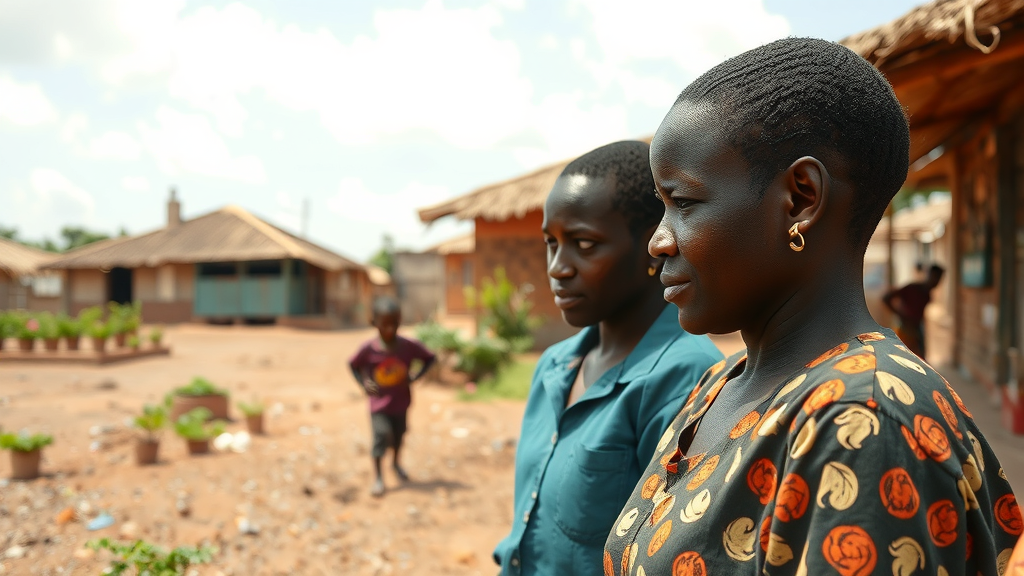
Cholera remains one of the most unforgiving infectious diseases known to medicine. In a healthy adult, the bacterium Vibrio cholerae can trigger such profound fluid loss that a person may pass more than a liter of watery stool per hour, draining the body of water and electrolytes with terrifying speed. Yet the disease is also among the most treatable: with prompt rehydration, case fatality can fall below one percent, while untreated severe cholera can kill more than half of those it strikes. The entire battle against the disease is therefore fought in the hours between the first symptoms and the first effective treatment. A new study from Nampula Province in northern Mozambique, published in BMC Public Health, examines precisely that window, and its findings reveal a landscape in which the barriers to survival are not always the ones public health planners might expect.
The research, led by Yeonji Jeon of the International Vaccine Institute in Seoul together with colleagues at Mozambique’s Instituto Nacional de Saúde and its Nampula delegation, set out to map how communities in a cholera-endemic region actually behave when illness strikes. Nampula Province experiences recurrent cholera outbreaks, making it a natural laboratory for understanding the interaction between community knowledge, physical access to healthcare, and the decision to seek treatment. Despite decades of global investment in cholera case management, the authors note that persistent gaps remain in understanding local health-seeking behaviors and what ordinary households actually know about the disease. Closing the case fatality gap, they argue, requires knowing not just where clinics are, but why people do or do not reach them.
To capture that picture, the team conducted a cross-sectional household survey between November 10 and 19, 2023, spanning urban Nampula city and the rural districts of Meconta and Monapo. In total, 831 households were enrolled, and trained teams collected information on healthcare access, health-seeking behavior, and cholera knowledge using tablet-based questionnaires. The statistical toolkit was deliberately conventional: Pearson Chi-square tests to detect differences between groups, followed by multivariate logistic regression to identify which factors were independently associated with whether households used healthcare facilities when cholera or diarrheal symptoms appeared. This design allowed the researchers to separate the effect of geography from the effects of education, awareness, and household circumstances, a distinction that proved decisive.
The first striking result concerns transportation and distance, the variables most often treated as the dominant obstacles to timely care. Across all three sites, walking was the primary mode of reaching a healthcare facility, cited by 55.9 percent of participants. Rural residents generally traveled farther and spent more time in transit than their urban counterparts, a predictable but important disparity in a province where health infrastructure is unevenly distributed. Yet distance and mode of travel did not translate into the behavioral pattern one might predict. When asked what they would do in the face of cholera or diarrheal symptoms, a remarkable 94 percent of participants said they would seek care at a healthcare facility, and households in rural Meconta showed exclusive reliance on formal facilities. The willingness to seek treatment, in other words, was already in place almost everywhere the survey reached.
That willingness made one finding all the more paradoxical. Households located within 500 meters of a healthcare facility were actually less likely to seek care, with an odds ratio of 0.2 and a p-value of 0.0417, meaning that proximity conferred no advantage and may even have discouraged facility use. The authors interpret this as evidence that behavioral determinants beyond physical proximity shape treatment decisions. Possible explanations range from overconfidence among those living closest to care, to assumptions that illness will resolve on its own, to social and economic factors that the survey’s distance measures cannot capture. Whatever the underlying mechanism, the result carries a hard lesson for program design: building clinics closer to communities is not, by itself, a guarantee that sick people will walk through their doors in time.
The second major pillar of the study measured what residents actually knew about cholera, and here the picture darkened considerably. Recognition of the disease’s most dramatic symptoms was high: 85 percent of participants identified watery diarrhea as a cholera symptom and 86 percent identified vomiting. But knowledge collapsed when it came to the symptom that actually kills. Only 17 percent identified dehydration as a feature of cholera, and awareness of oral rehydration solution, the simple sugar-and-salt mixture that remains the single most life-saving intervention in cholera care, stood at a critically low 2.2 percent. This knowledge profile has direct clinical consequences. A caregiver who recognizes vomiting but not the insidious signs of fluid loss may wait until a patient is already in deep shock before departing for a facility, undoing the advantage of the province’s otherwise high care-seeking rate.
Where does cholera knowledge come from in Nampula? Healthcare workers emerged as the dominant channel, cited by 61.5 percent of participants as their main source of information, a finding that underscores the enormous influence frontline clinicians exert beyond the consultation room. But the pattern diverged sharply by geography. Rural participants relied more heavily on community-based sources, while urban populations more often encountered cholera information through television and social media. This split matters for communication strategy: a radio or social media campaign tuned to urban consumption habits will simply not reach rural households, which depend on community structures, health workers, and local networks for health information. Any education effort that ignores these channel differences risks reinforcing precisely the knowledge gaps the survey documented.
The regression analysis distilled which factors most strongly predicted whether a household would actually visit a healthcare facility for cholera treatment. Two stood out. First, households in which the head had technical or vocational education were dramatically more likely to seek facility-based care, with an odds ratio of 19.9 and a p-value of 0.0178, an association so strong that education appears to function as an almost binary switch on health behavior. Second, and more immediately actionable, households in which a member exhibited dehydration symptoms were more likely to visit a healthcare facility, with an odds ratio of 4.5 and a p-value of 0.0258. In other words, when the visible danger of cholera becomes unmistakable, people do respond, which means the tragedy unfolds in the lag between the first symptoms and the first recognizable signs of dehydration, a lag that better community knowledge could shorten.
The authors draw a clear set of conclusions from these data. Low awareness of dehydration, oral rehydration solution, and the oral cholera vaccine persists across Nampula despite remarkably high healthcare utilization, which means the missing ingredient is not infrastructure but information. They call for strengthened community-based education, deeper engagement of health workers as information conduits, and expanded oral rehydration points, the low-threshold posts where rehydration therapy can begin before a patient deteriorates. These measures, the study argues, must proceed alongside clinical case management and vaccination, with particular intensity in rural settings where the knowledge deficits are widest and community channels, not mass media, carry the message.
For the wider global health community, the Nampula findings land at a moment when cholera is resurging across multiple continents and vaccine supplies remain chronically strained. The study’s core insight travels well beyond Mozambique: the geography of mortality in cholera is not the geography of clinics but the geography of knowledge. A mother who cannot recognize dehydration, a household unaware that a sachet of oral rehydration salts can arrest a fatal decline, and a community that has never heard of the cholera vaccine are all vulnerabilities that no facility can compensate for once the critical hours have passed. With 94 percent care-seeking already achieved and healthcare workers trusted as messengers, Nampula Province has laid the behavioral foundation on which targeted education could realistically be built. The remaining task, the study suggests, is to fill the seventeen percent and the two percent gaps, because those numbers measure exactly the distance between recognizing a symptom and recognizing a death in the making.
Subject of Research: Health-seeking behavior and cholera knowledge affecting timely treatment in Nampula Province, Mozambique
Article Title: Bridging the gaps: how knowledge and access to care influence timely cholera treatment and reduce deaths in Nampula Province, Mozambique
Article References: Jeon, Y., Baloi, L. D., Park, S., Manjor, S., Lee, H., Park, J. Y., Jang, G. H., You, Y. A., Kim, D. R., Koh, D.-H., Tilahun, S. T., Manjate, N., Tovele, A., Zacarias, M., Chabane, J., Barata, A., Lynch, J. A., Langa, J. P., & Park, S. E. (2026). Bridging the gaps: how knowledge and access to care influence timely cholera treatment and reduce deaths in Nampula Province, Mozambique. BMC Public Health. https://doi.org/10.1186/s12889-026-29539-8
Image Credits: AI Generated
DOI: 10.1186/s12889-026-29539-8
Keywords: cholera, Mozambique, Nampula, health-seeking behavior, oral rehydration solution, dehydration, public health, case management, oral cholera vaccine, community health workers, household survey, diarrheal diseases
Cite Scienmag News
Kristina Jarvis. (September 25, 2026). Knowledge Gaps, Not Distance, Decide Who Survives Cholera in Mozambique. Scienmag. https://scienmag.com/knowledge-gaps-not-distance-decide-who-survives-cholera-in-mozambique/
Kristina Jarvis. "Knowledge Gaps, Not Distance, Decide Who Survives Cholera in Mozambique." Scienmag, 25 September 2026, https://scienmag.com/knowledge-gaps-not-distance-decide-who-survives-cholera-in-mozambique/. Accessed 4 October 2026.
Kristina Jarvis. "Knowledge Gaps, Not Distance, Decide Who Survives Cholera in Mozambique." Scienmag. September 25, 2026. https://scienmag.com/knowledge-gaps-not-distance-decide-who-survives-cholera-in-mozambique/


