

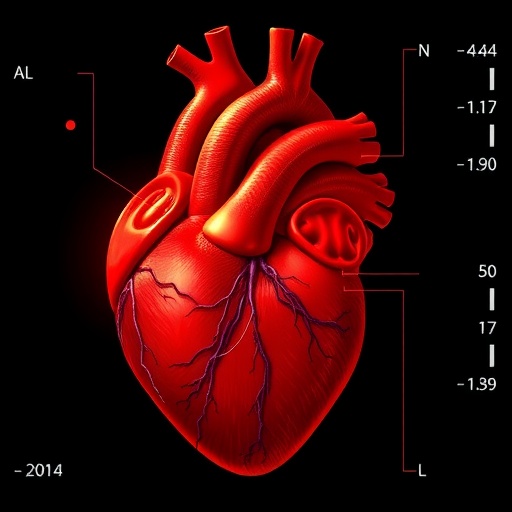
Pioneering Advances in Prenatal Detection of Congenital Cardiac Risks Using Ultrasound and Computational Modeling
A groundbreaking research initiative at King’s College London has secured over £191,000 in funding to enhance the early detection of congenital cardiac anomalies, specifically targeting coarctation of the aorta (CoA) before birth. This heart condition, characterized by the narrowing of the aorta shortly after birth, restricts critical blood flow and can precipitate severe complications without prompt medical intervention. Affecting approximately seven in every 10,000 births globally, CoA demands highly accurate prenatal diagnosis to optimize treatment outcomes and reduce infant morbidity and mortality.
Currently, routine ultrasound screenings provide prenatal cardiac evaluations but are significantly hampered by diagnostic challenges. Existing protocols often yield false positive results, mistakenly indicating the presence of CoA in otherwise healthy fetuses. These false alarms not only subject families to undue emotional distress but also exert considerable strain on healthcare resources, necessitating unnecessary follow-up examinations and monitoring. Conversely, many CoA cases go undetected prenatally due to limited sensitivity and specificity of ultrasound imaging techniques, delaying critical postnatal treatments and increasing risks of adverse health consequences including cognitive deficits and, in severe instances, fatality.
This visionary project, led by a multidisciplinary team including Professor Pablo Lamata, Dr Adelaide de Vecchi, and Dr David Lloyd from King’s College London, has embraced the potential of computational 3D morphological biomarkers to revolutionize prenatal CoA diagnosis. Their prior research harnessed the advanced imaging capabilities of fetal magnetic resonance imaging (MRI) to reconstruct highly detailed three-dimensional models of the fetal aorta during pregnancy. This approach elucidated distinct developmental pathways of the aortic architecture in fetuses at elevated risk of CoA, substantially improving diagnostic accuracy. However, the reliance on fetal MRI—available only at specialized medical centers—limits widespread clinical adoption.
To overcome these barriers, the team has embarked on adapting their sophisticated 3D aortic reconstruction methodology to routine two-dimensional ultrasound scans, which are widely accessible and form the backbone of current prenatal care worldwide. This transition poses significant technical challenges due to the inherent limitations of ultrasound imaging, including lower spatial resolution and operator dependence. Nonetheless, by integrating cutting-edge computational modeling and machine learning algorithms, the researchers aim to achieve automated, accurate reconstruction of fetal aortic morphology from standard ultrasound data, thus democratizing access to superior diagnostic tools in routine clinical environments.
Professor Lamata, Director of the Centre for Doctoral Training in Digital Twins for Healthcare, emphasizes the transformative potential of this approach: “Our work has demonstrated the critical differences in aortic development trajectories in fetuses predisposed to CoA using MRI-based 3D modeling. Our goal now is to replicate this diagnostic precision through ultrasound, a universally available technology. Successfully doing so will enable early risk stratification for CoA on a broad scale, facilitating timely interventions and improving neonatal outcomes.”
This initiative also draws upon the expertise of clinical collaborators such as Dr David Lloyd, consultant in pediatric and fetal cardiology at Evelina London Children’s Hospital, who acknowledges the diagnostic complexities of CoA in utero: “Fetal cardiologists face significant challenges in accurately diagnosing CoA prenatally due to the subtlety of morphological indicators and variability in blood flow patterns. By translating insights gained from MRI studies into bedside ultrasound, this project can provide clinicians with reliable, easily implementable tools for early identification of this life-threatening condition.”
The research team’s advancement is further enhanced through their participation in the MedTech Venture Builder Programme hosted by the London Institute for Health Engineering. This initiative supported their strategic focus shift towards echocardiography while reinforcing the clinical relevance and economic viability of their project. It provided a critical framework for defining target patient populations, refining technological capabilities, and crafting compelling funding applications grounded in realistic clinical impact.
At its core, this project exemplifies a convergence of medical imaging, computational science, and clinical cardiology aimed at addressing an urgent unmet need in prenatal healthcare. The automated extraction of 3D morphological biomarkers from routine ultrasound promises to transcend existing diagnostic limitations, minimizing false positives and missed cases alike. This paradigm shift could substantially reduce emotional and financial burdens on families and healthcare systems, while safeguarding the health and development of countless newborns at risk.
Action Medical Research, a UK-wide charity with a distinguished 70-year history of supporting medical innovation, has recognized the significant promise of this research by awarding the grant. Dr Caroline Johnston, Senior Research Manager, underscores the importance of this collaboration: “We are proud to fund this interdisciplinary work uniting engineers and clinicians. Translating sophisticated imaging and modeling techniques into broadly accessible ultrasound diagnostics could markedly enhance care for vulnerable infants and fulfill our mission to improve child health.”
Beyond technological innovation, the project underscores the importance of integrating engineering advances with sensitive clinical workflows and patient-centered considerations. The ongoing refinement of algorithms to handle the variability of ultrasound data, as well as the development of standardized imaging protocols, will be pivotal to clinical adoption. Moreover, validating the technology across diverse populations and healthcare settings will ensure equitable benefits and scalability.
In sum, this initiative represents a beacon of hope for earlier and more precise detection of congenital heart defects through accessible, non-invasive prenatal imaging techniques. By converting sophisticated MRI-derived 3D models into ultrasound-based diagnostics, this research bridges the gap between cutting-edge science and routine clinical practice, heralding a new era in fetal medicine where life-threatening conditions like CoA can be identified and managed before birth, improving survival and quality of life for future generations.
Subject of Research: Prenatal detection of congenital cardiac risks with a focus on coarctation of the aorta using ultrasound imaging and computational 3D morphological modeling.
Article Title: Pioneering Advances in Prenatal Detection of Congenital Cardiac Risks Using Ultrasound and Computational Modeling
Web References:
https://action.org.uk/
https://lihe.org.uk/
Keywords: Congenital heart disease, coarctation of the aorta, prenatal diagnosis, fetal ultrasound, fetal MRI, 3D morphological biomarker, computational modeling, echocardiography, pediatric cardiology, medical imaging, fetal medicine, digital twins


