

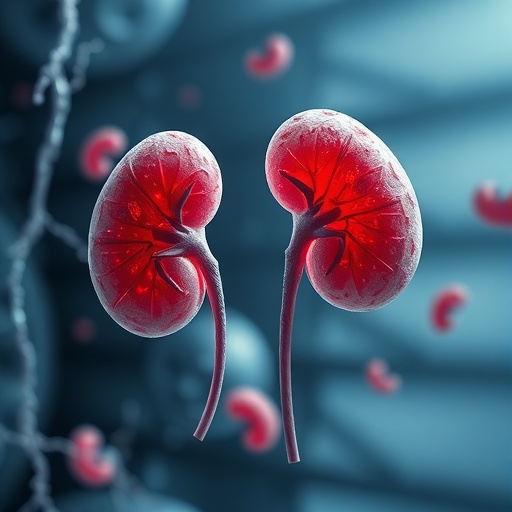
Concerns escalating over the pervasive infiltration of micro- and nanoplastics into ecosystems have now extended into the realm of human health, prompting urgent scientific inquiries. A groundbreaking study led by researchers at Flinders University sheds new light on the potentially detrimental impacts of nanoplastic particles on renal cellular integrity. Published in the esteemed journal Cell Biology and Toxicology, this investigation reveals critical insights into how varying concentrations, sizes, and polymer compositions of nanoplastics affect kidney cells, emphasizing the urgent need for comprehensive long-term evaluations of nanoplastic toxicity in human health contexts.
Nanoplastics, defined as plastic fragments smaller than one micron, have emerged as ubiquitous pollutants that stem from the degradation of larger plastic debris and widespread chemical usage. Unlike their microplastic counterparts, nanoplastics can penetrate biological membranes and create more intimate cellular disturbances. The Flinders University team, led by PhD candidate Hayden Gillings, systematically assessed the cellular responses of kidney cells exposed in vitro to nanoplastics derived from common polymers including polystyrene, polyethylene, and poly(methyl methacrylate). Their study was uniquely designed to measure not only acute toxicity but also subtler changes to cellular morphology and regulatory processes under varying experimental conditions.
One of the study’s pivotal discoveries is the apparent threshold-dependent toxicity of nanoplastics. Lower concentrations—those likely to reflect environmental exposures that are transient or minimal—did not produce immediate toxic effects within short incubation periods. However, as nanoplastic burdens increased, cells exhibited profound changes including alterations in shape, disrupted survival rates, and compromised regulatory mechanisms fundamental to kidney function. These findings raise alarms about the cumulative and chronic exposure risks, which could remain unappreciated in short-term toxicology assessments yet pose severe health implications over time.
Further adding complexity to their toxicological profiles, nanoplastic particle size and polymer type were found to differentially influence cellular outcomes. Smaller particles, due to their higher surface-area-to-volume ratios and enhanced cellular entry capabilities, tended to evoke more pronounced cytotoxicity. Meanwhile, polymer chemistry modulated the bio-reactivity and interaction with cellular components, with some polymers triggering responses even at relatively low dosages. This nuanced interplay points to the inadequacy of evaluating nanoplastic risks solely on mass concentration, underscoring the significance of particle physicochemical properties in driving biological impacts.
The Flinders team collaborated with medical scientists from Monash University and experts in renal health from Flinders’ College of Medicine and Public Health to contextualize their laboratory findings within physiological frameworks. The kidneys, the body’s quintessential blood filtering organs, rely on tightly regulated cellular networks to maintain homeostasis and clearance of toxins. Disruption to renal epithelial cells by sustained nanoplastic exposure could feasibly undermine kidney filtration efficiency, promote inflammatory responses, and potentiate accumulation of plastics within renal tissue—a scenario bearing serious pathological potential.
Given the omnipresence of plastics in terrestrial, marine, and atmospheric environments, the authors underscore that nanoplastic exposure is not a hypothetical risk but a very real and escalating public health challenge. The extensive fragmentation of plastic waste into nanoplastics also liberates chemical additives capable of leaching toxic compounds such as volatile organic compounds (VOCs), which compound biological hazards. This synergistic threat necessitates urgent implementation of policies targeting the reduction of plastic release at source and comprehensive strategies to monitor and mitigate environmental nanoplastic pollution.
Critically, the researchers advocate for future studies incorporating long-term in vivo models to elucidate the cumulative impacts of nanoplastic exposure on kidney function and systemic health. Emphasis is placed on evaluating genotoxic effects, potential DNA damage, and chronic functional impairments that remain obscured in acute cell culture experiments. This holistic approach will be vital for regulatory bodies to accurately assess nanoplastic risks and develop evidence-based guidelines protecting human health.
Associate Professor Melanie MacGregor, a leading chemist and nano- and microplastics expert at Flinders University and leader of the Nano and Microplastics Research Consortium, highlights that microplastic pollution, already recognized as a global crisis, is now evolving beneath the threshold of human perception into the nanoplastic domain. The minute scale of these particles allows systemic penetration, thereby elevating concerns over their bioaccumulation and toxicity across multiple organ systems, with the kidneys now firmly on the radar of nanotoxicology studies.
This pioneering research is timely, dovetailing with emerging epidemiological data identifying chronic kidney disease as a growing global health burden affecting millions worldwide. With conditions like diabetes and hypertension already imposing significant renal strain, the additive exposures to nanoplastics and associated chemical hazards may exacerbate disease progression, complicate treatment outcomes, and increase morbidity rates. Thus, understanding environmental factors such as nanoplastic pollution in the pathophysiology of kidney diseases is essential for public health interventions.
At a mechanistic level, the researchers detailed how nanoplastics induce modifications in cell shape and survival which may correlate with disruptions in cytoskeletal organization, membrane permeability, and intracellular signaling pathways. These cellular perturbations can cascade into altered filtration capabilities and provoke inflammatory and fibrotic processes in renal tissues. Such mechanistic insights provide a foundation for designing therapeutic interventions to counteract or prevent nanoplastic-induced renal damage.
Collectively, this multicenter study, supported by the Australian Research Council Future Fellowship Grant alongside institutional funding from the Flinders Foundation and Flinders Medical Centre Renal Research Fund, underscores an urgent call to action. It stresses not only advancements in research methodologies that replicate real-world nanoplastic exposures but also proactive policy changes that address the lifecycle of plastics from production through disposal. Mitigating the human health risks posed by nanoplastics in kidneys and potentially other vital organs must become a scientific and societal priority.
The revelations presented by Flinders University researchers propel the dialogue about environmental nanoplastic contamination far beyond ecological implications into the critical domain of human health risk assessment. Their work not only primes the scientific community for more exhaustive explorations but also challenges governments, industry stakeholders, and the wider public to recognize nanoplastics as a tangible biological threat demanding immediate attention and intervention.
Subject of Research: Cells
Article Title: Nanoplastic toxicity and uptake in kidney cells: differential effects of concentration, particle size, and polymer type
News Publication Date: January 16, 2026
Web References:
https://link.springer.com/article/10.1007/s10565-025-10135-2
https://www.flinders.edu.au/people/melanie.macgregor
https://kidney.org.au/your-kidneys/what-is-kidney-disease/
References:
Gillings HL, Rojas-Canales DM, Wong SW, Bhuskute KR, Kaur A, Delcheva I, Gleadle JM, MacGregor M. Nanoplastic toxicity and uptake in kidney cells: differential effects of concentration, particle size, and polymer type. Cell Biology and Toxicology. 2026. DOI: 10.1007/s10565-025-10135-2.
Image Credits: Flinders University
Keywords: nanoplastics, kidney toxicity, renal cells, polymer types, particle size, environmental pollution, microplastics, cellular toxicity, nanotoxicology, kidney disease, chronic exposure, cell morphology


