


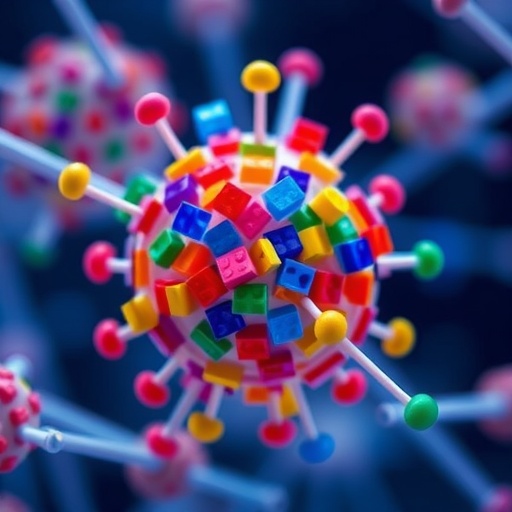
In a groundbreaking advancement poised to transform the landscape of biomedical research and therapeutic development, scientists at the Korea Advanced Institute of Science and Technology (KAIST) have leveraged generative artificial intelligence to decode and manipulate cellular responses to drugs and genetic alterations with unprecedented precision. This innovative approach, inspired by methods used in image-generating AI, enables the prediction and assembly of cell-drug interactions in a modular, “Lego block” fashion, offering into-the-future insights into cellular dynamics that have until now eluded researchers.
At the core of this breakthrough lies a sophisticated mathematical framework that models the multifaceted interplay between cells and pharmaceuticals within a latent space—a complex, invisible multidimensional map where the intrinsic features of cells and drugs are encoded separately yet can be fluidly recombined. By disentangling the representations of cellular states and drug effects within this latent domain, the KAIST team has constructed a generative deep learning architecture capable of forecasting the outcomes of novel cell-drug pairings never experimentally tested. This remarkable feat extends further, allowing for the anticipation of cellular responses to arbitrary genetic perturbations, opening new horizons for targeted therapies and regenerative interventions.
Traditional drug discovery and cell state modulation strategies often confront the monumental challenge of predicting how cells will behave in response to diverse chemical or genetic stimuli. The combinatorial explosion of possible interactions renders exhaustive experimental screening impractical, if not impossible. Addressing this bottleneck, Professor Kwang-Hyun Cho and his team have crafted an AI model that operates on the principle of direction vectors within latent space, an ingenious concept borrowed from the realm of image synthesis AI. This methodology facilitates the quantification and navigable manipulation of cell states along desired trajectories by optimally perturbing either genetic targets or drug combinations.
The research group validated their computational predictions against empirical data, employing colorectal cancer cells as a testbed. Impressively, the AI identified molecular targets capable of reverting malignant cells to phenotypic states reminiscent of healthy tissues. Subsequent laboratory experiments corroborated these findings, confirming that the in silico predictions faithfully mirrored biological realities. This validation not only underscores the model’s accuracy but also establishes a template for its application across diverse pathological and therapeutic contexts beyond oncology.
What sets this novel AI framework apart is its dual capacity: it not only predicts binary outcomes of drug efficacy but elucidates the mechanistic underpinnings of how specific perturbations reshape intracellular signaling networks and cellular phenotypes. This transparency addresses a longstanding critique of AI-driven models—that of being opaque “black boxes”—and equips researchers with actionable insights into the biochemical cascades influenced by therapeutic agents or genetic modifications.
The implications of this technology resonate deeply across the spectrum of biomedical sciences. In drug discovery, it provides a powerful screening tool to rapidly pinpoint promising candidates that can effectuate desired cellular shifts, dramatically reducing the time and cost associated with traditional pipelines. For cancer therapy, it offers a pathway to rationally design combination treatments capable of steering tumor cells toward normalization rather than merely cytotoxic eradication. Furthermore, in regenerative medicine, the ability to systematically induce cellular states akin to healthy or progenitor-like conditions holds promise for tissue repair and functional restoration.
Crucially, this generative AI model has been engineered with adaptability and generalizability at its forefront. It can assimilate varied data types and perturbation modalities, from small molecules to gene regulation, without necessitating retraining from scratch for each new application. This versatility ensures that the platform can continually evolve in tandem with expanding biological knowledge bases and emergent therapeutic targets.
Professor Cho emphasized the transformative potential of applying concepts from image-generation AI, particularly the “direction vector,” which effectively maps a navigable path to desired cell states. This mathematical innovation codifies cellular transformations in ways that enable not only the prediction but the intentional orchestration of biological outcomes through targeted interventions.
The study’s publication in the prestigious journal Cell Systems marks a significant milestone, showcasing a fusion of computational ingenuity and biological insight that could redefine precision medicine. The research was conducted by Dr. Younghyun Han, Dr. Chun-Kyung Lee, and Ph.D. candidate Hyunjin Kim, with funding support from the National Research Foundation of Korea and the Ministry of Science and ICT’s Mid-Career Researcher and Basic Research Laboratory programs.
As biomedical research continues to amass ever more complex datasets, tools like this generative AI technology will be indispensable for transforming data into predictive knowledge and ultimately into therapeutic strategies. By enabling the modular breakdown and recombination of drug and genetic effects on cells, the KAIST team has effectively constructed a digital toolkit for cell state engineering, echoing the modular versatility of Lego bricks. This marks a paradigm shift from passive observation to active design in cell biology, paving the way for the next generation of medical breakthroughs.
In sum, the development of an AI-driven platform capable of identifying optimal perturbations to induce targeted cell states represents a compelling convergence of deep learning, systems biology, and therapeutic innovation. The ability to predict and control cellular trajectories in silico heralds a future where diseases may be precisely countered by rationally designed drugs and genetic interventions, ushering in a new era of personalized and regenerative medicine.
News Publication Date: 16-Oct-2025
Web References: https://doi.org/10.1016/j.cels.2025.101405
References: KAIST research team published in Cell Systems, October 15, 2025.
Cite Scienmag News
Juliet Wilcox. (October 16, 2025). KAIST Creates AI Technology to Predict and Assemble Cellular Drug Responses Like LEGO Blocks. Scienmag. https://scienmag.com/kaist-creates-ai-technology-to-predict-and-assemble-cellular-drug-responses-like-lego-blocks/
Juliet Wilcox. "KAIST Creates AI Technology to Predict and Assemble Cellular Drug Responses Like LEGO Blocks." Scienmag, 16 October 2025, https://scienmag.com/kaist-creates-ai-technology-to-predict-and-assemble-cellular-drug-responses-like-lego-blocks/. Accessed 6 September 2026.
Juliet Wilcox. "KAIST Creates AI Technology to Predict and Assemble Cellular Drug Responses Like LEGO Blocks." Scienmag. October 16, 2025. https://scienmag.com/kaist-creates-ai-technology-to-predict-and-assemble-cellular-drug-responses-like-lego-blocks/


