


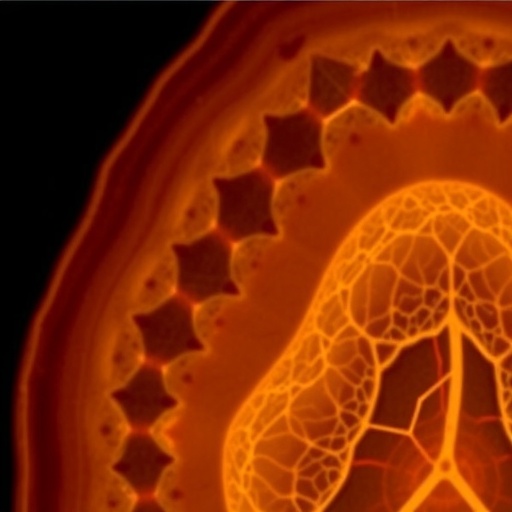
In a groundbreaking study, researchers have unveiled the intricate physiology and unique cellular composition of lipocartilages in mice, specifically those found in the ear. These cartilages, which differ significantly from the traditional cartilage types typically studied, have been identified as key determinants of both biomechanical properties and regenerative capabilities in skeletal systems. The focus on lipocartilage, characterized by its content of large intracellular lipid vacuoles and specialized cells called lipochondrocytes, opens new avenues in understanding skeletal development, aging, and potential treatment strategies for cartilage-related disorders.
Lipocartilages serve a vital role during the development and function of various vertebrate skeletal elements, including those in the head, neck, and thorax. Unlike the conventional cartilage that primarily serves as a supportive matrix, lipocartilages are distinguished by their unique cellular architecture, heavily enriched in lipid content. These structural features not only suggest a specialized function in load-bearing and mechanical support but also point towards a distinct physiological role in energy storage and metabolism.
The lipochondrocytes, the specialized cells residing within lipocartilages, demonstrate a unique gene expression profile which distinctly separates them from typical chondrocytes. Their metabolic pathways are adapted to facilitate the high lipid content intrinsic to lipocartilage, enabling them to influence developmental processes significantly. Additionally, their presence contributes to the distinctive mechanical properties of the cartilage, affecting its tensile strength and overall resilience.
The methodology developed for isolating lipocartilage from mouse ears combines precision dissection techniques with advanced biochemical assays. This step-by-step protocol allows researchers to not only isolate the structural components of lipocartilage but also to examine their cellular constituents. The dissection can be executed swiftly, with experienced researchers able to extract lipocartilage in approximately 20 minutes. The robust efficiency of this protocol is crucial, as it provides a necessary foundation for subsequent analyses carried out on the isolated tissues and their lipochondrocytes.
Upon isolation, the purification of lipochondrocytes is achieved through lipid-based buoyancy or through cell sorting methods following the application of fluorescent dyes specifically targeted at neutral lipids. This enables researchers to discern and purify individual lipochondrocytes, ensuring that subsequent experiments are conducted on a homogenous population of cells, thereby minimizing experimental variability. The purification process can be completed in approximately four hours, significantly streamlining the process and improving reproducibility in research contexts.
The impact of this protocol extends beyond mere isolation; it allows for detailed characterization of lipochondrocytes that can provide insights into their functionality. Subsequent assays, particularly biomechanical testing of the isolated lipocartilage, can be conducted within thirty minutes. These tests will illuminate the dynamic properties of the cartilage itself, facilitating a deeper understanding of how lipochondrocytes contribute to overall tissue performance in various mechanical contexts.
This research is particularly relevant in light of existing concerns surrounding cartilage deterioration and the aging process in humans. By highlighting the unique aspects of lipocartilages and their cellular makeup, this study contributes to our understanding of how direct manipulation of lipochondrocytic function could influence cartilage regeneration. This is increasingly important as current strategies for treating cartilage-related conditions often focus on traditional chondrocytes, overlooking the potential of lipocartilage-based therapies.
While this protocol has primarily been validated using mouse models, it lays a foundational framework for research into larger mammals. The structural differences in lipocartilage across species could yield crucial information on how these variations might affect mechanical properties and regenerative capacities. However, researchers will need to consider the anatomical and physiological differences when adapting methods for larger mammals.
As advancements in bioengineering burgeon, the potential applications for this research are manifold. From developing novel therapeutic approaches for cartilage repairs to creating bioengineered tissues that mimic natural cartilage properties, the scope of application is vast. Scientists are now more equipped than ever to explore the transformative potential held within lipochondrocytes, aiming to push the boundaries of current therapeutic practices.
The implications of this research are profound. Not only does it pave the way for novel strategies in cartilage repair and regeneration, but it also emphasizes the need for a comprehensive understanding of the multifaceted roles that different cell types play in tissue physiology. This understanding could ultimately lead to more targeted and effective therapies for a myriad of degenerative conditions that impact joint and cartilage health.
Moreover, this burgeoning field could eventually tie into broader metabolic research, linking the lipid metabolism of lipochondrocytes to systemic physiological health. This relationship highlights the interconnectedness of various biological systems and underscores the importance of a holistic approach to studying cellular functions. As the body of literature grows regarding lipocartilages, researchers remain optimistic about uncovering additional layers of complexity within cartilage biology.
Through this focused protocol and the insights provided regarding lipochondrocytes, the next generation of researchers is poised to expand knowledge in developmental biology and tissue engineering substantially. The ongoing exploration of lipocartilage not only sets a new standard for cartilage research but also highlights the exciting frontier of cellular specialization and adaptation in vertebrate biology.
In summary, the discovery and characterization of lipocartilages present a revolutionary perspective on cartilage-related research. It beckons scientists to delve deeper into the nuances of cellular function and tissue engineering while examining the broader biochemical and biomechanical implications. The implications of this work resonate across various disciplines, promising to inspire innovation in regenerative medicine and beyond.
Ramos, R., Liu, R., Park, J.M. et al. Isolation, purification and characterization of lipocartilage in mice.
Nat Protoc (2026). https://doi.org/10.1038/s41596-025-01302-0
Cite Scienmag News
Juliet Wilcox. (January 20, 2026). Isolating and Characterizing Lipocartilage in Mice. Scienmag. https://scienmag.com/isolating-and-characterizing-lipocartilage-in-mice/
Juliet Wilcox. "Isolating and Characterizing Lipocartilage in Mice." Scienmag, 20 January 2026, https://scienmag.com/isolating-and-characterizing-lipocartilage-in-mice/. Accessed 4 September 2026.
Juliet Wilcox. "Isolating and Characterizing Lipocartilage in Mice." Scienmag. January 20, 2026. https://scienmag.com/isolating-and-characterizing-lipocartilage-in-mice/


