


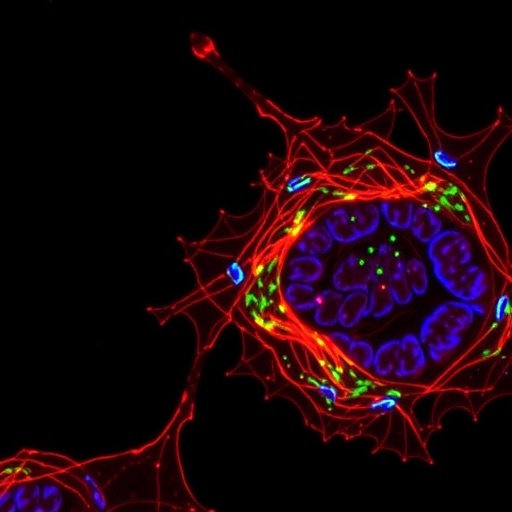
In a groundbreaking advance that could reshape our understanding of type I diabetes, researchers have elucidated a novel immunological mechanism by which pancreatic islet macrophages modulate autoimmune responses via efferocytosis of dying β-cells. The study, recently published in Nature, uncovers an anti-inflammatory macrophage subset within pancreatic islets whose activity is orchestrated by the controlled death of insulin-producing cells. This discovery opens up promising avenues for therapeutic intervention, targeting the immune microenvironment in a disease long considered dominated by auto-aggressive T cells.
Type I diabetes arises primarily from the autoimmune destruction of β-cells, the insulin factories within the pancreatic islets of Langerhans. While this T cell–mediated β-cell assault has been extensively characterized, the role of resident immune cells, especially macrophages within the islets, has remained enigmatic. Macrophages possess the unique functional capacity to clear apoptotic cells through a process called efferocytosis, a key determinant of tissue homeostasis and immune regulation. Until now, how intra-islet macrophages influence the immunological landscape during the dynamic β-cell turnover and autoimmune attack was unclear.
Employing an integration of omics technologies alongside in vivo and ex vivo functional assays, the research team identified a subset of intra-islet macrophages displaying an efferocytic, anti-inflammatory phenotype—termed e-Mac—in both mouse models and human pancreatic tissue. Notably, these e-Macs were characterized by gene expression profiles indicative of enhanced clearance capacity and immunomodulatory functions, suggesting a fundamental role in counterbalancing islet inflammation.
A pivotal experimental approach involved inducing limited β-cell apoptosis in wild-type C57BL/6 mice and NOD mice, a standard model for autoimmune diabetes susceptibility. Rather than provoking macrophage proliferation, this apoptotic challenge triggered a phenotypic switch in resident islet macrophages towards the e-Mac state. Intriguingly, this modulation of macrophage phenotype coincided with a sustained suppression of autoimmune diabetes in the NOD model, underscoring the potential of harnessing efferocytosis-mediated immunomodulation to mitigate disease progression.
Delving deeper into mechanistic insights, co-culture experiments with macrophages and apoptotic β-cells recapitulated the e-Mac phenotype ex vivo, confirming that apoptotic cell signals are sufficient to reshape macrophage identity and function. This reprogramming heralds a shift in islet immune surveillance from inflammatory cytokine production towards an immunosuppressive milieu, which may prevent pathological activation of autoreactive lymphocytes.
One of the most striking findings involved the impact of e-Macs on CD4+ T cell responsiveness. Islet macrophages enriched in the e-Mac phenotype induced an anergic-like state in CD4+ T cells in ex vivo assays, rendering them hyporesponsive to antigenic stimuli. Parallel in vivo experiments corroborated these observations, revealing a local accumulation of anergic-like CD4+ T cells within the islets of treated mice. This phenomenon offers a plausible cellular basis for the observed attenuation of autoimmune aggression.
To unravel the molecular dialogue underpinning macrophage-T cell crosstalk, the investigators applied NicheNet, a cutting-edge computational framework for predicting ligand-receptor interactions and downstream signaling pathways. This analysis, validated by focused experimental interventions, pinpointed the insulin-like growth factor 1 (IGF-1) and its receptor IGF1R axis as a critical mediator driving the induction of T cell anergy by e-Macs. Therapeutic modulation of this axis could therefore provide a strategy to selectively re-educate pathogenic T cells.
Collectively, the data converge on a model wherein limited β-cell apoptosis initiates a beneficial feedback loop: dying β-cells instruct resident macrophages to adopt an efferocytic, anti-inflammatory program, which in turn enforces tolerance on autoreactive T cells. This paradigm underscores a previously underappreciated role of efferocytosis not merely as cellular debris clearance but as a pivotal immunoregulatory checkpoint maintaining islet homeostasis and preventing autoimmune diabetes onset.
This innovative study challenges the dogma that autoimmune diabetes is exclusively fueled by aberrant T cell activation and exposes intra-islet macrophages as critical gatekeepers capable of tempering immune aggression. By leveraging mechanisms intrinsic to tissue repair and immune resolution, future therapies could aim to bolster this natural immunosuppressive axis, potentially halting or even reversing β-cell destruction.
Further research is required to translate these findings into clinical intervention, particularly in decoding how to precisely manipulate e-Mac populations and the IGF-1–IGF1R pathway without disrupting systemic immune function. Moreover, the heterogeneity of macrophages across human pancreatic islets and the dynamics of efferocytosis in the context of symptomatic diabetes remain important areas for exploration.
Nevertheless, this study represents a paradigm shift, highlighting the interplay between cell death signals, macrophage plasticity, and adaptive immune modulation within a key metabolic organ. By framing β-cell apoptosis not as a purely detrimental event but also as an immunological cue for tolerance induction, these findings suggest novel avenues for diabetes prevention and management that transcend classical immune suppression.
The implications of this work extend beyond diabetes to broader contexts where chronic inflammation and failed apoptotic clearance drive disease. Therapeutic strategies promoting efferocytosis and anti-inflammatory macrophage states could revolutionize treatments for autoimmune and inflammatory disorders alike, capitalizing on endogenous repair mechanisms.
In essence, the research illuminates a sophisticated biological narrative: controlled cell death orchestrates a tailored immune response via macrophage remodeling, which in turn enforces tolerance and preserves tissue function. Such insight elevates the significance of macrophage efferocytosis from housekeeping to a potent immunological regulator and opens new frontiers in understanding and combating autoimmune diseases.
Cite Scienmag News
Denise Maddox. (October 2, 2025). Islet Macrophages Remodeled by Limited β-Cell Death. Scienmag. https://scienmag.com/islet-macrophages-remodeled-by-limited-%ce%b2-cell-death/
Denise Maddox. "Islet Macrophages Remodeled by Limited β-Cell Death." Scienmag, 2 October 2025, https://scienmag.com/islet-macrophages-remodeled-by-limited-%ce%b2-cell-death/. Accessed 4 September 2026.
Denise Maddox. "Islet Macrophages Remodeled by Limited β-Cell Death." Scienmag. October 2, 2025. https://scienmag.com/islet-macrophages-remodeled-by-limited-%ce%b2-cell-death/


