


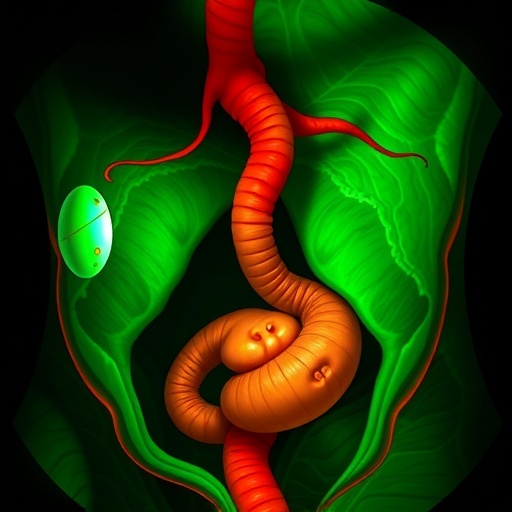
In an intriguing and groundbreaking study led by researchers Zhang, Liu, and An, new insights into the phenomenon of intussusception in children with Meckel’s diverticulum have emerged. This research, characterized as a single-center study, scrutinizes the alarming conditions under which secondary intussusception occurs in pediatric populations. At its core, the study aims to unravel complexities that medical practitioners face when diagnosing and treating bowel obstructions related to this unique congenital anomaly, and these findings could significantly enhance clinical approach and patient care.
Meckel’s diverticulum is an embryological remnant of the omphalomesenteric duct, often considered a silent condition that many individuals carry without symptoms. However, this study sheds light on the fact that when Meckel’s diverticulum is pathologically involved, particularly in children, the potential for serious complications like intussusception drastically increases. Intussusception itself occurs when a segment of the intestine telescopes into an adjacent segment, leading to obstruction, ischemia, or perforation. This issue remains a paramount concern within pediatric emergency medicine and surgery due to its potential to cause significant morbidity if not promptly diagnosed and managed.
The pioneers of this research focused on a select cohort of pediatric patients presenting with secondary intussusception attributed to Meckel’s diverticulum. The team meticulously reviewed patient records and outcomes to identify patterns and correlations that could inform future clinical practices. Their findings demonstrate not only the frequency with which Meckel’s diverticulum can act as a lead point for intussusception but also the varied clinical presentations that can manifest in these patients. This is particularly critical for healthcare professionals who must be vigilant in their assessments to avoid delayed diagnosis—an occurrence that can lead to severe complications.
One of the key revelations from this study is the age demographic of affected children. The research underscores that infants and younger children are particularly susceptible to secondary intussusception when there is an underlying structural abnormality like Meckel’s diverticulum. The authors illuminate the challenges faced by clinicians in diagnosing this condition due to the nonspecific nature of the symptoms, which may easily mislead even seasoned practitioners. Symptoms such as abdominal pain, vomiting, and the presence of a palpable abdominal mass can be mistaken for common gastroenterological ailments, complicating timely intervention.
The methodology employed in this research deserves special mention. This single-center study combined qualitative and quantitative data assessment, which allowed for a thorough examination of symptoms, diagnostic imaging results, and treatment outcomes. The rigorous approach taken by the authors ensured that their findings were not only valid but also actionable, providing a framework for further research and clinical application. Their careful delineation of patient demographics and clinical histories offers invaluable context for understanding the multifaceted nature of secondary intussusception.
In terms of diagnostic imaging, the research also highlights the pivotal role that advanced imaging techniques such as ultrasound and computed tomography (CT) play in the identification of intussusception. The authors advocate for increased awareness among pediatricians and emergency room personnel regarding the nuances of abdominal imaging in suspected cases involving Meckel’s diverticulum. They explain that while ultrasound is often the first-line imaging modality due to its safety and effectiveness in children, CT scans provide an additional layer of diagnostic accuracy that can aid in confirming intussusception when initial findings are inconclusive.
Surgical intervention remains a cornerstone of treatment for complicated cases. The study reflects on the necessity for timely surgical management, particularly in cases where bowel viability is compromised. By articulating various surgical approaches, including resection of the Meckel’s diverticulum and any accompanying affected bowel, the authors contribute to existing literature on the best practices for managing secondary intussusception. They emphasize the need to tailor surgical strategies based on individual patient presentations and the extent of the pathology, encouraging a case-by-case approach that prioritizes patient safety.
In consideration of postoperative care, the research provides insights into the expected recovery trajectory and potential complications that patients may face following surgical intervention. By documenting patient recovery patterns and the frequency of complications such as infection or bowel obstruction recurrence, the authors underscore the importance of thorough postoperative monitoring and patient education. These insights are vital for fostering a robust recovery process and minimizing the risks associated with surgical procedures.
The implications of this research extend beyond the confines of a single institution. It serves as a call to action for multi-center studies that could further validate the authors’ findings while exploring the geographical and demographic variations in the incidence of intussusception related to Meckel’s diverticulum. Such expansive studies could enhance the depth of understanding around this condition and its treatment, ultimately benefiting a broader spectrum of pediatric patients.
Moreover, the authors discuss the significance of clinician education and awareness in recognizing the signs of secondary intussusception associated with Meckel’s diverticulum. Through workshops and continuing medical education, healthcare professionals could better equip themselves to diagnose and manage this condition promptly. Dissemination of this important knowledge could lead to improved patient outcomes and a decrease in the associated morbidity linked with delayed diagnosis and treatment.
In conclusion, Zhang, Liu, and An’s comprehensive study offers vital insights into the intersection between Meckel’s diverticulum and secondary intussusception in pediatric patients. Their findings highlight both the challenges faced in diagnosis and the importance of timely intervention, urging a heightened level of clinical suspicion among healthcare providers. As the medical community continues to evolve, understanding the underlying complexities of congenital conditions like Meckel’s diverticulum will be crucial in enhancing patient safety and care quality in pediatric settings.
This groundbreaking research is not just about statistics or clinical findings—it is a testament to the ongoing pursuit of knowledge and improvement in pediatric healthcare. As practitioners digest and implement these findings, the ultimate goal remains clear: to mitigate risks and optimize outcomes for some of the most vulnerable patients in our healthcare system.
Zhang, R., Liu, Y. & An, N. A single-center study of secondary intussusception in children with Meckel’s diverticulum.
BMC Pediatr 25, 922 (2025). https://doi.org/10.1186/s12887-025-06300-5
Cite Scienmag News
Ophelia Keating. (November 11, 2025). Investigating Secondary Intussusception in Meckel’s Diverticulum. Scienmag. https://scienmag.com/investigating-secondary-intussusception-in-meckels-diverticulum/
Ophelia Keating. "Investigating Secondary Intussusception in Meckel’s Diverticulum." Scienmag, 11 November 2025, https://scienmag.com/investigating-secondary-intussusception-in-meckels-diverticulum/. Accessed 5 September 2026.
Ophelia Keating. "Investigating Secondary Intussusception in Meckel’s Diverticulum." Scienmag. November 11, 2025. https://scienmag.com/investigating-secondary-intussusception-in-meckels-diverticulum/


