

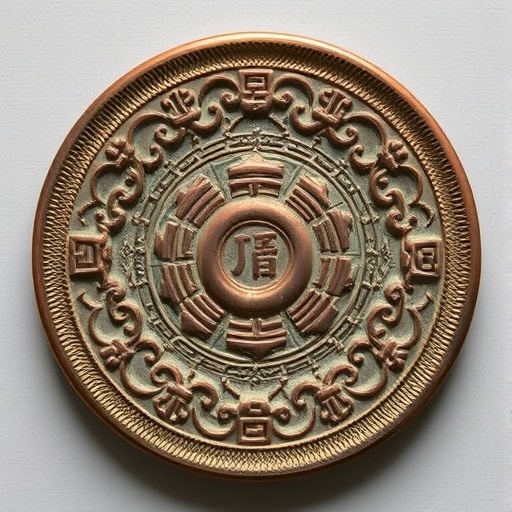
In a groundbreaking study that bridges the past and present, researchers Li, Yan, and Luo delve into the intricacies of copper-based artifacts originating from the storied late Bronze Age Baiyanghe Cemetery, located in Fukang City, Xinjiang. This exemplary work not only contributes to our comprehension of ancient metallurgical techniques but also sheds light on the broader socioeconomic patterns of a civilization that thrived thousands of years ago.
At the heart of this investigation is the scientific analysis of numerous artifacts unearthed from the Baiyanghe Cemetery. These artifacts serve as tangible remnants of their time, revealing narratives of innovation and adaptation within the framework of ancient metallurgical practices. The analysis employs a multidisciplinary approach, integrating archaeology with cutting-edge scientific methodologies such as compositional analysis and contextual studies to unveil the technological prowess of this era.
The Baiyanghe Cemetery, a significant archaeological site, provides a window into the cultural landscape of the late Bronze Age. Radiocarbon dating and stratigraphic assessments situate this cemetery within a pivotal period, characterized by increasing social complexity and the emergence of interconnected trade networks across ancient civilizations. Such developments were vital in understanding how artifacts evolved in form and function due to varying cultural influences and resource availability.
At the core of the artifact examination lies copper, a substance of immense importance in antiquity. Copper tools and ornaments not only symbolize status and power but also serve practical purposes in daily life. Through meticulous metallurgical analysis, the researchers reveal how ancient artisans manipulated this metal, employing techniques such as casting, alloying, and decorative engraving to create items that served both utilitarian and ceremonial purposes.
In their study, the authors highlight the principle of integration, suggesting that the technological advancements observed in copper artifact production were a direct response to the socio-political dynamics of the time. By examining the relationships between different communities and trade routes, the researchers argue that these artifacts are more than mere tools; they are symbols of interaction and integration among distinct cultures, indicating a rich tapestry of exchange and cultural dialogue.
One of the key findings of the analysis is the evidence of alloying with other metals, a practice that indicates a sophisticated understanding of materials science. The study reveals the presence of tin and arsenic within copper artifacts, suggesting that artisans were well-versed in creating bronze, which was exceptionally durable and aesthetically pleasing. The implications of this are profound, as it highlights not only technological advancements but also the potential for trade relationships between different regions, which is a staple in the narrative of late Bronze Age civilizations.
Further insights stem from the spatial distribution of these artifacts within the cemetery. The placement and context help paint a picture of social hierarchies and communal practices in ancient societies. For instance, the presence of ornate artifacts in particular graves hints at a stratified society where wealth and status were visually signified through the adornment and use of sophisticated metalwork. This analysis leads to a broader discussion regarding the role of material culture in establishing identity within the late Bronze Age.
In addition to their archaeological findings, the researchers also delve into the conservation concerns surrounding these artifacts. As time progresses, the preservation of such historical treasures becomes increasingly vital, and understanding their material composition is essential for developing appropriate conservation strategies. The eco-friendly approaches suggested by the authors advocate for a balance between preservation and accessibility, ensuring that future generations can appreciate and learn from these artifacts.
The methodological rigor of this study also includes collaborations with materials scientists and chemists, showcasing a progressive interdisciplinary approach. By employing advanced techniques such as X-ray fluorescence (XRF) and scanning electron microscopy (SEM), the research team successfully maps the elemental composition of the artifacts, providing invaluable data that expands the existing knowledge of ancient metallurgical practices.
Furthermore, the implications of this study extend beyond archaeological circles and into the broader domain of cultural heritage. By unearthing these artifacts and analyzing them through a modern lens, the researchers advocate for a renewed appreciation of historical narratives. The insights gained can influence public engagement with archaeology, encouraging a more profound understanding of the connections that define human history.
The scientific analysis undertaken by Li, Yan, and Luo is not merely an academic exercise; it represents a crucial step in understanding how past societies interacted, adapted, and flourished. As the researchers continue to unveil the complexities of Bronze Age civilizations, they remind us of the rich heritage that informs our contemporary understanding of technology, culture, and identity.
In conclusion, this study exemplifies the importance of interdisciplinary approaches to archaeology, highlighting how diverse fields can converge to create a more holistic understanding of history. Through their meticulous efforts, the authors contribute significantly to the growing body of knowledge surrounding ancient copper-based artifacts, ultimately enriching our appreciation of the dynamic interactions that have shaped human civilization for centuries.
As this research paves the way for future studies, it serves as a reminder of the continuous dialogue between past and present, celebrating the enduring legacy of ancient technologies. The artifacts from the Baiyanghe Cemetery are not just relics; they are a testament to human ingenuity, creativity, and the intricate weave of cultural connections that defined the late Bronze Age.
Subject of Research: Scientific analysis of copper-based artifacts
Article Title: Integration at the crossroads: scientific analysis of copper-based artifacts from the late Bronze Age Baiyanghe Cemetery in Fukang City, Xinjiang.
Article References:
Li, Y., Yan, X. & Luo, W. Integration at the crossroads: scientific analysis of copper-based artifacts from the late Bronze Age Baiyanghe Cemetery in Fukang City, Xinjiang.
Archaeol Anthropol Sci 18, 23 (2026). https://doi.org/10.1007/s12520-025-02386-1
Image Credits: AI Generated
DOI: https://doi.org/10.1007/s12520-025-02386-1
Keywords: Copper artifacts, Bronze Age, metallurgical analysis, Baiyanghe Cemetery, archaeology, cultural heritage.


