


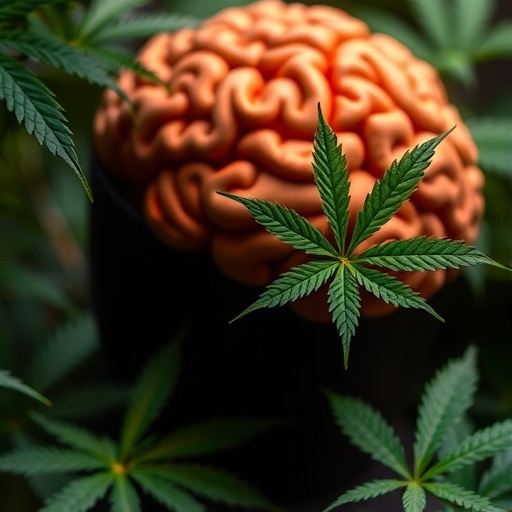
In the ongoing battle against Alzheimer’s disease, researchers continually seek innovative therapeutic strategies that go beyond the traditional focus on amyloid plaques and neurofibrillary tangles. A groundbreaking study led by Babak Baban and colleagues at Augusta University, published in the journal eNeuro, offers fresh insight into the role of neuroinflammation in Alzheimer’s and heralds cannabidiol (CBD), a compound derived from cannabis, as a promising candidate to modulate this complex pathology. Their investigation reveals that CBD can significantly temper neuroinflammatory pathways, potentially opening new avenues for more effective treatment modalities.
Neuroinflammation, a chronic inflammatory response within the central nervous system, has increasingly been recognized as a critical component in the progression of Alzheimer’s disease. This inflammation involves the overactivation of immune cells in the brain such as microglia and astrocytes, which release an array of proinflammatory cytokines and mediators that contribute to neuronal injury and cognitive decline. The Augusta University team sought to determine whether CBD’s established anti-inflammatory properties could be harnessed to mitigate these immune processes and disrupt the damaging feedback loops perpetuating neurodegeneration.
Their study employed an established mouse model of Alzheimer’s disease, exposing these animals to inhaled CBD to evaluate its mechanistic impact on immune response regulation and inflammation within the brain. Utilizing a comprehensive suite of molecular and genetic assays, the researchers meticulously measured the expression levels of key genes and proteins integral to neuroinflammatory signaling pathways. They discovered that CBD treatment robustly downregulated critical regulators of neuroinflammation, significantly lowering levels of proinflammatory molecules that exacerbate neural damage.
A focal point of the investigation was the modulation of two pivotal biochemical pathways: the indoleamine 2,3-dioxygenase (IDO) pathway and the cyclic GMP-AMP synthase (cGAS)-stimulator of interferon genes (STING) pathway. Both systems are central to immune activation and inflammatory signaling within the central nervous system. By influencing these pathways, CBD effectively curbed the cascade of inflammatory signals, suggesting a molecular basis for its neuroprotective effects. This dual-target mechanism highlights CBD’s capacity to exert broad immunomodulatory control, making it uniquely suited for addressing the multifaceted nature of Alzheimer’s pathology.
Baban emphasized that Alzheimer’s research historically fixated on the deposition of amyloid plaques and tau tangles as the disease’s core drivers. However, this study compellingly points to chronic neuroinflammation—specifically autoinflammatory responses within the brain—as equally crucial in disease progression. CBD’s ability to quell this immune overactivation complements previous findings from the same group, which demonstrated cannabidiol’s potential to facilitate the clearance of plaques and tangles through alternative pathways. Together, these results underscore a synergistic, multitarget therapeutic approach that could vastly improve clinical outcomes.
One of the groundbreaking aspects of this research lies in the mode of CBD administration. The team chose inhalation delivery, which may mimic more realistic routes of therapeutic intervention compared to traditional oral or injectable forms. This method allows for rapid absorption and direct impact on brain tissue, which could enhance the efficacy of CBD and mitigate peripheral side effects. The findings suggest that inhaled CBD can be a practical and potent neuroinflammatory modulator in vivo within the Alzheimer’s disease context.
Molecular analyses detailed in the paper include a decrease in proinflammatory cytokines such as tumor necrosis factor-alpha (TNF-α), interleukin-1 beta (IL-1β), and interferon-gamma (IFN-γ), which are typically elevated in neurodegenerative conditions. In parallel, the study observed a modulation of microglial activation states, shifting these cells from a reactive phenotype that promotes tissue damage to a more homeostatic one conducive to neural repair and inflammation resolution. This shift is vital, as microglia play a dual role—both protective and detrimental—in the diseased brain environment.
Furthermore, genetic expression profiles revealed that CBD influenced regulatory elements involved in immune cell recruitment and signaling cascade amplification. By attenuating key transcription factors and signaling molecules, such as NF-κB, which orchestrate inflammatory gene expression, CBD establishes an anti-inflammatory milieu supportive of neuronal survival. The suppression of IDO pathway activity also suggests a reduction in neurotoxic kynurenine metabolites, which have been implicated in synaptic dysfunction and neurodegeneration.
The implications of these findings extend beyond Alzheimer’s, potentially informing therapeutic strategies for other neurodegenerative diseases characterized by chronic inflammation, including Parkinson’s disease and multiple sclerosis. The capacity of CBD to engage multiple immune and inflammatory nodes simultaneously holds promise for a new class of interventions aimed at restoring immune homeostasis in the brain rather than merely addressing downstream neurodegenerative symptoms.
While human clinical trials remain necessary to confirm translatability, the data emphasize the innovative potential of phytocannabinoids as part of a multimodal therapeutic arsenal. Given the non-psychoactive nature of cannabidiol and its growing acceptance in medical contexts, it represents an attractive candidate for further drug development. Importantly, the study also clarifies the independent scientific merit of this work, with no conflicts of interest influencing study design or analysis, despite collaborations involving cannabidiol inhaler providers.
Baban’s group recommends further exploration into the long-term impacts of CBD treatment on cognitive function, behavioral outcomes, and neuropathological markers in Alzheimer’s models. Such studies could elucidate the durability of neuroimmune modulation and optimize dosing strategies for maximal therapeutic benefit. Additionally, investigating synergistic effects when combining CBD with other pharmacological agents could yield enhanced efficacy.
In conclusion, the pioneering research led by Babak Baban and colleagues marks a decisive step toward redefining Alzheimer’s disease treatment paradigms. By targeting the neuroimmune interface, cannabidiol emerges as a versatile compound capable of dampening detrimental inflammation, promoting neural protection, and potentially enhancing the brain’s capacity to clear pathological aggregates. These insights pave the way for a new era of neuroinflammation-focused therapies that transcend the limitations of conventional plaque- and tangle-centric approaches.
News Publication Date: 6-Oct-2025
Web References: https://doi.org/10.1523/ENEURO.0114-25.2025
Cite Scienmag News
Cassandra Pierce. (October 6, 2025). Investigating Cannabidiol’s Therapeutic Promise in Alzheimer’s Disease. Scienmag. https://scienmag.com/investigating-cannabidiols-therapeutic-promise-in-alzheimers-disease/
Cassandra Pierce. "Investigating Cannabidiol’s Therapeutic Promise in Alzheimer’s Disease." Scienmag, 6 October 2025, https://scienmag.com/investigating-cannabidiols-therapeutic-promise-in-alzheimers-disease/. Accessed 6 September 2026.
Cassandra Pierce. "Investigating Cannabidiol’s Therapeutic Promise in Alzheimer’s Disease." Scienmag. October 6, 2025. https://scienmag.com/investigating-cannabidiols-therapeutic-promise-in-alzheimers-disease/


