


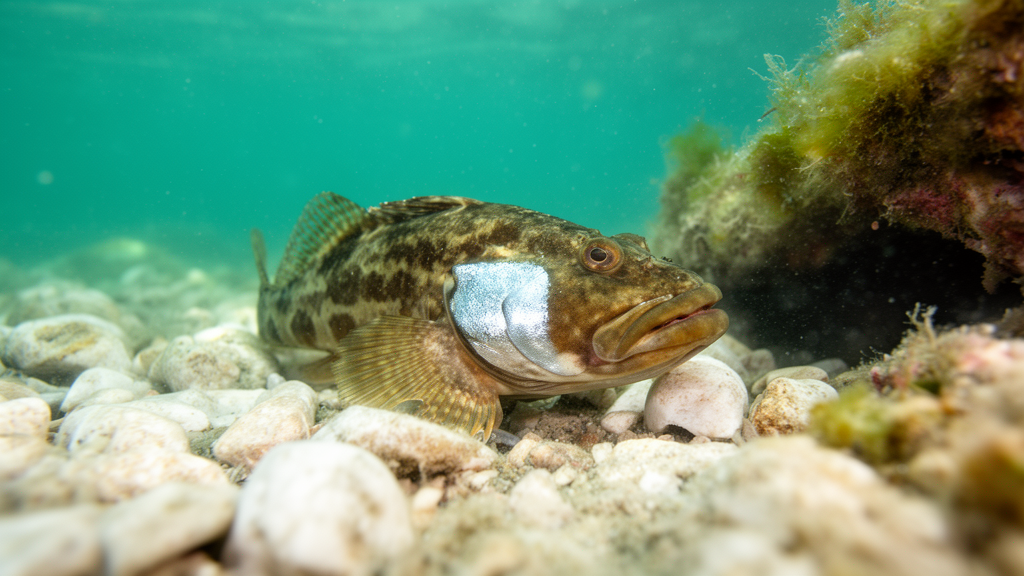
A silver-cheeked toadfish caught off Croatia’s Istrian coast has become the northernmost documented occurrence of the invasive species in the Mediterranean Sea. The single specimen was captured by a recreational angler on 13 May 2024 in Medulin Bay, in the northern Adriatic at 44°47′24″N, 13°55′43″E. It was taken from a depth of 19.7 metres with pieces of chicken used as bait, when the sea-surface temperature was 17.63°C.
After being hauled aboard, the fish immediately inflated and produced clicking sounds. The capture extends the species’ documented northern boundary beyond previous Adriatic and Mediterranean records, although the observation of one individual does not by itself establish how widespread the population has become in northern Croatian waters. The fish was transported to the Laboratory of the Faculty of Natural Sciences in Pula for species identification, measurements, examination of its gonads and analysis of stomach contents.
Researchers identified it as Lagocephalus sceleratus , commonly known as the silver-cheeked toadfish. Its total length was 522 millimetres, standard length was 433 millimetres and weight was 1,330 grams. Macroscopic examination of the gonads determined that the specimen was male.
The study is a single-specimen record with anatomical, dietary and geographic observations; it does not provide a population estimate for northern Adriatic toadfish or quantify changes in their abundance around Croatia. The species was first recorded in the Mediterranean off the southeastern Aegean coast of Turkey in 2003. Subsequent records showed its presence across much of the eastern basin, particularly along the coasts of Greece, Turkey, Lebanon, Egypt, Cyprus, Malta and Tunisia, with reports extending to Gibraltar and the Black Sea.
Thirteen pufferfish species have been detected in the Mediterranean, including 11 non-indigenous species, and 11 have established populations according to the cited regional records. The silver-cheeked toadfish is among the most conspicuous of these arrivals. Habitat-suitability models described in the study predict that L. sceleratus is most likely to occur in coastal areas, with the highest modeled suitability in the eastern Mediterranean, especially along the coasts of Greece and Turkey.
The models also identify additional suitable areas along southern Italy, near the Strait of Gibraltar and in parts of the western Mediterranean, while some central and western areas receive lower suitability ratings. A merged distribution indicates that much of the Mediterranean is suitable for the species except for certain central and western regions. These are spatial model predictions rather than measurements of the fish’s current abundance, and the Medulin Bay capture lies outside the eastern area identified as having the highest predicted suitability.
The 2024 fish was the fifth reported L. sceleratus occurrence in the Adriatic Sea and the fourth on its eastern side. The first Adriatic specimen was caught in October 2012 north of Jakljan Island in southern Croatia, followed by a record near Tribunj in 2013 and another near Vodice in 2014. A fish was also documented on the Italian side of the Adriatic near Trani in Puglia in 2014, and another occurrence was reported in 2019.
The Medulin Bay animal was caught farther north than all of those records. The reported sequence of locations and dates documents the species’ presence across the Adriatic and identifies the latest capture as its northernmost, without establishing a uniform or uninterrupted expansion along the basin’s coasts. Ocean circulation may facilitate the movement of warm-water species into new Adriatic areas.
The Adriatic current flows north to northwest along the coasts of Albania and Croatia, reaches the Istrian Peninsula and then turns southeastward along Italy. The study notes that this circulation can assist the transport of larvae and juvenile fish. Medulin Bay also shares oceanographic features with the neighboring Kvarner area, including deeper water and somewhat higher bottom temperatures than parts of the shallow northern Adriatic shelf along western Istria.
Dense water production on the shallow shelf is contrasted with more frequent bottom-layer renewal in Kvarner Bay, which occurs annually rather than on the longer cycles found in some deep Adriatic basins. The authors identify these conditions as potentially favorable for thermophilic species, including other non-native organisms recorded nearby, but the record itself does not establish the route by which the captured fish reached Medulin Bay. Stomach analysis identified bivalve shells, gastropod shells, fragments of sea-urchin skeletons and particles of inorganic material.
Most prey could not be identified below a relatively high taxonomic level because the toadfish’s beak-like jaws crush food so thoroughly that recognizable species-level remains are rarely recovered. The observed contents nevertheless document the consumption of mollusks and armored benthic animals. The species’ powerful dentition allows it to feed on both pelagic and benthic organisms, including crustaceans, sea urchins and barnacles.
The Medulin Bay stomach contents therefore fit the species’ broad diet, but a single fish cannot establish how frequently different prey categories are consumed or how local predation changes across the Adriatic. The growing presence of L. sceleratus has consequences for coastal fisheries as well as marine monitoring. In some Mediterranean coastal areas, the species became an increasingly important component of small-scale fishing catches less than a decade after its first detection, creating socioeconomic repercussions.
Proposed measures in invaded areas include more robust fishing gear, changes in fishing tactics during periods when the fish are frequently present and exploration of their commercialization. The study identifies targeted removal during the spawning period as the principal control priority for decision-makers. Such proposals remain management recommendations rather than interventions evaluated by the present single-catch report.
The authors also emphasize that the changing Mediterranean biodiversity profile does not yet establish the precise effect of warm-water arrivals on trophic webs or ecosystem functioning. Human health adds another reason to track the species’ distribution. The silver-cheeked toadfish is described as aggressive and has been reported to bite people approached in coastal water.
Although such incidents are rare, the cited southern and eastern Mediterranean cases include severe injuries and partial finger amputation. The growing occurrence of the fish in coastal areas therefore creates a particular concern for swimmers in frequently visited tourist zones. The species is also highly toxic, which the study links to the need to prevent its marketing and consumption.
The authors call for education of medical staff, tourism workers, marine-recreation professionals and the public, along with guidance from Croatia’s Directorate of Fisheries for fishers handling accidental catches. They describe this as a need for coordinated preparedness, not as a response tested by the reported specimen. Regulatory gaps complicate efforts to address invasive marine species.
European Union regulation on invasive species focuses mainly on freshwater and terrestrial ecosystems, while many marine species are excluded because of scientific uncertainties and conflicts between conservation goals and fisheries interests. Croatian national policy addresses some marine species in aquarium-related contexts but does not provide comprehensive controls for wild populations such as L. sceleratus . The study therefore recommends targeted national and local action involving enforcement, catch-handling information, public education and targeted removal.
It also presents the Medulin Bay record as an example of the value of citizen science: local fishers, recreational anglers and marine enthusiasts have contributed to the detection of Croatian records, and mobile reporting systems could improve early detection. The finding confirms the northernmost Mediterranean occurrence while leaving the abundance, ecological effect and future movement of the species in the northern Adriatic unresolved.
Subject of Research: A single-specimen record of the silver-cheeked toadfish in Croatia’s northern Adriatic
Article Title: Northernmost Mediterranean record of the silver-cheeked toadfish, Lagocephalus sceleratus ( Actinopterygii , Tetraodontiformes , Tetraodontidae )
Article References: Iveša, N., Buršić, M., & Dulčić, J. (2025). Northernmost Mediterranean record of the silver-cheeked toadfish, Lagocephalus sceleratus (Actinopterygii, Tetraodontiformes, Tetraodontidae). Acta Ichthyologica et Piscatoria, 55, 77-81. https://doi.org/10.3897/aiep.55.146945
Image Credits: AI Generated
Keywords: silver-cheeked toadfish, Lagocephalus sceleratus, northern Adriatic, Mediterranean Sea, Croatia, invasive species, Lessepsian migration, pufferfish, coastal fisheries, citizen science, Northernmost, Mediterranean
Cite Scienmag News
Patricia Pace. (October 20, 2026). Invasive silver-cheeked toadfish reaches northernmost Mediterranean record. Scienmag. https://scienmag.com/invasive-silver-cheeked-toadfish-reaches-northernmost-mediterranean-record/
Patricia Pace. "Invasive silver-cheeked toadfish reaches northernmost Mediterranean record." Scienmag, 20 October 2026, https://scienmag.com/invasive-silver-cheeked-toadfish-reaches-northernmost-mediterranean-record/. Accessed 20 October 2026.
Patricia Pace. "Invasive silver-cheeked toadfish reaches northernmost Mediterranean record." Scienmag. October 20, 2026. https://scienmag.com/invasive-silver-cheeked-toadfish-reaches-northernmost-mediterranean-record/


