

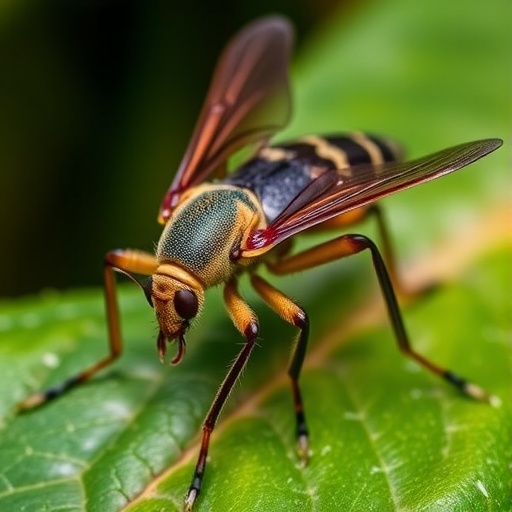
Invasive alien species have long been recognized as one of the foremost threats to global biodiversity, particularly affecting terrestrial ecosystems in complex and often unpredictable ways. A groundbreaking study published in Nature Communications has provided the most comprehensive meta-analysis to date on the impacts of invasive alien species across various terrestrial insect orders, shedding light on the nuanced and often alarming ecological consequences of these biological intruders. This extensive research reveals not only the pervasive negative effects these species exert but also underscores the staggering variability in how different insect groups respond to invasion pressures across diverse environmental contexts.
The study, led by Skinner, Cooke, Roy, and colleagues, delves into a vast repository of ecological data, synthesizing information from hundreds of individual case studies that track invasive species impacts on insect biodiversity, abundance, and ecosystem function. It is the first of its kind to systematically quantify these effects across multiple insect orders, providing invaluable insight into both broad-scale patterns and intricate details that previous narrower studies might have missed. By employing advanced statistical models capable of handling complex hierarchical data, the researchers were able to discern general trends while accounting for species-specific and ecosystem-specific idiosyncrasies.
One of the central revelations of the analysis is the predominantly negative impact invasive species have on native insect populations. Across the board, invasive alien species were found to reduce native insect species richness and individual abundance, thereby threatening the integrity of local ecological networks. However, this impact is far from uniform. Different insect orders exhibited variable susceptibility to invasions. For example, beetles (Coleoptera) and butterflies and moths (Lepidoptera) showed markedly different responses, with some taxa suffering severe population declines while others demonstrated surprising resilience or even localized benefits due to novel resource availability.
The variability in impact not only depends on insect order but is intricately linked to the ecological roles and life history traits of the native insects as well as the identity and traits of the invaders. Insects with narrow habitat preferences or specialized diets were generally more vulnerable, whereas generalist species often managed to persist or thrive in invaded environments. The results point to the complexity of invasion biology, emphasizing that the effects of exotic species cannot be oversimplified or treated as universally detrimental or benign.
Perhaps most strikingly, the study highlights how environmental context—ranging from habitat type and geographical region to the broader landscape matrix—influences invasion outcomes. Nervous systems often missing from ecological models were addressed through integrating data from contrasting climates, altitudes, and degrees of anthropogenic disturbance. For instance, tropical habitats displayed different impact patterns compared to temperate regions, often associated with both higher invasion pressure and increased native biodiversity, thereby complicating conservation efforts.
The researchers also explored the mechanisms driving these impacts, exposing how invasive species outcompete native insects for resources such as food and nesting sites, introduce novel pathogens, or indirectly alter habitat structure through ecosystem engineering. Mechanical competition and predation were recurrent themes, with some invasive predators causing precipitous declines in vulnerable native insect populations. Moreover, invasive plant species facilitated some invasion effects by altering host plant communities crucial to native herbivorous insects.
A critical methodological advancement in this meta-analysis was the standardization of disparate data types and the control for publication bias—a common pitfall in ecological syntheses. By applying rigorous inclusion criteria and robust model averaging techniques, the study delivers results with unprecedented reliability and depth. This methodological rigor offers a template for future meta-analyses aiming to unravel the ecological consequences of global change drivers embedded within complex datasets.
The implications of these findings extend beyond academic curiosity; they serve as a clarion call for more targeted and informed conservation strategies. The stark realization that invasive alien species impact different insect groups in unique ways necessitates tailored management approaches that respect the ecological sensitivities of native communities. Blanket policies or one-size-fits-all eradication programs may fall short or even generate unintended harm without nuanced understanding.
Furthermore, the research underscores the importance of early detection and rapid response in invasion management. The temporal dynamics of invasions—whether the invader is at early colonization or well-established phase—directly influence the scale and severity of impact. Effective monitoring systems, integrating both citizen science and professional ecological networks, are paramount in creating dynamic, adaptive management frameworks.
This study also prompts a reevaluation of the potential indirect effects invasive species might have on ecosystem services mediated by insects, such as pollination, nutrient cycling, and pest control. Declines in key insect functional groups could cascade through ecosystems, compromising agricultural productivity and natural ecosystem resilience. Consequently, understanding these multilayered interactions is fundamental to safeguarding ecosystem functions that underpin human well-being.
Conservation biologists and policymakers now face the challenge of integrating these complex ecological data into actionable policies that anticipate both immediate and long-term invasion consequences. The study’s transparent presentation of uncertainty and variability in invasion impact reinforces the necessity of precautionary principles and adaptive management in the face of ecological complexity.
On a broader scale, the meta-analysis aligns with the growing recognition of the Anthropocene’s ecological challenges, where human-mediated species translocations increasingly redefine species distributions and community compositions worldwide. The findings propel the urgency of addressing invasive species as a major component of global biodiversity loss, complementing other stressors such as habitat destruction and climate change.
In conclusion, this comprehensive meta-analysis reshapes our understanding of invasive alien species impacts on terrestrial insect assemblages, revealing a complex tapestry of negative effects heavily modulated by biological and environmental variability. The study provides an essential scientific foundation for biodiversity conservation in a rapidly changing world, emphasizing that mitigating invasive species threats demands both broad-scale awareness and local ecological sensitivity to preserve the intricate web of terrestrial insect life.
Subject of Research:
Impacts of invasive alien species on terrestrial insect orders through meta-analysis.
Article Title:
Meta-analysis reveals negative but highly variable impacts of invasive alien species across terrestrial insect orders.
Article References:
Skinner, G.L.V., Cooke, R., Roy, H.E. et al. Meta-analysis reveals negative but highly variable impacts of invasive alien species across terrestrial insect orders. Nat Commun 17, 296 (2026). https://doi.org/10.1038/s41467-025-67925-9
Image Credits: AI Generated


