


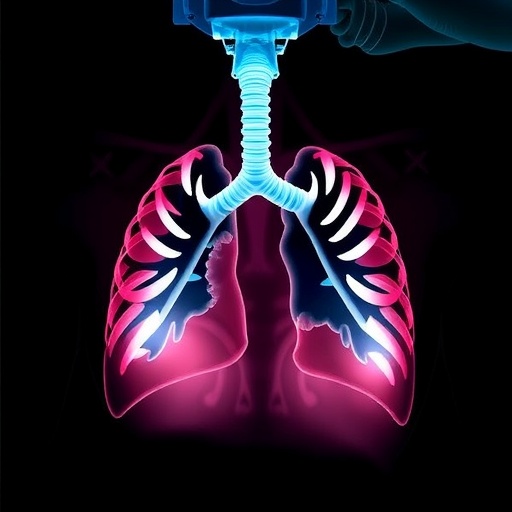
In the ever-evolving field of thoracic surgery, the multifaceted approach to patient care takes center stage, particularly during the delicate procedures of video-assisted thoracic surgery (VATS). As advancements in minimally invasive techniques continue to reshape the surgical landscape, understanding the nuances of intraoperative ventilatory strategies is essential for optimizing patient outcomes. A recent narrative review by Coppola et al. delves deeply into this critical aspect, highlighting the complexities and considerations that influence respiratory management during these procedures.
In the context of VATS, ensuring optimal ventilation is paramount. The interaction between surgical techniques and ventilatory strategies can significantly impact patient stability and surgical success. Traditional mechanical ventilation methods, while commonly employed, often require adjustments in response to shifting dynamics in patient anatomy and surgical interventions. The review emphasizes that tailoring ventilatory support to individual patient needs is not just beneficial but necessary, considering factors like lung compliance and the ability to maintain oxygenation and ventilation effectively.
The authors point out that one of the principal challenges during VATS lies in the risk of hypoxia, particularly when lung separation techniques are utilized. In a procedure that often necessitates the collapse of one lung to provide the surgeon with a clearer view and unobstructed working space, the management of the remaining lung becomes even more critical. Coppola et al. discuss the various ventilation strategies that can mitigate the risk of inadequate oxygenation, including the application of Positive End-Expiratory Pressure (PEEP) and low tidal volume approaches, which support ventilation without excessively distending the lung.
Moreover, the review sheds light on the importance of continuous intraoperative monitoring. Effective surgical teams cannot rely solely on preoperative assessments; real-time data regarding respiratory mechanics and gas exchange must guide intraoperative decisions. This dynamic monitoring requirement calls for advanced technologies and protocols that adapt swiftly to the surgical environment, thereby offering enhanced patient safety and outcomes.
The surgeons’ understanding of physiological principles is also paramount when implementing these ventilatory strategies. The review illustrates how variations in lung mechanics can significantly alter gas exchange processes, leading to potential complications if not addressed properly. For instance, maintaining optimal end-expiratory lung volumes helps prevent atelectasis, a common occurrence when lung volumes are reduced, thereby improving oxygenation during critical surgical maneuvers.
Furthermore, the application of neuromuscular blocking agents is discussed in the context of VATS. While their use can aid surgical access and improve conditions such as lung collapse, the implications for ventilatory management are profound. The necessity for deep neuromuscular blockade can complicate the urgency to maintain physiological ventilation and may require adjustments in an anesthesiology approach. Consequently, a thorough understanding of pharmacological interactions with respiratory parameters is essential to mitigate risks associated with anesthesia during VATS.
An aspect that the review pays special attention to is the consideration of patient positioning during VATS. The positioning not only impacts surgical access but also directly influences ventilation strategies. Side-sitting positions commonly employed in VATS can affect venous return and pulmonary hemodynamics, thereby necessitating adjustments in ventilatory pressure settings. The review articulates that an integrated approach involving both surgical technique and respiratory management is critical to successfully navigating the complexities of patient care in the operating room.
The integration of multimodal analgesia is another vital strategy highlighted by Coppola et al. Effective pain management enhances patient recovery and can influence respiratory function post-surgery. By minimizing the opioid requirement, healthcare providers may observe a more favorable pulmonary recovery trajectory, ultimately contributing to a more efficient postoperative recovery process.
Additionally, the authors stress the need for individualized strategies rooted in patient physiology and disease states. Recognizing that each patient’s respiratory mechanics can exhibit variability is crucial; therefore, a ‘one-size-fits-all’ approach to ventilatory management is inadequate. The utilization of patient-specific data can refine ventilatory strategies, ensuring that caregivers adapt their practices to the unique challenges posed by each case.
Collaborative efforts involving anesthesiologists, surgeons, and critical care providers emerge as a theme throughout the review. Effective intraoperative ventilation management during VATS requires a synergistic team approach, with clear communication fueling the exchange of information vital for patient monitoring and decision-making. Such collaborative dynamics influence workflow efficiency, contributing to enhanced patient outcomes.
The growth of telemedicine and advanced simulation training within surgical specializations could indeed bolster the understanding and application of ventilatory strategies in VATS. Proactive training initiatives that expose healthcare providers to variations in ventilatory management can facilitate better preparedness for dealing with intraoperative challenges that may arise unexpectedly.
Importantly, the review concludes by urging further research aimed at closing the knowledge gap surrounding intraoperative ventilatory management in thoracic surgery. Continued investigation into new technologies and delivery methods for respiratory support will be crucial to refining best practices and ensuring superior patient care. The burgeoning field of personalized medicine paves the way for more sophisticated approaches, potentially transforming intraoperative management during VATS over the coming years.
In essence, the narrative review by Coppola et al. serves as a clarion call for adaptive and patient-centered approaches in the management of intraoperative ventilation. With the surgical landscape continually shifting toward less invasive techniques and enhanced patient safety protocols, the implications for how ventilatory strategies are utilized and optimized cannot be overstated. As the field presses on, the collaboration between surgical and anesthetic teams will be key in advancing effective intraoperative care, ultimately improving outcomes for patients undergoing video-assisted thoracic surgeries.
Coppola, S., Pastene, B., Fratti, I. et al. Intraoperative Ventilatory Strategies in Patients Undergoing Video-Assisted Thoracic Surgery: A Narrative Review.
Adv Ther (2025). https://doi.org/10.1007/s12325-025-03369-3
Cite Scienmag News
Ophelia Keating. (September 19, 2025). Intraoperative Ventilation Approaches for Thoracic Surgery. Scienmag. https://scienmag.com/intraoperative-ventilation-approaches-for-thoracic-surgery/
Ophelia Keating. "Intraoperative Ventilation Approaches for Thoracic Surgery." Scienmag, 19 September 2025, https://scienmag.com/intraoperative-ventilation-approaches-for-thoracic-surgery/. Accessed 5 September 2026.
Ophelia Keating. "Intraoperative Ventilation Approaches for Thoracic Surgery." Scienmag. September 19, 2025. https://scienmag.com/intraoperative-ventilation-approaches-for-thoracic-surgery/


