


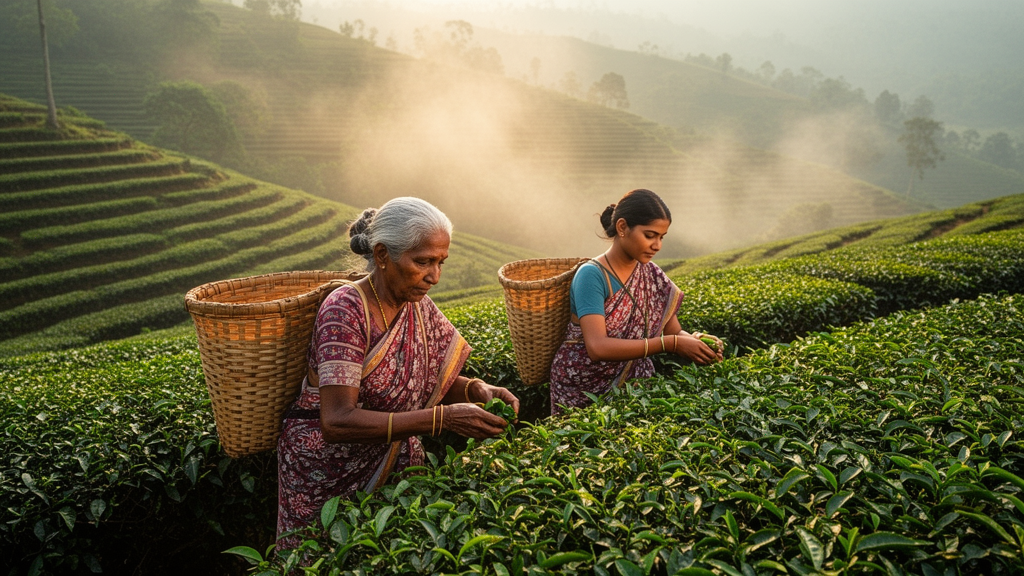
A grounded theory study examining tea plantation labourers in Kerala, India, has identified intergenerational structural dependency as the core process driving and reproducing systemic oppression across generations. While the tea plantation sector continues to operate as an integral component of India’s broader economy, plantation labourers continue to experience persistent inequalities rooted deeply in historical, political, and socio-economic structures. The study explored the structural and psychosocial mechanisms through which systemic oppression is experienced and reproduced among tea plantation labourers in Kerala.
To analyze how systemic oppression operates in this context, the researchers adopted a constructivist grounded theory methodology. The empirical investigation relied on semi-structured qualitative interviews conducted directly with 18 tea plantation labourers. Following data collection, the researchers analyzed the qualitative accounts through iterative coding, constant comparison across participant testimonies, analytical memo writing, and theoretical integration, ultimately constructing an emergent conceptual framework grounded entirely in the qualitative evidence gathered from the workers.
The analysis identified six interconnected dimensions that jointly maintain oppressive conditions. The study identified socio-economic dependency and restricted mobility. It also documented occupational vulnerability and an embodied labour burden. Furthermore, the findings detailed the structural production of health inequalities.
The researchers identified the psychological internalization of oppression. The study also identified political exclusion and powerlessness. Finally, the analysis documented institutional neglect and welfare failure.
By synthesizing these six dimensions into an emergent conceptual framework, the study demonstrates how political, institutional, socio-economic, occupational, health, and psychological processes continuously interact to sustain systemic inequality across generations.
Subject of Research: Systemic oppression and intergenerational dependency among tea plantation labourers in Kerala
Article Title: A constructivist grounded theory of systemic oppression among tea plantation labourers in Kerala, India
Article References: Rajeev, A., A V, G., J, J., & C, J. (2026). A constructivist grounded theory of systemic oppression among tea plantation labourers in Kerala, India. SN Social Sciences, 6(11), Article 616. https://doi.org/10.1007/s43545-026-01926-3
Image Credits: AI Generated
DOI: 10.1007/s43545-026-01926-3
Keywords: Kerala tea plantations, tea plantation labourers, systemic oppression, intergenerational structural dependency, constructivist grounded theory, socio-economic dependency, restricted mobility, occupational vulnerability, embodied labour burden, health inequalities, internalized oppression, political exclusion, institutional neglect, welfare failure, labour rights, occupational health, worker participation
Cite Scienmag News
Courtney Benton. (November 11, 2026). Intergenerational Structural Dependency Drives Systemic Oppression Among Kerala Tea Labourers. Scienmag. https://scienmag.com/intergenerational-structural-dependency-drives-systemic-oppression-among-kerala-tea-labourers/
Courtney Benton. "Intergenerational Structural Dependency Drives Systemic Oppression Among Kerala Tea Labourers." Scienmag, 11 November 2026, https://scienmag.com/intergenerational-structural-dependency-drives-systemic-oppression-among-kerala-tea-labourers/. Accessed 14 November 2026.
Courtney Benton. "Intergenerational Structural Dependency Drives Systemic Oppression Among Kerala Tea Labourers." Scienmag. November 11, 2026. https://scienmag.com/intergenerational-structural-dependency-drives-systemic-oppression-among-kerala-tea-labourers/




