


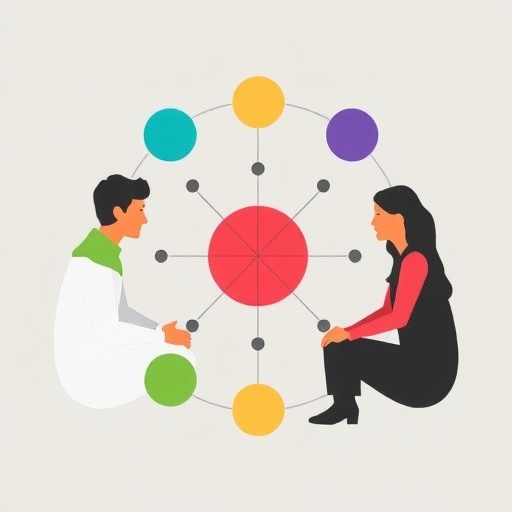
In the ever-evolving landscape of education, the necessity for students to navigate complex and multifaceted issues is more critical than ever. The recent research by Bowie, Aantjes, Woolley, and colleagues recognizes a compelling gap in the current educational curricula, which often compartmentalizes subjects rather than encouraging an integrative approach to learning. This investigation aims to articulate a new philosophy that embraces a multidisciplinary perspective, enabling students to tackle the ‘big questions’ of our time effectively.
In traditional education models, subjects are typically siloed, each with distinct boundaries that disconnect lessons from one another. This fragmentation can hinder a comprehensive understanding of intricate topics, leaving students ill-prepared to address real-world problems that require knowledge from various domains. The researchers argue that integrating subjects is essential, allowing students to draw connections between disciplines that enrich their learning experiences and enhance their critical thinking skills.
One of the significant findings from the research highlights the lack of interconnectivity among subjects in many school curricula. While educational standards often prioritize content mastery, this focus can restrict students’ ability to see how subjects like science, mathematics, humanities, and the arts can inform and complement one another. The lack of systematic subject interlinking is a significant barrier to cultivating a nuanced understanding of complex issues, which can stymie creativity and problem-solving abilities in students.
Furthermore, the researchers explored the potential of an integrative philosophy of knowledge. This concept encompasses the belief that knowledge should not exist in isolated fragments but should be viewed as interconnected and dynamic. Such an approach encourages students to engage in critical inquiry, prompting them to seek out relationships among different fields of study. By fostering connections, educators can nurture a generation of thinkers who are better equipped to navigate the complexities of the modern world.
The significance of this study extends beyond academic theory; it has profound implications for teaching practices and curriculum design. The findings call for a paradigm shift in how we approach education, urging educators to develop programs that emphasize interdisciplinary learning. Such programs can offer students opportunities to engage with real-world problems that require comprehensive solutions. By anchoring education in practical applications and collaborative projects, students may develop a richer, more contextualized understanding of the materials they are studying.
Additionally, the researchers underline the importance of fostering an environment in which educators themselves are encouraged to collaborate across disciplines. Professional development opportunities that prioritize interdisciplinary learning can empower teachers to break down the walls between subjects. When educators share insights and strategies from their respective fields, they can develop curricula that reflect a more integrated approach, ultimately benefiting students.
Equally important is the role of assessment within this integrative educational paradigm. Standardized testing often reinforces the notion of segmented knowledge by evaluating students based solely on their performance in isolated subjects. An innovative assessment model that values interdisciplinary projects and collaborative performances could provide a more accurate reflection of a student’s understanding and ability to apply knowledge in diverse contexts.
Moreover, incorporating technology into the educational experience can further facilitate an integrated approach to learning. Digital tools and platforms can serve as bridges between subjects, offering interactive and engaging ways for students to explore the connections among various disciplines. Utilizing multimedia resources, simulations, and collaborative online projects can present learning opportunities that extend beyond conventional classroom walls, encouraging students to think critically and analytically.
The empirical indications presented in the research substantiate the claim that a disjointed curriculum yields ineffective educational outcomes. Students often exhibit lower degrees of engagement and enthusiasm when they perceive their studies as isolated events. Conversely, when educational experiences are intertwined, students tend to exhibit higher retention rates and a deeper understanding of the material. The implications of these findings are profound, as they prompt a re-evaluation of curricular effectiveness and student engagement.
As education continues to adapt within the context of an increasingly complex world, embracing an integrative philosophy is not merely beneficial; it is imperative. Equipped with the ability to synthesize knowledge from multiple disciplines, students can better navigate the interconnected challenges they will inevitably face in the future. From climate change to social injustice, the questions of tomorrow demand critical thinkers who can approach problems with a nuanced and multifaceted perspective.
Ultimately, this research by Bowie and colleagues advocates for a transformative vision of education that fosters interconnectedness and collaboration among subjects. By cultivating an integrative mindset within students, educators can prepare them not only for academic success but for meaningful engagement within society. As we stand on the brink of a new era in education, the call to action is clear: we must forge connections rather than divisions, allowing the pursuit of knowledge to reflect the complexities of life itself.
In conclusion, as we move forward, prioritizing an integrative approach within educational frameworks can ensure that the ‘big questions’ of our time are not only addressed but are explored in depth, fostering a generation of innovative problem solvers prepared to tackle the challenges ahead. The potential for positive change in educational practices is immense, and the responsibility lies with each stakeholder to advocate for a curriculum that values interconnectivity and collaboration among subjects.
Cite Scienmag News
Courtney Benton. (October 12, 2025). Integrative Philosophy: Addressing Curriculum Disconnect in Education. Scienmag. https://scienmag.com/integrative-philosophy-addressing-curriculum-disconnect-in-education/
Courtney Benton. "Integrative Philosophy: Addressing Curriculum Disconnect in Education." Scienmag, 12 October 2025, https://scienmag.com/integrative-philosophy-addressing-curriculum-disconnect-in-education/. Accessed 4 September 2026.
Courtney Benton. "Integrative Philosophy: Addressing Curriculum Disconnect in Education." Scienmag. October 12, 2025. https://scienmag.com/integrative-philosophy-addressing-curriculum-disconnect-in-education/


