

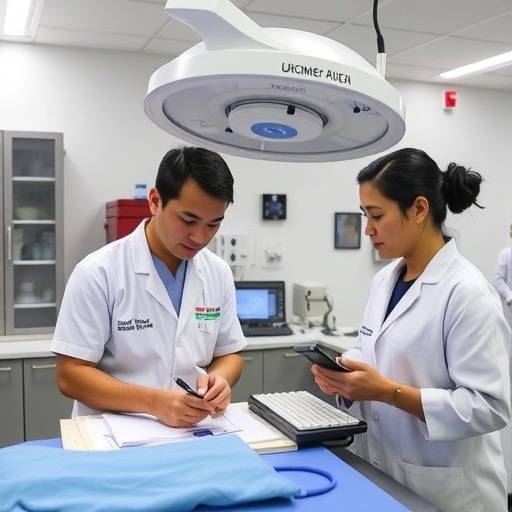
In the realm of medical education, innovative teaching methodologies are continually evolving to enhance the learning experience for students and improve patient care outcomes. An exciting development has emerged from the collaborative research by Chen, Mao, Sun, and their team, which explores the integration of Problem-Based Learning (PBL) with the mini-Clinical Evaluation Exercise (mini-CEX) model specifically tailored for the urological clinic setting. This innovative approach responds to the pressing need for effective, practical training in a field where competency and clinical judgment are critical.
The shift toward PBL in medical education is not merely a trend; it reflects a significant realization that active learning can lead to deeper understanding and retention of knowledge. PBL emphasizes student-centered learning, where the learners engage with real-life clinical scenarios that foster critical thinking and problem-solving abilities. By implementing PBL in urology education, students do not just memorize treatment protocols; they learn to apply their knowledge practically in a dynamic clinical environment.
Concurrently, the mini-CEX model provides a robust framework for formative assessment in clinical settings. This tool allows educators to evaluate students during a typical patient encounter, offering real-time feedback on essential competencies such as history-taking, clinical reasoning, and interpersonal skills. The integration of PBL and mini-CEX represents a paradigm shift, moving away from conventional lectures to a more interactive and assessment-focused model of medical training. This integration aims to elevate the standards of urology education and ensure that future specialists are not only knowledgeable but also proficient in their practical skills.
The study conducted by Chen et al. rigorously examines how these two methodologies can complement each other in the clinical teaching of urology. By assessing the effectiveness of this combined approach, the researchers provide insights into how it can enhance the educational experience for medical students. The research involved a comparative evaluation of traditional teaching methodologies against the PBL and mini-CEX integration, looking closely at student engagement, clinical competence, and overall satisfaction with the learning process.
Preliminary findings indicate a marked improvement in student learning outcomes when exposed to the PBL combined with mini-CEX evaluation model. Participants reported feeling more engaged and better equipped to face real-world challenges in clinical settings. This engagement is crucial for students who will soon transition into roles where they must interact with patients, make quick decisions, and apply theoretical knowledge to practical scenarios.
Furthermore, the benefits of this integrated model extend beyond mere academic achievement. By building soft skills such as communication and teamwork through role-playing in PBL scenarios, students are better prepared to collaborate with multidisciplinary teams in their future careers. The use of simulations and peer interactions in PBL fosters an environment where students learn from one another, share insights, and develop a deeper understanding of complex urological cases.
A critical aspect of the research is the educators’ feedback on this approach. Chen et al. noted that instructors also embraced the PBL and mini-CEX methodology, finding it invigorating and more aligned with contemporary educational practices. The satisfaction among educators can often be overlooked in educational studies; however, their buy-in is crucial for the successful implementation of any new teaching methods. If educators find value in an approach, they are more likely to engage deeply and commit to its sustained use, enhancing the learning experience for students.
Challenges, of course, were not absent from this innovative juxtaposition of educational methodologies. Educators and students alike faced hurdles in the initial implementation, including adjustments to the assessment criteria and rethinking traditional teaching roles. However, the study demonstrates that overcoming these challenges significantly contributes to a more enriched educational environment. With time, adequate training, and support for both educators and students, the seamless integration of PBL and mini-CEX can become a standard in medical training.
As the researchers continue to analyze long-term outcomes, the implications of their findings are profound. The potential for enhancing clinical competency via an active learning environment cannot be understated. This study serves as a testament to the continuous evolution of medical education, emphasizing that adaptive learning is not merely a necessity; it is an essential component of training quality healthcare professionals in a complex and ever-changing landscape.
Looking ahead, the implications of this research extend beyond urology. Medical educators in various specialties can learn from the successful combination of PBL and mini-CEX, leveraging these tools to reformulate their teaching strategies. The successful dissemination of this knowledge can lead to a broader transformation in medical education, influencing curricula and pedagogical methods on a global scale.
In conclusion, the exploration of PBL in combination with the mini-CEX model represents a forward-thinking approach to medical education that aligns with the realities of modern healthcare. As further studies are published, the hope is that such innovations will become mainstream, ultimately benefiting medical students, educators, and patients alike. The research conducted by Chen et al. not only underscores the importance of evolving educational techniques in medicine but also highlights the positive impact that such changes can have on patient care and public health outcomes.
This groundbreaking work not only sets a new standard for clinical teaching in urology but also ignites a conversation about the future of medical education as a whole. As training methodologies continue to develop, it is imperative that the healthcare education community remains open to change, ready to embrace successful innovations that enhance learning and improve clinical practice. The commitment to fostering a culture of continuous improvement in medical education will undoubtedly lead to better-prepared physicians, ultimately elevating the standard of care delivered to patients.
By centralizing effective assessment models with innovative teaching methodologies, researchers like Chen and his colleagues are paving the way toward a brighter future in medical education. The emphasis on active engagement, critical reasoning, and real-time feedback is a recipe for success that other fields may well seek to emulate. As educational paradigms shift, one thing remains clear: the intersection of effective teaching strategies and real-world application is where tomorrow’s healthcare leaders will thrive.
Subject of Research: Integration of Problem-Based Learning (PBL) and mini-CEX in urological education
Article Title: Application of PBL combined with mini-CEX evaluation model in the clinical teaching of urological clinic teaching.
Article References:
Chen, X., Mao, X., Sun, X. et al. Application of PBL combined with mini-CEX evaluation model in the clinical teaching of urological clinic teaching.
BMC Med Educ (2025). https://doi.org/10.1186/s12909-025-08466-z
Image Credits: AI Generated
DOI:
Keywords: Medical education, Problem-Based Learning, mini-CEX, urology, clinical training, innovative teaching methodologies, formative assessment.


