

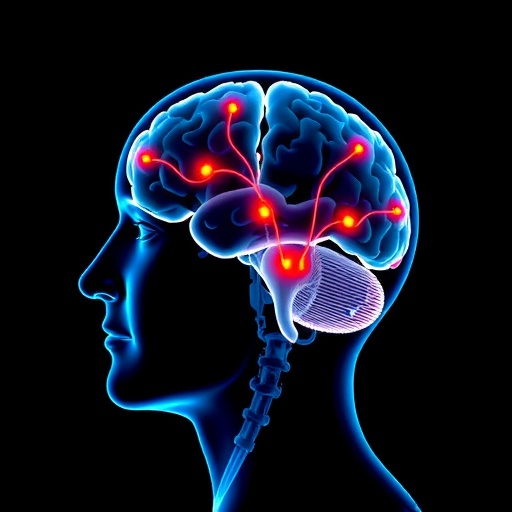
Deciding if and when to pursue deep brain stimulation (DBS) can be overwhelming for people with Parkinson’s disease. While DBS is one of the most effective interventions for movement symptoms, it’s also among the most complex. DBS uses a surgically implanted, battery‑powered device to send electrical signals to areas of the brain that control movement.
To make this decision easier, experts at the University of Colorado Anschutz created the first evidence-based decision tool for patients designed to improve patients’ understanding of DBS and boost their confidence as they weigh treatment options. Their results, published in the Journal of Parkinson’s Disease, show that the majority of patients reported it was helpful in their decision-making process, they were satisfied with the tool and would recommend it to others.
“We designed this to support real shared decision‑making between patients and doctors, not just information‑sharing. What we found is that patients at every stage of the DBS journey found it useful,” said the study’s first author Michelle Fullard, MD, MSCE, Director of Clinical Research at the CU Anschutz Movement Disorders Center. “We see this as a tool that patients can use on their own so they’re coming to the table with knowledge about the surgery while talking to their doctors.”
To create the decision aid, the research team used a rigorous, evidence‑based framework designed to ensure the tool met real patient needs. They started by identifying what information patients felt they were missing, conducted a thorough review of existing research, drafted an initial version and then refined it through repeated testing with patients in the clinic.
In total, over 120 patients participated across phases (57 patients participated in the needs‑assessment phase, 22 tested the prototype and 46 evaluated final acceptability).
In early testing, patients beginning the DBS evaluation reported high decisional conflict, particularly around uncertainty and lack of information. The new tool directly targeted these concerns.
In a study of people with Parkinson’s disease:
- 94% said they would recommend it
- 91% found the language easy to follow
- 87% were satisfied with the decision aid’s quality
The tool also includes a unique personalized symptom report. Patients enter their symptoms and receive individualized feedback on how likely each symptom is to improve with DBS -helping correct common misconceptions and “hidden hopes” about what the surgery can achieve.
“Patients often go into surgery hoping it will fix a specific symptom, and when that doesn’t happen, it can feel disappointing. Our goal is to ensure people have a clear, realistic understanding of what DBS can and cannot do so they feel confident and satisfied with whatever decision they make,” Fullard adds, who also is a doctor currently treating patients with Parkinson’s disease and other movement disorders.
The study also highlighted important gender‑related insights: women in the study were more likely to live alone and emphasized wanting more detailed information about post‑operative support, such as help with meals and household needs.
This builds on Fullard’s recent research showing clear gender differences in how people with Parkinson’s gather information, weigh risks and benefits, and decide whether to pursue DBS.
“Our research shows that women remain a minority of DBS patients despite having Parkinson’s at nearly similar rates as men. This disparity could come from differences in experiences, rather than disease prevalence, and this study showcases another difference between genders. Women in particular emphasized needing more social support and a clearer picture of life after surgery than men,” said Fullard.
As a next step, the decision aid is currently being evaluated in a clinical trial, where researchers are measuring how much it helped people after the surgery.
The resource is also freely available at DBSDecisionTool.com and multiple Parkinson’s organizations are already sharing it with their communities. Clinicians have already expressed interest in patients accessing the tool before their specialist appointments, helping them arrive more prepared for discussions.
The team plans to expand testing through a multi‑site study and ultimately make the tool available to any center nationwide. Future adaptations are planned for conditions beyond Parkinson’s, including essential tremor.
About the University of Colorado Anschutz
The University of Colorado Anschutz is a world-class academic medical campus leading transformative advances in science, medicine, education and patient care. The campus includes the University of Colorado’s health professional schools, more than 60 centers and institutes, and two nationally ranked independent hospitals – UCHealth University of Colorado Hospital and Children’s Hospital Colorado – which see nearly three million adult and pediatric patient visits each year. Innovative, interconnected and highly collaborative, CU Anschutz delivers life-changing treatments, exceptional patient care and top-tier professional training. The campus conducts world-renowned research supported by $890 million in funding, including $762 million in sponsored awards and $128 million in philanthropic gifts for research.
Journal
Journal of Parkinson’s Disease
Article Title
Development and acceptability of a deep brain stimulation surgery decision aid for Parkinson’s disease
Julia Milzer
University of Colorado Anschutz
julia.milzer@ucdenver.edu
Office: 303-725-0733
Journal
Journal of Parkinson’s Disease
Article Title
Development and acceptability of a deep brain stimulation surgery decision aid for Parkinson’s disease
Tags
bu içeriği en az 2000 kelime olacak şekilde ve alt başlıklar ve madde içermiyecek şekilde ünlü bir science magazine için İngilizce olarak yeniden yaz. Teknik açıklamalar içersin ve viral olacak şekilde İngilizce yaz. Haber dışında başka bir şey içermesin. Haber içerisinde en az 12 paragraf ve her bir paragrafta da en az 50 kelime olsun. Cevapta sadece haber olsun. Ayrıca haberi yazdıktan sonra içerikten yararlanarak aşağıdaki başlıkların bilgisi var ise haberin altında doldur. Eğer yoksa bilgisi ilgili kısmı yazma.:
Subject of Research:
Article Title:
News Publication Date:
Web References:
References:
Image Credits:
Keywords


