

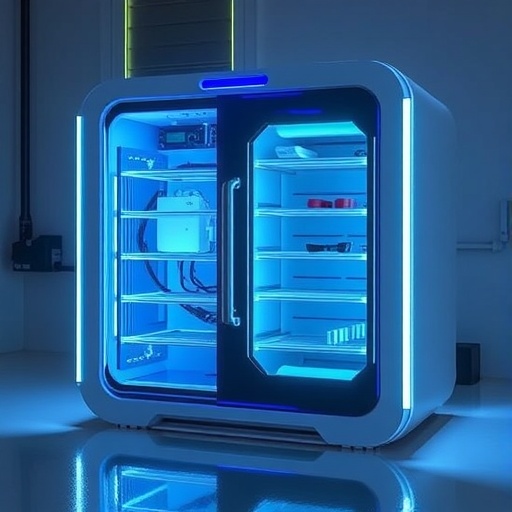
Quantum computing stands at the forefront of technological innovation, promising to revolutionize fields ranging from artificial intelligence and drug development to secure communications and complex logistical optimizations. These machines, leveraging the counterintuitive principles of quantum mechanics, rely heavily on the preservation and manipulation of delicate quantum states known as qubits. However, one of the most formidable challenges in the realization of practical, large-scale quantum computers is maintaining these fragile quantum states, which are easily destabilized by environmental disturbances, particularly temperature fluctuations and noise.
To function correctly, superconducting quantum computers must be cooled to temperatures approaching absolute zero, roughly -273 degrees Celsius. At such ultra-low temperatures, electrons in the circuit move without resistance, enabling the formation and stability of quantum states. Despite the advancements in cryogenic technology, the cooling systems themselves ironically introduce unwanted noise and energy fluctuations. This noise interferes with quantum coherence and degrades the information stored within qubits, threatening the reliability and scalability of quantum devices.
Recognizing this paradox, researchers at Chalmers University of Technology in Sweden have pioneered a radically new approach to refrigeration at the quantum scale. Their breakthrough device is a minimalistic quantum refrigerator that intriguingly utilizes noise itself as the engine of cooling. This innovative concept turns the conventional challenge of noise into an opportunity, enabling exquisite control over minute heat and energy flows within quantum circuits that conventional refrigeration methods cannot achieve.
At the core of this pioneering quantum refrigerator is an engineered superconducting artificial molecule. Unlike molecules formed from atoms, this artificial molecule is constructed from nanoscale superconducting circuits that imitate molecular properties. This unique system is coupled to two microwave channels acting as thermal reservoirs with distinct temperatures, one hot and one cold. The researchers manipulate thermal energy transfer between these reservoirs by injecting controlled microwave noise through auxiliary ports, effectively using fluctuating signals to drive heat flow and refrigeration.
This process exploits an elusive and theorized phenomenon called Brownian refrigeration, where random thermal fluctuations—previously considered a nuisance—can induce and power a directed cooling effect. The Chalmers team’s work stands as the closest experimental realization of this concept. By finely tuning the noise spectrum in a narrow band of microwave frequencies, they successfully orchestrate the energy exchange pathways, transforming random fluctuations into a resource for thermal management in superconducting systems.
Remarkably, the refrigerator operates with extraordinary sensitivity, detecting heat currents as feeble as attowatts—a scale so minuscule that warming a water droplet by one degree Celsius using this heat flow would take longer than the age of the universe. The precision in measuring and manipulating thermal currents at this scale represents a significant technical milestone, pushing the limits of control over quantum thermodynamics and fostering new possibilities for managing heat in quantum hardware.
Beyond refrigeration, this quantum device exhibits multi-modal functionality. By adjusting reservoir temperatures and noise intensity, it can transition between acting as a refrigeration unit, a heat engine, or an amplifier of thermal transport. This versatility holds profound implications for future quantum computing architectures, where local heat management is vital as quantum processors grow larger and more intricate. Heat generated during qubit operations must be carefully controlled to prevent decoherence and maintain computational integrity.
The ability to direct and harness thermal energy at such a nanoscale addresses a critical bottleneck in scaling quantum technologies. Classical cooling methods, though effective at macroscopic levels, lack the finesse to manage energy fluxes within individual quantum circuits. The Chalmers quantum refrigerator exemplifies a new paradigm where cooling mechanisms are integrated directly into the quantum device and driven by the system’s intrinsic noise properties, enabling unprecedented robustness and stability.
This breakthrough also provides fundamental insights into quantum thermodynamics—a field exploring how energy and information intersect at quantum scales. Understanding how to exploit noise, dissipation, and fluctuations not simply as obstacles but as functional resources reshapes our approach to quantum machine design. Devices like this refrigerator open the door toward engineered quantum heat engines and refrigerators that can operate autonomously and efficiently within quantum computing environments.
Fabricated at Chalmers’ Nanofabrication Laboratory, the artificial molecule that underpins this quantum refrigerator comprises superconducting circuits engineered to carefully mimic two coupled qubits. The design ingeniously enables the controlled injection of noise, with the illegal flow of heat contingent upon this noise driving the transfer between thermal reservoirs. Through extensive experimental calibration, the researchers confirmed the delicate balance required to achieve refrigeration powered purely by stochastic fluctuations.
Simon Sundelin, the doctoral student leading this project, highlights how understanding energy transport pathways at the quantum level is paramount for future device design. Their findings enable the anticipation and regulation of heat flows, paving the way for quantum devices in which thermal energy is not a destructive byproduct but a parameter that can be predictably manipulated to enhance device performance.
The study’s co-author, Aamir Ali, underlines the importance of this work for practical quantum technology. By removing heat at scales unreachable by conventional refrigeration, this method could make quantum processors more reliable and scalable. It enhances prospects for building larger, more complex quantum computers that retain coherence for longer operational cycles, accelerating progress toward practical quantum advantage.
Simone Gasparinetti, associate professor and senior author, points out that this work is a major step in realizing Brownian refrigeration, a concept long thought to be only theoretical. By converting random thermal fluctuations into a cooling force, their experiment not only solves a pressing engineering problem but also deepens our fundamental understanding of thermodynamic processes in quantum systems.
As the quantum revolution unfolds, innovations like the noise-powered quantum refrigerator underscore the importance of marrying fundamental physics with engineering ingenuity. By harnessing the very noise that threatens quantum coherence, researchers have revealed a new pathway toward stable, scalable, and efficient quantum machines—ushering in an era where quantum heat management becomes a controllable asset rather than an insurmountable hurdle.
Subject of Research: Not applicable
Article Title: Quantum refrigeration powered by noise in a superconducting circuit
News Publication Date: 26-Jan-2026
Web References: https://doi.org/10.1038/s41467-025-67751-z
References: Sundelin, S., Aamir, M. A., Kulkarni, V. M., Castillo-Moreno, C., & Gasparinetti, S. (2026). Quantum refrigeration powered by noise in a superconducting circuit. Nature Communications.
Image Credits: Chalmers University of Technology / Simon Sundelin
Keywords: Quantum computing, Quantum information, Qubits


