

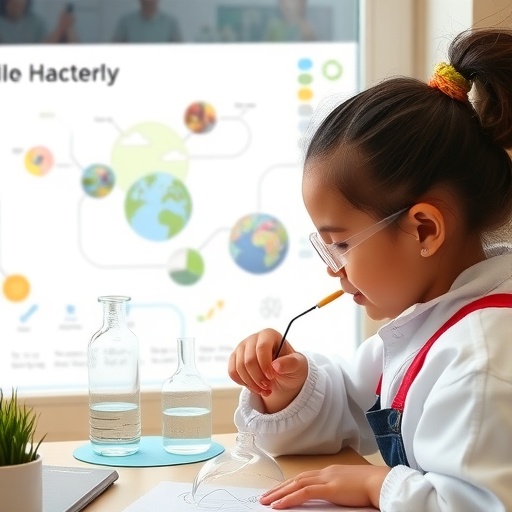
The field of science education is continuously evolving, with innovative strategies emerging that seek to enhance the learning experiences of young students. One such pioneering approach is the Integrated Science Education Strategy (ISES), which has been meticulously designed and evaluated by researcher S.C.K. Raghav. This strategy seeks to weave together various educational methods to create a coherent and impactful learning environment for primary science education. The implementation of thematic team-teaching, the integration of traditional teaching practices, and the use of collaborative pedagogies are all crucial components of this novel educational framework.
As educators strive to fulfill the needs of diverse learners, ISES proposes an amalgamation of instructional techniques that cater to different learning styles, thereby fostering a more inclusive classroom. Through thematic team-teaching, educators can effectively collaborate to deliver content that connects multiple scientific concepts, encouraging students to see the interrelations between different fields of study. This collaborative approach not only benefits students academically but also nurtures social skills essential for their overall development.
Traditional instructional practices, while often viewed as outdated, play a significant role in the ISES framework. The fusion of these conventional methods with more progressive pedagogies creates a multifaceted learning environment that resonates with students. Aspects such as direct instruction, hands-on experiments, and the use of visual aids remain integral to the learning process. This blend ensures that foundational knowledge is established while allowing students to engage in active exploration and inquiry-based learning—an essential component in the development of scientific literacy.
Moreover, the inclusion of collaborative pedagogies significantly enhances student engagement and motivation. When students work together on projects, they not only share knowledge but also learn to appreciate diverse perspectives and approaches to problem-solving. Collaborative learning fosters a sense of community and belonging within the classroom, which has been shown to improve academic outcomes. It encourages peer teaching, where students can explain concepts to one another, solidifying their understanding and boosting confidence.
One salient feature of ISES is its adaptability. This strategy can be customized to suit different classroom contexts and student demographics, making it a versatile tool for educators. As schools face unique challenges, such as varying class sizes, resource availability, and the wide range of abilities displayed by students, ISES provides the flexibility and creativity that teachers need to meet their specific needs. The ability to integrate real-world issues into the curriculum can further enhance the relevance of science education, making it more engaging for students.
Furthermore, the efficacy of ISES is firmly rooted in empirical research. Through a comprehensive evaluation process, the strategy has undergone rigorous testing to assess its impact on student learning outcomes. By gathering data on student performance, engagement levels, and attitudes towards science, researchers have been able to refine and enhance the strategy over time. This evidence-based approach is critical in ensuring that educational strategies are grounded in reality and deliver measurable results.
Participants in the ISES initiative have reported significant improvements in their knowledge retention and understanding of scientific concepts. When students engage with material in diverse ways—whether through hands-on experiments, collaborative projects, or discussions—they tend to retain information better than through traditional rote memorization. This indicates that the depth and breadth of learning can be substantially increased when varied teaching methodologies are employed.
The move towards more integrated science education is also in line with current educational trends emphasizing the importance of STEM (Science, Technology, Engineering, and Mathematics) subjects. As our society progresses, the demand for individuals who are proficient in scientific literacy continues to grow. By employing strategies like ISES, educators can better prepare students for the challenges of the future, equipping them with essential skills that extend far beyond the classroom.
Beyond academic implications, the social interactions fostered in an ISES classroom contribute to holistic development. Students learn important life skills such as teamwork, communication, and critical thinking—qualities that are essential in any career. The ability to collaborate effectively prepares learners for a workforce that increasingly values these interpersonal skills. In pursuing a well-rounded education, ISES acknowledges that learning is not just about academic content; it’s also about preparing students for life’s complexities.
In an ever-changing world, education must continuously adapt to meet the needs of society. The integration of traditional and modern pedagogies offers a promising pathway toward achieving this. The ISES framework is emblematic of this shift, providing an innovative solution that respects the importance of foundational knowledge while embracing the need for flexibility and engagement in teaching and learning processes.
As educators, stakeholders, and policymakers reflect on the future of science education, initiatives like ISES serve as beacons of innovation. They offer a roadmap for transforming traditional classrooms into dynamic learning environments that not only meet educational standards but also inspire a new generation of scientists and critical thinkers. The results of this initiative could very well shape the landscape of primary science education for years to come, influencing teaching methodology and curriculum development across the globe.
As S.C.K. Raghav’s exploration into ISES gains traction, the educational community is encouraged to leverage such findings to enhance their practice. The ongoing evaluation of the strategy will contribute to an evidence-based understanding of science education, which is paramount as we seek to empower the next generation with knowledge and skills that transcend academic content. A future where science is accessible, engaging, and rooted in understanding is on the horizon, thanks to innovative strategies such as ISES.
In conclusion, the Integrated Science Education Strategy is paving the way for a new approach to science education that is not only innovative but also functionally relevant. The importance of thematic team-teaching, traditional methods, and collaborative learning cannot be overstated, particularly in this age of rapid change and globalization. ISES represents a significant advancement in education, with the potential to positively impact not just individual students but entire educational systems. As we move forward, the lessons learned from the evaluation of ISES will continue to resonate, guiding educators toward creating more inclusive and effective science learning experiences.
Subject of Research: Integrated Science Education Strategy for Primary Science Learning
Article Title: Design and evaluation of an Integrated Science Education Strategy (ISES) incorporating thematic team-teaching, traditional practices, and collaborative pedagogies for primary science learning.
Article References:
Raghav, S.C.K. Design and evaluation of an Integrated Science Education Strategy (ISES) incorporating thematic team-teaching, traditional practices, and collaborative pedagogies for primary science learning.
Discov Educ (2026). https://doi.org/10.1007/s44217-026-01143-3
Image Credits: AI Generated
DOI:
Keywords: Integrated Science Education, Primary Science Learning, Collaborative Pedagogies, Team-Teaching, Traditional Practices, STEM Education.


