

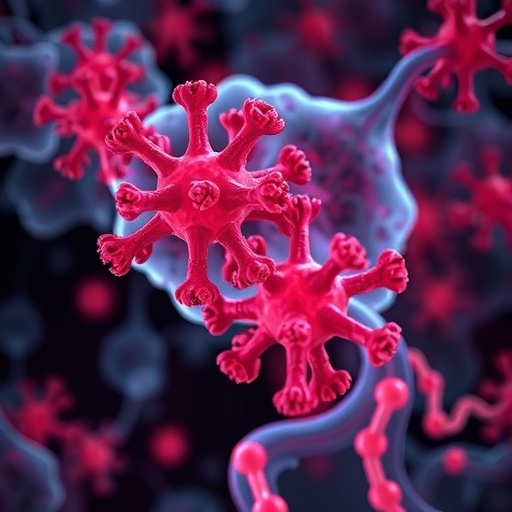
In a groundbreaking advancement at the intersection of immunology and psychiatry, recent research has illuminated profound connections between circulating inflammatory proteins and the risk profiles of major psychiatric disorders, including schizophrenia, bipolar disorder, and major depressive disorder. This revelation, anchored in cutting-edge Mendelian randomization techniques, offers a paradigm shift in our understanding of the biological underpinnings that may predispose individuals to these complex mental health conditions. The study, conducted by Dong, Bi, Li, and colleagues and published in Translational Psychiatry in 2025, harnesses the power of genetic data to untangle the causal relationships long suspected but previously elusive in observational research.
Psychiatric disorders such as schizophrenia, bipolar disorder, and major depressive disorder represent a significant global health burden, characterized by multifactorial etiologies involving genetic, environmental, and biological factors. Historically, neurochemical imbalances and neurotransmitter dysfunction have dominated explanatory models, yet mounting evidence suggests that systemic inflammation could play a pivotal role in modulating brain function and psychiatric symptomatology. This investigation leverages Mendelian randomization, a sophisticated statistical method that uses genetic variants as proxies to infer the causal influence of circulating inflammatory proteins on disease risk, thus overcoming limitations of confounding and reverse causality that often plague traditional epidemiological studies.
The study meticulously evaluated a panel of circulating inflammatory proteins, focusing on cytokines, chemokines, and acute-phase reactants known to influence immune system activity. By integrating large-scale genome-wide association study (GWAS) data, the researchers identified specific protein markers whose genetically predicted levels exhibit strong associations with susceptibility to these psychiatric disorders. This approach provides compelling evidence beyond correlation, suggesting that particular inflammatory mediators may actively contribute to pathogenesis rather than merely reflecting disease state or consequence.
One of the most striking findings was the relationship between elevated levels of certain pro-inflammatory cytokines and increased risk of schizophrenia. Interleukin-6 (IL-6), a cytokine central to initiating and perpetuating inflammatory cascades, demonstrated a robust genetic correlation with schizophrenia susceptibility. This insight aligns with prior clinical observations linking elevated IL-6 in cerebrospinal fluid and peripheral blood with psychotic symptoms, but the Mendelian randomization framework fortifies the argument for a direct causal role in disease development.
Similarly, bipolar disorder exhibited distinct inflammatory signatures, with genetic predisposition to higher circulating levels of C-reactive protein (CRP) correlating with elevated risk. CRP, a widely studied acute-phase protein, serves as a systemic inflammation marker and has been previously associated with mood episodes and severity. The genetic evidence provided by this study underscores inflammation as a tangible contributor rather than an incidental finding in bipolar disorder, potentially guiding future biomarker-driven therapeutic strategies targeting immune modulation.
Major depressive disorder (MDD), the most prevalent of these psychiatric illnesses, also showed convincing associations with select inflammatory proteins including tumor necrosis factor alpha (TNF-α) and interleukin-1 beta (IL-1β). These cytokines are known to influence neurotransmitter metabolism, neural plasticity, and hypothalamic-pituitary-adrenal axis function, all implicated in depressive pathophysiology. The confirmation that genetically elevated TNF-α and IL-1β levels increase MDD risk suggests that anti-inflammatory interventions could yield promising adjunctive treatments, a prospect already being explored in clinical trials.
This study’s employment of Mendelian randomization not only enhances causal inference but also addresses confounding variables such as lifestyle factors, medication use, and concurrent illnesses that have historically confounded inflammation-psychiatric disorder studies. By anchoring analyses in germline genetic variants, which are randomly assorted at conception and remain largely immutable throughout life, the approach simulates the conditions of a randomized controlled trial at the population level, thereby bolstering confidence in the validity of these inflammatory biomarkers as true risk factors.
In addition to illuminating inflammatory mechanisms, these findings raise essential questions regarding the bidirectional relationship between the immune system and brain function. Psychiatric symptoms may themselves influence systemic inflammation, and neuroinflammatory processes can modulate neuronal circuits involved in cognition, emotion, and behavior. Unraveling this complex dialogue holds promise for the identification of novel therapeutic targets aimed at restoring immunological balance as a means of mitigating psychiatric disease progression.
The integration of genetic and proteomic data also opens the door for precision medicine approaches in psychiatry, which has lagged behind other medical fields in biomarker development. By stratifying patients according to inflammatory protein profiles informed by genetic predisposition, clinicians might better predict disease trajectory, treatment response, and relapse risk, ultimately personalizing care paradigms based on biological signatures rather than symptom-based classifications alone.
Moreover, the study’s findings beckon the exploration of anti-inflammatory agents, such as cytokine inhibitors and non-steroidal anti-inflammatory drugs, as potential adjunct therapies. Early-phase clinical trials already suggest benefits of immunomodulatory treatments in subsets of patients with elevated inflammatory markers, heralding a new era where psychiatry embraces immunopsychiatry as a cornerstone of treatment innovation.
This research also calls attention to the potential environmental and lifestyle factors which could modulate systemic inflammation and thus impact neuropsychiatric health. Diet, exercise, stress exposure, and infection history are known to influence inflammatory protein levels, suggesting that holistic approaches incorporating lifestyle interventions may have preventative or therapeutic effects in neuroinflammatory psychiatric disorders.
Future directions burgeoning from this study include longitudinal investigations to monitor dynamic changes in inflammatory markers relative to disease onset, exacerbations, and remission phases. Additionally, dissecting the cellular and molecular pathways linking these circulating proteins to central nervous system dysfunction will be key to transforming statistical associations into actionable biological insights.
Technological advances such as single-cell sequencing, neuroimaging combined with immunophenotyping, and integrative computational modeling promise to refine our understanding of inflammation’s role in mental illness, contributing to the identification of novel biomarkers and targeted therapeutics that transcend symptomatic treatment.
As mental health disorders continue to pose significant societal challenges, unraveling the immune dimension elevates hope for breakthroughs that may alleviate suffering through more individualized, biologically informed approaches. The study by Dong et al. propels the field forward by merging genetic epidemiology with immunology, underpinning a new chapter in elucidating the complex interplay between immunity and mental health.
In conclusion, the comprehensive Mendelian randomization analysis presented in this study not only substantiates the causal involvement of circulating inflammatory proteins in schizophrenia, bipolar disorder, and major depressive disorder but also challenges traditionally siloed perspectives within psychiatry. It emphasizes a systemic, multifactorial etiological model where immune-inflammatory processes are central players, thereby inspiring future research and clinical strategies that harness immunomodulation for improved psychiatric care.
Subject of Research: Circulating inflammatory proteins and their causal associations with schizophrenia, bipolar disorder, and major depressive disorder using Mendelian randomization techniques.
Article Title: Circulating inflammatory proteins associated with risks of schizophrenia, bipolar disorder, and major depressive disorder: a mendelian randomization study.
Article References:
Dong, Z., Bi, B., Li, R. et al. Circulating inflammatory proteins associated with risks of schizophrenia, bipolar disorder, and major depressive disorder: a mendelian randomization study. Transl Psychiatry (2025). https://doi.org/10.1038/s41398-025-03738-0
Image Credits: AI Generated


