


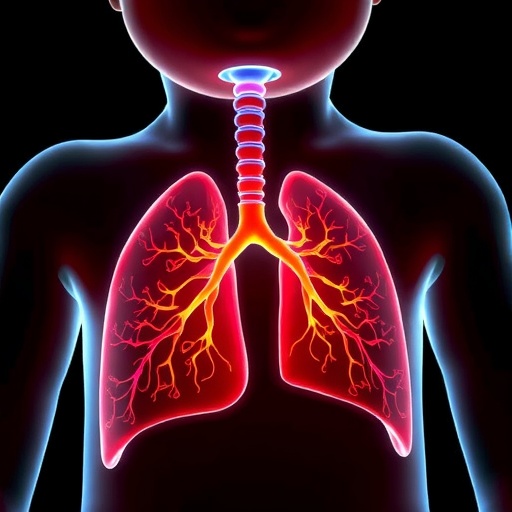
Congenital diaphragmatic hernia (CDH) has long posed a formidable challenge in pediatric medicine, representing one of the most severe and life-threatening malformations affecting newborns. Characterized by a defect in the diaphragm and resultant lung underdevelopment, CDH frequently leads to respiratory failure and often proves fatal despite surgical correction of the diaphragmatic defect. The underdeveloped lungs, or pulmonary hypoplasia, remain a significant barrier to improved survival outcomes, as current therapeutic options are severely limited. In a groundbreaking international study spearheaded by researchers from the University of Leipzig Medical Center, new insights into the inflammatory mechanisms underlying pulmonary hypoplasia have emerged, potentially unlocking pathways to novel, prenatally targeted therapies.
The hallmark of CDH pathology involves a structural defect in the diaphragm, permitting abdominal organs to herniate into the thoracic cavity during fetal development. This herniation compresses the developing lungs, culminating in restricted pulmonary growth and compromised respiratory function after birth. While surgical intervention to repair the diaphragmatic defect typically occurs within the neonatal period, lung immaturity persists as an insurmountable obstacle, accounting for the high mortality and morbidity associated with this condition. Traditional management has focused on postnatal respiratory support; however, the lack of pharmacological treatments targeting lung growth underscores the critical need to decipher the molecular pathologies driving pulmonary hypoplasia.
At the core of this investigative effort, pediatric scientists at Leipzig delved into the role of the immune system’s inflammatory responses in the developing lungs of CDH patients. Utilizing advanced proteomic technologies and molecular analyses of human fetal lung tissue, the researchers identified a marked enrichment of macrophages—immune cells implicated in inflammation—both before birth and in early postnatal lungs affected by CDH. This observation offered compelling evidence that inflammation is more than a secondary consequence; it may be an active contributor to the aberrant lung development seen in congenital diaphragmatic hernia.
Macrophages are pivotal players in the immune system, capable of orchestrating complex signaling cascades that influence tissue remodeling and repair. In the context of pulmonary development, their presence in excess and activation status could disrupt normal alveolar formation and vascularization. The study highlighted the overactivation of inflammatory signaling pathways, most notably the macrophage migration inhibitory factor (MIF), an inflammatory cytokine previously linked to various pathological processes. The upregulation of MIF and other inflammatory mediators suggests a mechanistic axis that could be responsible for stunting lung growth in CDH.
Importantly, the Leipzig team did not limit their analysis to human samples alone. To validate their findings, they cross-examined data from animal models of diaphragmatic hernia, including rat studies, and complementary stem cell models derived from patient tissues. These parallel investigations confirmed that increased macrophage infiltration and inflammatory activity are conserved features in CDH across species, thereby strengthening the biological plausibility of inflammation’s central role. Such comparative approaches pave the way for translational research that bridges experimental models with clinical realities.
The implications of these findings are profound. They set the stage for the conceptualization of anti-inflammatory treatments administered prenatally, a paradigm shift that could redefine management strategies for this devastating condition. By attenuating the inflammatory milieu in the fetal lung, it may be possible to promote more normal alveolar and vascular development, ultimately enhancing pulmonary function and survival rates after birth. This potential therapeutic avenue is supported by the notion that inflammation is not merely an effect but a driver of pulmonary hypoplasia.
To realize these therapeutic ambitions, the University of Leipzig Medical Center is spearheading an ambitious research initiative, funded by the German Research Foundation (DFG). This program is focused on screening and evaluating the efficacy of various anti-inflammatory agents in both animal models and patient-derived stem cells. Such preclinical studies are essential prerequisites before transitioning into human clinical trials. The research team’s multidisciplinary approach, integrating molecular biology, immunology, and pediatric surgery, embodies the rigorous methodology necessary to translate bench findings into bedside applications.
Beyond paving the way for new treatments, the identification of inflammation’s role also reshapes our understanding of CDH’s pathogenesis. Historically considered a primarily mechanical problem related to diaphragmatic defects and lung compression, this new evidence places immunological factors front and center. Chronic prenatal inflammation may induce disruptions in lung morphogenesis, alveolarization, and pulmonary vasculature formation, leading to the characteristic hypoplasia observed in CDH. This paradigm shift necessitates a reassessment of current diagnostic and therapeutic techniques to include biomarkers of inflammation and immune activation.
The study’s lead investigator, PD Dr. Richard Wagner, emphasized the translational potential of these insights. By modulating the inflammatory environment in utero, physicians might one day reduce the burden of pulmonary hypoplasia and improve both survival and quality of life for affected children. Such prenatal pharmacological interventions would represent an unprecedented advance, supplementing surgical repair with biological therapies targeting lung development. These therapies could fundamentally alter the natural history of CDH.
Moreover, the research highlights the value of cutting-edge proteomics and bioinformatic tools in unraveling complex developmental disorders. By analyzing protein expression profiles across fetal development stages, the team uncovered critical inflammatory signatures and molecular pathways that had previously remained obscure. This methodological synergy between proteomics, microscopy, and stem cell biology underscores a growing trend in biomedical research where comprehensive systems-level analyses yield deep mechanistic insights.
The collaboration across multiple international centers, including institutions in Mannheim, Paris, Winnipeg, and Boston, further exemplifies the global commitment to tackling CDH. Shared data and expertise amplify the study’s robustness, ensuring that findings are reproducible and relevant across diverse populations. These partnerships are instrumental for coordinating ensuing clinical trials and harmonizing treatment protocols internationally.
Among the promising aspects of the study is the role of early-career researchers such as Ms. Katinka Sturm, who serves as joint first author. Her contributions reflect the vitality and innovation young scientists bring to the field. Supporting emerging talent is critical for sustaining momentum in this challenging yet hopeful research area, fostering a new generation dedicated to eradicating congenital malformations like CDH.
As this research progresses, it holds the promise not only of transforming therapeutic approaches but also of informing preventive strategies. Understanding how inflammation intersects with genetic and environmental factors to impair lung development could inform prenatal screening programs. Early identification of at-risk pregnancies could prompt anti-inflammatory interventions or enhanced monitoring to mitigate adverse outcomes.
In conclusion, the Leipzig-led study marks a seminal advance in congenital diaphragmatic hernia research, illuminating inflammation as a key pathological driver. This insight opens unprecedented opportunities for targeted prenatal therapies designed to promote lung growth and reduce mortality. Although challenges remain in translating these cellular and molecular discoveries into clinical practice, the study’s meticulous approach and multifaceted investigations provide a strong foundation. The convergence of immunology, developmental biology, and pediatric surgery embodied in this work heralds a new era poised to improve the fate of infants born with CDH.
News Publication Date: 20-Aug-2025
Web References: 10.1164/rccm.202501-0153RL
Cite Scienmag News
Harold Sullivan. (September 22, 2025). Inflammation Linked to Life-Threatening Lung Malformations in Infants. Scienmag. https://scienmag.com/inflammation-linked-to-life-threatening-lung-malformations-in-infants/
Harold Sullivan. "Inflammation Linked to Life-Threatening Lung Malformations in Infants." Scienmag, 22 September 2025, https://scienmag.com/inflammation-linked-to-life-threatening-lung-malformations-in-infants/. Accessed 5 September 2026.
Harold Sullivan. "Inflammation Linked to Life-Threatening Lung Malformations in Infants." Scienmag. September 22, 2025. https://scienmag.com/inflammation-linked-to-life-threatening-lung-malformations-in-infants/


